• Skip to primary navigation
  • Skip to main content

The One Percent Almanack

Wit and Wisdom on Investing, Business, and Life

  • Home
  • Members
  • Log In|Log Out
  • Show Search
Hide Search

Life 2.0: Do You Have a Pink Shirt?

November 30, 2016

In my first year in college, Manish lived just two rooms next to me in the hostel. He was 6 feet 2 inches tall, very friendly and very smart. In the first semester, he scored 98.8 percent and was ranked second in the institute. It wasn’t a small feat considering that the institute was IIT Bombay.

I knew his work ethics and diligence in studies so his academic performance wasn’t a surprise. Getting up at 4 am for studying and attending all the classes regularly came naturally to him. Maybe he made it look that way. But there was one thing very unusual about him. On the day of the exam, he always used to wear his favourite pink shirt. People admired him for his intelligence, hard work, and focus but his superstition about pink shirt just didn’t make sense. It even earned him a nickname – Pinky.

Not to mention, there were few other, less irritating, peculiarities about him. For example, both his table-clock and his watch were set 15-minutes ahead of the actual time. He couldn’t tolerate seeing a footwear upside down. And he never missed his 30-minute afternoon nap, come what may.

<!–more–>[show_to accesslevel=’almanack-all’]

I once argued with him, “When you know your clock is 15 minutes ahead, you would work according to that. How does it help? In fact, every time you must mentally adjust the time and then work accordingly. It unnecessarily increases your cognitive load.”

He would brush me off, “It’s a hack and it works for me.” I just couldn’t wrap my head around his strange habits. He knew what he was doing, after all, he was the institute-topper and I barely managed to get passing marks.

One day, his wing mates, including me, decided to play a prank on him. This was February 2000, my second semester of college, and our mid-semester exams had just started. Manish’s routine on exam days was like a clockwork. Our exams would start at 2 pm so he would finish his lunch by 12.30 pm and head back to his room for a 30-minute nap. When he was asleep, we locked his room from outside, changed the time in his alarm clock (and his wristwatch) to 3 pm, turned his footwear upside down and hid his favourite pink shirt.

True to his biological clock, he got up after exactly 30 minutes of nap and found everything wrong. Upside down footwear, locked doors, missing pink shirt and of course the clock said he had overslept. He became agitated and started shouting frantically. That’s when we decided to end the prank and opened his doors. He wasn’t very pleased with our idea of having fun and quietly left for the exams, wearing a different shirt. He scored his 98 out of 100 in that paper.

The day exam results were declared, some of us told him, “See! Your pink shirt doesn’t have any special powers. It’s your superstition.”

“It’s not a superstition. But you guys won’t understand so forget it.” Manish replied. He continued to sport his pink shirt on exam days for the rest of his time in college.

I forgot about this incident until recently when I came across an interesting passage in Rafael Nadal’s autobiography where he describes his routine just before a match –

I sat down, took off my white tracksuit top, and took a sip from a bottle of water. Then from a second bottle. I repeat the sequence, every time, before a match begins, and at every break between games, until a match is over. A sip from one bottle, and then from another. And then I put the two bottles down at my feet, in front of my chair to my left, one neatly behind the other, diagonally aimed at the court. Some call it superstition, but it’s not. If it were superstition, why would I keep doing the same thing over and over whether I win or lose? It’s a way of placing myself in a match, ordering my surroundings to match the order I seek in my head.

So, Manish was right. His pink shirt wasn’t a superstition. It was a way for him to send a subconscious signal to his mind that it’s time to get ready for peak performance. Manish understood what top performing athletes know. It was an intelligent hack which, on the surface, looked like a stupid superstition. No wonder Manish passed engineering at the top of his class, secured a full scholarship from Stanford University for higher studies and bagged the most coveted job in the campus placement. He knew the secret.

Sharpening the mind’s focus on the activity at hand requires deep concentration. Peak performers know the importance of external cues to trigger that flow state. It’s not uncommon to find celebrity sports people having such strange habits which look like superstitions. These are hacks to nudge the subconscious into a specific state. What an ignorant observer thinks of as a superstition is a scientifically proven mental trick to put the mind into an optimal state.

So how can mere mortals like us, who probably are never going to compete professionally in sports or any similar activity, benefit from this idea?

Well, if you are reading this, chances are you work in a setup where being good at reading, thinking and decision making are one of the most important traits for being successful. Whether you are an investor, software engineer, or a business executive, to be able to focus and think deeply about problems should be very important for you. Isn’t it?

In short, the most successful people in the modern world are those who can do deep work for extended periods of time. Deep work, according to Cal Newport, author of the book with the same title, is defined as –

Professional activities performed in a state of distraction free concentration that push your cognitive abilities to their limit. These efforts create new value, improve your skill, and are hard to replicate.

But the constant distraction and information overload of the modern work is the biggest enemy of the deep work. Relying only on your willpower to keep away the distractions and bring focus isn’t going to take you far. You need hacks. Like Nadal does. Like Manish did.

One such hack is to build a magic corner in your home or workplace. If you can afford a separate room or office, nothing like it but getting started with a small corner in your house is perfectly fine. A corner which has lots of visual cues related to the work that you want to learn to become better at. It can have post-it notes with quotes from your people who you want to emulate. You could perhaps have small pictures of them stuck on the wall as a reminder. Post-it notes can have lots of ideas that you find interesting and want to pursue in future.

You could have your bookshelf, reading chair and study table like I have done. See the above a picture of my magic corner at home.

My goal is to become an effective reader and better thinker. And building this magic corner has been the biggest personal discovery for me. This is the place where I spend most of my time reading, thinking, writing, learning, unlearning, imagining, wondering, connecting the dots and even dozing off (to facilitate diffused learning). When you enter the magic corner, its vibrations and energy gets hold of your subconscious and quickly puts you in the zone.

The zone where ideas, insights and creative juices start flowing uninhibited. Your magic corner becomes the pink shirt.

The more time one spends in his magic corner the stronger would be its vibrations and more productive it would become for you. It’s the perfect example of a positive feedback loop working in your favour. Anytime you want to enter your zone, your flow state, all you would need to do is go to your magic corner.

For that matter, a magic corner doesn’t necessarily have to be a physical space. It could be a slice of time in your day. You could carve out 30-40 minutes window of time from your day and reserve that period only for learning purpose. However, it can’t be a moving window. It needs to be a recurring period every day at the same hour. Like magic corner has a fixed place, your ‘magic-time-corner’ needs to be at a fixed place in time. It could be in the early morning, late evening or even during the day but you must mark it fixed. The moment that hour arrives, you must leave what you are doing and resume your creative work.

I have found that a physical magic corner is much easier to implement than a magic-time-corner. You could give a try to both and stick with what works best for you.

I have lost touch with Manish but I am sure by this time he has discovered few more learning and performance hacks. If I meet him again I won’t blow that chance by smirking at his superstitions.

So, what are you waiting for? Arise, awake and get your pink shirt.

[/show_to] [hide_from accesslevel=’almanack-all’]

Want to Read More? This content is exclusive for members of Value Investing Almanack. Login to read if you are a member. Else, click here to subscribe.

Benefits to VIA Members
 
  • Spotlight: Big ideas from Value Investing and why applying them in your investment decision making will be a great deal
  • InvestorInsights: Interviews with experienced value investors, learners, and deep thinkers
  • StockTalk: Thorough analysis of business models of companies (without any recommendations)
  • Behaviouronomics: Deep analysis of human behaviour and how it impacts investment decision making
  • BookWorm: Reviews of the best books on Value Investing and related subjects
  • Free Course – Financial Statement Analysis for Smart People (otherwise priced at Rs 5,900)
  • Archives: Instant access to our huge archive from the past three years

Become a VIA Member. Click to Subscribe
[/hide_from]

Super Investor: Joel Greenblatt

November 30, 2016

Joel Greenblatt is a very successful value investor and the founder of Gotham Capital. Joel an adjunct professor at the Columbia Business School (Warren Buffett’s alma mater) and author of three investment books namely,You Can Be a Stock Market Genius, The Little Book That Beats the Market and The Big Secret for the Small Investor.

However, the above accolades pale in front of his real accomplishment. His investment firm has averaged a whopping 40% annual return from 1985 to 2016. Just to give you an idea, Rs 100 compounded at the rate of 40% for 20 years turns into Rs 83,600. In the investment world, where 100-baggers are extremely rare events, Greenblatt has turned his investor’s corpus to 800-bagger.

Returns like that don’t come with plain luck. At least not for such a long time. I am sure you are excited to know about the tricks that Joel Greenblatt has up his sleeve that has enabled him to create such an enviable long-term record. You can learn all about his secrets and investing methods in his books but what’s more important to first learn are the basics that underlie his investment process.

<!–more–>[show_to accesslevel=’almanack-all’]

“Without a basic level of knowledge and understanding,” writes Greenblatt, “you can’t tell a great investment from a real dog.” So, before you start implementing the methods, it would be a good idea to reprint the basic principles on your mind’s canvas.

Do Your Own Work

You don’t want to be well paid merely for taking big risks. Anyone can manage that. You want to be well paid because you did your homework…Your extraordinary profits will not be a result of taking on big risks; they will be the justly deserved pay for doing your homework.

In fact, as an investor, your primary task is to reduce risk as much as possible. And the only way to do that is to know what you are getting into, i.e., putting an independent thinking to whatever investments you are making. There is no substitute for hard work, goes the adage. But in investing, it’s not the hard work alone that counts most, it’s the thoughtful-hard-work that generates the best returns.

Today, merely reading all the material available on a company doesn’t give you any special edge. Information is accessible to everyone. What brings an edge to a small investor today is the ability to generate superior insights using the same information which is available to others. Superior insights don’t come from borrowed conviction. They come from sitting in the room alone, revving up your brain’s CPU and connecting the dots.

Most Trusted Advisors aren’t Trustworthy

The odds of anyone calling you on the phone with good investment advice are about the same as winning Lotto without buying a ticket…The vast majority of analysts are directly paid by clients. The research recommendations and reports produced by these analysts are peddled by the firm’s stock brokers in exchange for commission business. One perennial problem is the overwhelming incentive for analysts to issue “Buy” recommendations. The universe of stocks not owned by a customer is always much larger than the list of those currently owned. Consequently, it’s much easier to generate commissions from new “Buy” recommendations than from recommendations to sell.

The incentives of a large part of the financial industry are misaligned with the clients it serves. Most mutual fund and hedge fund managers are more interested in bigger assets under management (AUM) rather than long-term performance. Their incentives are directly proportional to the size of the fund they manage. Similarly, the stock research team owned by most big investment banks don’t want to issue a negative report on a company because they don’t want to lose the chance of getting an investment-banking assignment from the same company in future. For that matter, most personal finance advisors are merely mutual fund agents in the garb experts.

So, the lesson for an investor is that he or she shouldn’t invest based on the stock tips provided by stock brokers and other finance professionals. Always ask, what’s the advisor’s incentive? Where does he or she make money from? And even if you have ensured your advisor is truly independent in dispensing advice, don’t trust him completely. Find out what is his own investment philosophy? Does he invest in the same assets which he is recommending to you?

Pick Your Spots

The most successful horse players are the ones who don’t bet on every race but wager on only those occasions when they have a clear conviction. It makes sense that if you limit your investments to those situations where you are knowledgeable and confident, and only those situations, your success rate will be very high.

Warren Buffett has spoken about the same idea many times. He calls it “sticking to your circle of competence.” To get better returns in equities doesn’t mean that one needs to invest in the hottest sectors. It doesn’t even mean catching the latest trends. When you pick businesses based on your knowledge and understanding of a particular industry, sector or class of businesses, it becomes highly likely that you’ll not make the mistake of investing in a bad business.

The fact that this highly selective process may leave you with only a handful of positions that fit your strict criteria shouldn’t be a problem. The penalty you pay for having a focused portfolio – a slight increase in potential annual volatility – should be far outweighed by your increased long-term returns.

Don’t Buy More Stocks

For many people, especially a small investor, a stock portfolio is only a portion of his entire investment holdings. Most people, reasons Greenblatt, have a portion of their net worth in bank savings, debt funds, real estate and life insurance policies. Which means, their investments are already quite diversified. On top of that, if the investor diversifies his or her stock portfolio in two dozen different stocks, it doesn’t reduce the risk any further, however, it does ensure mediocre returns.

Ideally, your decision to buy and sell stocks should be based solely on the investment merits. This may mean leaving that extra money in the bank or in other assets, even if you’ve made up your mind that socks are the investment vehicle of choice. Leaving some of your assets on the side-lines (i.e., out of stock market) should be your compromise to prudent diversification. As long as you’re willing to do your own homework, a strategy of owning a select handful of your favourite stock situations should yield results far superior to a strategy of owning dozens of different stocks or mutual funds.

Look Down, Not Up

One of the reasons most people look at stock market investing as a risky proposition is that they have an incomplete, if not flawed, view of risk. For most investors, risk is thought of as the risk of receiving volatile returns. On top of that, the distinction between upside volatility and downside volatility is greatly confused.

Moreover, volatility is calculated based on past price movements of a stock which can lead to a faulty conclusion about future performance. The truth, according to Greenblatt, is you can’t really tell much of anything just from measuring a stock’s past price movements. In fact, the riskiest thing about focusing on past price movements is that it doesn’t tell you how much you can lose.

So, one way to create an attractive risk/reward situation is to limit downside risk severely by investing in situations that have a large margin of safety. The upside, while still difficult to quantify, will usually take care of itself. In other words, look down, not up, when making your initial investment decision. If you don’t lose money, most of the remaining alternative are good ones. While this basic concept is simple enough, it would be very difficult to devise a complicated mathematical formula to illustrate the point.

Conclusion

Vince Lombardi is remembered as the greatest coach in American football. At the beginning of every coaching season, he would gather the players around, hold the football in one hand, and say, “Gentlemen, this is a football.” It may sound funny because he wasn’t coaching novices. His players were already accomplished, professional players.

But the story goes that he held up the football as though they had never seen one before. He would describe its importance; he would then take th

e team out and show them the field. He’d point out the rules of the game. Then, he would remind the players the basics of how the game is played.

Lombardi stressed fundamentals. He knew that the secret to extraordinary performance was taking the ordinary aspects of the game i.e., basics and giving them extraordinary focus.

Warren Buffett, even after 65 years of having discovered Benjamin Graham’s book, The Intelligent Investor, considers it as the most important text for every value investor. None of the investing basics that we read above should be new to those who have been learning and practicing value investing for some time. However, it’s important to keep reminding ourselves about the basics.

And that’s because, as I wrote at the beginning, methods change, principles don’t.

[/show_to] [hide_from accesslevel=’almanack-all’]

Want to Read More? This content is exclusive for members of Value Investing Almanack. Login to read if you are a member. Else, click here to subscribe.

Benefits to VIA Members
 
  • Spotlight: Big ideas from Value Investing and why applying them in your investment decision making will be a great deal
  • InvestorInsights: Interviews with experienced value investors, learners, and deep thinkers
  • StockTalk: Thorough analysis of business models of companies (without any recommendations)
  • Behaviouronomics: Deep analysis of human behaviour and how it impacts investment decision making
  • BookWorm: Reviews of the best books on Value Investing and related subjects
  • Free Course – Financial Statement Analysis for Smart People (otherwise priced at Rs 5,900)
  • Archives: Instant access to our huge archive from the past three years

Become a VIA Member. Click to Subscribe
[/hide_from]

InvestorInsights: Kuntal Shah

November 20, 2016

Kuntal Shah is one of the founding partners of SageOne Investment Advisors and has an opportunistic inclination towards value-oriented and risk-controlled approach to investments. He has been an extremely successful investor over the past two decades and his success has come from exploiting the inefficiencies inherent in the markets.

Kuntal has in-depth understanding of value investing with focus on risk identification and mitigation, emerging trends and opportunities in key growth sectors in India, taxation and accounting. He also loves to teach on these subjects and in the past has lectured at UTI Institute of Capital Markets, IIM (Ahmedabad), IIT (Mumbai), Symbiosis, FLAME and Chartered Accountants Institute. Kuntal is an Electronics Engineer from Pune University.

Safal Niveshak (SN): Could you tell us a little about your background, and how you got interested in value investing?

Kuntal Shah (KS): I was brought up in a middle-class family in Mumbai. I am an engineer by qualification. Early life was a constant struggle to make ends meet for our family of five siblings given our father’s limited earnings. I was lucky to be brought up in an environment where there was no compromise on education and was fortunate to be inculcated with middle class working ethos, frugality and conservatism of living within one’s means without recourse to borrowing to prepone consumption.

I was always fascinated with the capital markets. Hence, a career in the same seemed like an excellent opportunity to develop a perspective on different businesses and figure out how their fortunes played out in long run and how stock prices got set in the short and long run. The initial phase of your career is spent learning the intricacies but the benefits flow all your life as learning and compounding of capital are both cumulative and a good means to attain financial independence.

[Read more…] about InvestorInsights: Kuntal Shah

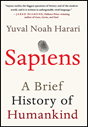
BookWorm: Sapiens

November 15, 2016

The traditional way of learning history in the classroom has always focused on memorising the dates and events. Yuval Harari’s book will change that forever. Sapiens provides a sweeping history of human race from 40,000 feet. Harari’s observations and insights aren’t merely interesting but highly provocative because they will challenge your deepest and dearest assumptions about this world.

The gentleman who taught us history course in school had a strong baritone voice which was in stark contrast to his fragile-looking structure. The only reason I remember him even today is because his voice still echoes in my head. The endless lectures where he would dictate the historical events and we would ferociously note down every single word. I am sure he knew his subject well but never bothered to convince us why studying history was important.

It wasn’t until 2015 that I learned the importance of history. And the credit goes to Yuval Noah Harari, who not only made a dry subject very interesting with his unique style of humour and penetrating observation but also because he presents convincing arguments about why one should study history. In his book Sapiens, he writes –

Unlike physics or economics, history is not a means for making predictions. We study history not to know the future but to widen our horizons, to understand that our present situation is neither natural nor inevitable, and that we consequently have many more possibilities before us than we imagine. For example, studying how Europeans came to dominate Africans enables us to realise that there is nothing natural or inevitable about the racial hierarchy, and that the world might well be arranged differently.

Sapiens was the best book that I read in 2015. And I am not alone in declaring it as the most important book that every knowledge seeker should read. Mark Zuckerberg, Barack Obama, and Bill Gates have openly and strongly recommended Yuval’s book.

I guarantee that once you read the book, your worldview about the past, present and future will change dramatically. It’s such a rich book that I had to literally stop at every page and marvel at Harari’s jaw-dropping insights.
[Read more…] about BookWorm: Sapiens

Behaviouronomics: Diderot Effect

November 10, 2016

Obtaining a new possession often creates a spiral of consumption which leads you to acquire more new things. As a result, we end up buying things that our previous selves never needed to feel happy or fulfilled.

The manager of a superstore came to know that one of his salesmen sold stuff worth Rs 1 crore to a customer on a single day. He got curious and called the salesman in his office.

“How on earth did you manage to sell so much to a single customer?” asked the manager.

“Well, sir, the guy wanted to buy a smartphone so I showed a mobile that could function as a TV remote also. He liked the idea but he didn’t have a TV at home so I sold him a wide screen TV also. Then I suggested to him that a TV without home theatre would be useless so he bought that also. Of course, a wide screen TV and home theatre wouldn’t be of much use without an HD cable connection so he took that too. Then I explained to him how cool it would be to connect his TV to his home security system. He agreed and bought our latest state of the art home security system. The security system came with free gift vouchers. To use those vouchers I took him to our furniture store and he picked up a premium TV cabinet. Since his living room wasn’t big enough for the TV cabinet, we went down to our real estate department and he ended up booking a new house.”

“Wait a minute! So, you’re telling me that you sold a house to a guy who just came in to buy a smartphone?” the manager asked.

“No sir, he just came in asking directions to the nearest bus stop. I told him that if he had a good smartphone, he would never have to ask directions again,” explained the salesman. “And he’s going to come back next week when he moves into his new house since a living room with just a TV cabinet will look quite awkward. Isn’t it?”

[Read more…] about Behaviouronomics: Diderot Effect

  • « Go to Previous Page
  • Page 1
  • Interim pages omitted …
  • Page 44
  • Page 45
  • Page 46
  • Page 47
  • Page 48
  • Interim pages omitted …
  • Page 72
  • Go to Next Page »

Handcrafted with in India