
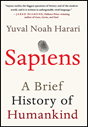
The traditional way of learning history in the classroom has always focused on memorising the dates and events. Yuval Harari’s book will change that forever. Sapiens provides a sweeping history of human race from 40,000 feet. Harari’s observations and insights aren’t merely interesting but highly provocative because they will challenge your deepest and dearest assumptions about this world.
The gentleman who taught us history course in school had a strong baritone voice which was in stark contrast to his fragile-looking structure. The only reason I remember him even today is because his voice still echoes in my head. The endless lectures where he would dictate the historical events and we would ferociously note down every single word. I am sure he knew his subject well but never bothered to convince us why studying history was important.
It wasn’t until 2015 that I learned the importance of history. And the credit goes to Yuval Noah Harari, who not only made a dry subject very interesting with his unique style of humour and penetrating observation but also because he presents convincing arguments about why one should study history. In his book Sapiens, he writes –
Unlike physics or economics, history is not a means for making predictions. We study history not to know the future but to widen our horizons, to understand that our present situation is neither natural nor inevitable, and that we consequently have many more possibilities before us than we imagine. For example, studying how Europeans came to dominate Africans enables us to realise that there is nothing natural or inevitable about the racial hierarchy, and that the world might well be arranged differently.
Sapiens was the best book that I read in 2015. And I am not alone in declaring it as the most important book that every knowledge seeker should read. Mark Zuckerberg, Barack Obama, and Bill Gates have openly and strongly recommended Yuval’s book.
I guarantee that once you read the book, your worldview about the past, present and future will change dramatically. It’s such a rich book that I had to literally stop at every page and marvel at Harari’s jaw-dropping insights.
[show_to accesslevel=’almanack-all’]
So, without further ado, let’s dive into few key ideas discussed in the book.
Species and M&A
Many insights from the field of Biology, especially the Theory of Evolution, have direct implications in investing. But one fascinating insight that I discovered in this book was about how incompatible species produce sterile offsprings.
Biologists classify organisms into species. Animals are said to belong to the same species if they tend to mate with each other, giving birth to fertile offspring. Horses and donkeys have a recent common ancestor and share many physical traits. But they show little sexual interest in one another. They will mate if induced to do so – but their offspring, called mules, are sterile. Mutations in donkey DNA can therefore never cross over to horses, or vice versa. The two types of animals are consequently considered two distinct species, moving along separate evolutionary paths. By contrast, a bulldog and a spaniel may look very different, but they are members of same species, sharing the same DNA pool. They will happily mate and their puppies will grow up to pair off with other dogs and produce more puppies.
When two companies with different culture and values merge, they end up creating a sterile offspring i.e. an entity which fails to create value for the shareholder. Warren Buffett’s Berkshire Hathaway is a brilliant example of how this evolutionary insight can be exploited to create a stronger business. Buffett chooses only those companies which meet his criteria of business quality and management culture. He knows that the future prospects (offspring) of the merged entity will solely depend on the DNA match between Berkshire’s culture and the culture of the company being acquired.
With Great Myths Comes Great Power
On the evolution time line, the oldest ancestors of humans first appeared around 2.5 million years back. For next 2 million years, these human-like animals continued to co-exist with millions of other species of other organisms without having any significant impact on the environment. But today homo sapiens rules the planet.
For a long time, historians attributed human dominance to homo sapiens’ intelligence and superior abilities, at the individual level. However, the history of human dominance began with cognitive revolution (70,000 years ago) when this obscure species of an ape in the corner of Africa developed cognitive abilities like thinking, remembering, learning, and communicating. With these new abilities, humans started creating and believing in imagined stories, like God and life after death. These myths facilitated large-scale collaboration between strangers and paved the way for human dominance.
Now, humans aren’t alone who collaborate in large scale. Social insects like bees also collaborate but they do so in a very rigid manner. They are driven by instincts and DNA hardwiring. There are other animals like Chimpanzees who can collaborate with much more flexibility but only in small numbers. A chimpanzee will only deal with another of its kind if they know each other intimately.
But humans are different. Today we don’t have to know a stranger before striking a deal with him or her. Both of us individually believe in some common stories about business ethics, money, economy, etc. And these shared beliefs make our collaboration frictionless. A chimpanzee can’t ask for 10 bananas from another chimpanzee in exchange for securing a place in animal heaven.
So, humans live in dual reality. One is the objective reality, like nature i.e., trees, mountains, river, air etc. This objective reality is shrouded by another layer of imagined reality i.e., our myths like nation-state and culture. If you think about it, entities like Google (or any corporation for that matter), or even a country (the idea of a nation state) don’t exist in reality. They are stories, created using legal and political rules, which themselves are again shared beliefs.
Money is probably the most powerful myth that exists in the modern world. The basic raw material for making money is human trust. It’s especially more true today where most money doesn’t get printed much. It’s largely electronic data. Two countries may remain in conflict with each other for decades but when it comes to believing in the story of economic growth, another powerful myth, they are in complete agreement. It seems the answer to every problem is economic growth and when this fictional story about economic growth gets translated to an individual level, it becomes consumerism. Similarly, the belief in humanism and basic human rights is a story that almost every country in the world has come to believe, wholeheartedly, in last few centuries.
On one hand, this belief in fictional narrative and myths has rapidly advanced humanity, but on another hand, when these myths differed between large groups of people, it resulted in wars, genocides and concentration camps. So, there are both sides to the coin.
Agriculture – The Greatest Fraud
The agricultural revolution began about 12,000 years ago. It allowed humans society to evolve into more complex structures and lead to cities, kingdoms, temples etc. Agriculture is usually seen as a great leap forward for humankind. And it’s true from the vantage point of those sitting on the higher pedestal (the elite and the upper class) because their quality of life, comforts and wealth increased many folds because of organised farming. But if you look at the agricultural revolution from the point of view of an average peasant woman, her life is much worse than an average hunter-gatherer woman.
Harari argues that farming brought long working hours for the hunter-gatherer, led to population explosion, a pampered elite, and a worse diet, along with pestilence, famine, and war. Thousands of years of evolution had brought humans to live as hunter-gatherers. As hunter-gatherers, we were designed to chase rabbits, run away from lions, gather wild berries and dig roots. Agriculture changed our physical activities to digging canals, carrying water and harvesting which our bodies were not meant for. For that matter, the kind of work that we do today i.e., driving, sitting on a chair for long hours, etc. are all against our biological software.
The biggest eye-popping insight that jumped at me was the comparison between agriculture and the modern industrial world. Agriculture was a luxury trap in the same way that people take up demanding jobs in high-powered companies, working hard to make money so that they can retire early. Harari speculates –
In 8500 BC one could cry bitter tears over the Agricultural Revolution, but it was too late to give up agriculture. Similarly, we may not like capitalism, but we cannot live without it. Much like the Agricultural Revolution, so too the growth of the modern economy might turn out to be a colossal fraud. The human species and the global economy may well keep growing, but many more individuals may live in hunger and want.
The Discovery of Ignorance
The third big revolution of the history is the scientific revolution which began about 500 years ago. This is when homo sapiens began understanding the rules that govern the natural world around it and inside it. This has given so much power to humans, thanks to technology like genetic engineering and computers, that soon they will begin to change the way life evolves.
Contrary to popular beliefs, the scientific revolution isn’t a revolution of knowledge. It’s a result of homo sapiens discovering and acknowledging its own ignorance. The willingness to admit ignorance has made modern science more dynamic, supple and inquisitive than any previous tradition of knowledge, argues Harari.
Despite all the breakthroughs and advancements, science is unable to set its own priorities. In other words, science has given us immense power but it has failed to provide a convincing answer about what homo sapiens should do with all the newly acquired powers.
For example, from a purely scientific viewpoint it is unclear what we should do with our increasing understanding of genetics. Should we use this knowledge to cure cancer, to create a race of genetically engineered supermen, or to engineer dairy cows with super-sized udders? It is obvious that a liberal government, a Communist government, a Nazi government and a capitalist business corporation would use the very same scientific discovery for completely different purposes, and there is no scientific reason to prefer one usage over others.
It’s speculated that self-driving cars will soon replace almost all the automobiles on the planet. However, when it comes to making an ethical judgment, driverless car technology doesn’t have all the answers. If an autonomous car is about to run over 5 people, should it take the decision of taking a sharp swerve and plunge down the cliff, killing its owner? That’s an ethical question that no AI can ever answer. Which means science can never exist alone. It needs the assistance of ideology or a religion.
Conclusion
Sapiens is basically an investigation of what impact the three most important events of history, i.e., cognitive, agricultural and scientific revolution, have had on human life, animals, and the environment. However, what makes this book so insightful is the deep philosophical commentary which accompanies the narrative. And Harari’s style is so engaging and entertaining that you would never feel for a second that you are reading a book on history. Sample this –
Medieval nobleman wore colourful robes of gold and silk, and devoted much of their time to attending banquets, carnivals and glamorous tournaments. In comparison, modern CEOs don dreary uniforms called suits that afford them all the panache of a flock of crows, and they have little time for festivities.
Panache of flock of crows! That’s so vivid and funny. I wish my history textbooks, back in school, had these nuggets of humour. Reading this book rekindled my interest in history so much that, if I had a time machine, I would go back to history than traveling to the future.
I have covered less than one percent of Sapiens’ usefulness above, but I hope I have helped seduce you to read this book for yourself.
[/show_to]
[hide_from accesslevel=’almanack-all’]
- Spotlight: Big ideas from Value Investing and why applying them in your investment decision making will be a great deal
- InvestorInsights: Interviews with experienced value investors, learners, and deep thinkers
- StockTalk: Thorough analysis of business models of companies (without any recommendations)
- Behaviouronomics: Deep analysis of human behaviour and how it impacts investment decision making
- BookWorm: Reviews of the best books on Value Investing and related subjects
- Free Course – Financial Statement Analysis for Smart People (otherwise priced at Rs 5,900)
- Archives: Instant access to our huge archive from the past three years