
• Skip to primary navigation
  • Skip to main content

The One Percent Almanack

Wit and Wisdom on Investing, Business, and Life

  • Home
  • Members
  • Log In|Log Out
  • Show Search
Hide Search

Life 2.0: Education Beyond Textbooks

June 30, 2016

“I have never let schooling interfere with my education.” – Mark Twain

You could laugh it off as a humorous quote, but if you pause and reflect, it is a profound observation. The traditional schooling, including majority of the contemporary education systems, instead of facilitating, impedes the real education.

Based on the opening lines, you might think that I am going to criticize our education system and then offer another cookie cutter solution. But that’s not the purpose because I believe there are no right answers. Instead of offering remedies, I am going to raise few unsettling questions in an attempt to jolt you out of your comfort zone and start thinking about the issue. Let me start by borrowing a quote from Steve Jobs. He mused –

“The minute you understand that you can poke life, you push in and something will pop out on the other side, you can change it, you can mould it, that’s the most important thing.”

So this post is more like a poke, an attempt to make a dent by nudging you and starting a chain reaction.<!–more–>[show_to accesslevel=’almanack-all’]

Anyways, let’s start with something many of us already know and agree to.

Everyone opines that there’s something seriously wrong with our existing education system. In spite of that, the emphasis continues to be on learning by rote and relying on examinations to assess intelligence. Everyone agrees that the machinery needs to be repaired or rather overhauled. However, the repairs – changing syllabi, pumping in more funds to make better classrooms or score more in examinations – only perpetuate the problem.

The first problem is that we’ve gotten ourselves confused between means and ends. We have started looking at education as means to be successful in life. The contemporary education only shows kids the way to external benefits. We are being educated merely to get a better job, to be scientists, to be scholars wedded to books, to be specialists addicted to knowledge. In other words, to be just another, albeit more efficient, cog in the wheel.

The Bollywood blockbuster 3 Idiots was a beautiful illustration of this problem. Ironically, everyone enjoyed watching the movie, agreed to it, discussed it and conveniently forgot about it and settled back to the good old comfortable and conventional ways of education.
Being excellent at taking tests and exams depicts nothing about our intelligence. It only showcases our ability to ace the tests and exams, which is quite sad. We are focusing on the wrong indicators. Intelligence quotient (IQ) being one of them.

There’s too much stress on IQ which is supposed to grade one’s ability to solve complex mathematical equations and regurgitate the textbooks verbatim. Did you know that the idea of IQ test was originally designed by a group of French psychologists, innocently attempting to identify mentally challenged children who needed help in school? They devised 30 tasks that ranged from touching one’s nose to drawing patterns from memory. The design of these tests had very little empirical support in the real world, and these psychologists consistently warned against interpreting these tests literally. Unfortunately, their fears came true and IQ was adopted as a standard measure of intelligence for everyone.

All these conventional ways of learning make independent thinking extremely difficult. Which in turn breeds conformity. Conformity is driven by the need to remain in good books of people around us. We want to look consistent in our actions. But a consistent thinker is a thoughtless person, because he conforms to a pattern; he repeats phrases and thinks in a groove.

Our education system causes us to fear criticism and rejection so we close ourselves in a shell of conformity. As a result, our whole upbringing has made us afraid to be different from our neighbour, afraid to think contrary to the established patterns of society, and afraid to stand out and question the respectful authority of tradition.

Conformity ensures that we end up being moderately successful, provided we are after the conventional success. Being contrarian brings with it the risk of being a failure. This fear of failure blocks the intelligent understanding of life. Conformity promises comfort and security but it puts an end to spontaneity. Seekers of comfort always minimise the conflict and stay ensconced in one familiar corner of life, afraid to rock the boat. But this fear of unknown kills the spirit of adventure.

Our present education came into being as a result of industrialization and war. Its principal aim was to develop efficiency. But this efficiency breeds feverishness to get ahead and we are caught in this treadmill of ruthless competition. What’s the point of being efficient in something which shouldn’t be done at the first place?

Though knowledge and efficiency are necessary, to put all the emphasis on them only leads to conflict and confusion. Parents take pride in their children being studious but have no clue about how to develop and nurture the raw intelligence of human brain.

On being asked, “What’s enlightenment?” Buddha replied, “It’s the end of suffering.”

He didn’t specifically tell what enlightenment looked like lest the human mind will construct another false notion about it. He indicated what enlightenment was not. That trick frees up our mind and leaves a whole new realm of possibilities to explore.

So to answer our question, “what should effective education look like?”, we must focus on what it is not.

Education is not merely a matter of training the mind. Training makes for efficiency, as we have seen, but it does not bring about completeness. A mind that has merely been trained is the continuation of the past, can never discover the new.

Secondly, education is not merely acquiring knowledge, gathering and correlating facts. We may acquire degrees, certifications and be mechanically efficient and still be far away from being intelligent. Intelligence is not mere information. It is not derived from the prescribed textbooks.

To borrow the words of J. Krishnamurti, education should help students “to flower in goodness.” He suggested –

…to find out what is right education, we will have to inquire into the whole significance of living…In its most complete sense, education should focus on enabling students to respond with their whole being to life situations. This goes beyond the mere acquisition of technical skills to an understanding of the world around us and an awareness of the self, so that students develop the capabilities and confidence to live life as complete human beings.

That might sound abstract but that’s the point. You can’t create a standard one-size-fits-all solution for this problem. The solution for everyone is unique and it can only be discovered by self-enquiry. And that’s what we have to teach our kids – to enquire! To ask questions. Lots of them and not settle until they have found the answers.

While I may look like an armchair philosopher criticising the current state of affairs and not really adding any value, which to some extent is true 🙂 But, fortunately, once in a while someone breaks free from the shell. These are people who have taken Mahatma Gandhi’s message seriously, “Be the change you want to see in this world.”

They are making things happen and changing the world. For example, there is Khan Academy, which aims to humanise the classroom through technology. It allows kids to explore concepts on their own pace and allow them to help each other as well. In this unique experiment, the role of teacher gets reframed to a guide who helps the student to achieve their goals and the onus of acquiring the information gets pushed to the student himself.

The works of people like Sir Ken Robinson promote creativity and self-reliance in education. To break free from the current culture of standardised education, he urges us to help kids in discovering their own talents and allow them to focus on that. This approach teaches kids the love of exploration and encourages them to be lifelong learners. It makes the child better prepared to step off the well beaten path and empower him to forge his own niche. Put simply, it allows a child to find things that he or she enjoys and master them instead of doing things that will be of no use to him in the future.

My 16 years of education in schools and colleges wasn’t much different from millions of other kids who are still serving their prison time in our conventional education system. But my real education started when my formal education came to an end, when there was no one to tell me what to study. The next 12 years, after my last day in college, turned out to be the most valuable in terms of learning, unlearning and questioning. This new phase of education wasn’t driven by the desire to get a good job or make money but it was labour of love. It wasn’t a means but an end in itself. And unbeknown to me, it silently carved a brand new career for me.

I’d like to end this by quoting a letter written by Abraham Lincoln to the Head Master of his son’s school.

Respected Teacher,

My son will have to learn I know that all men are not just, all men are not true. But teach him also that for every scoundrel there is a hero; that for every selfish politician, there is a dedicated leader. Teach him that for every enemy there is a friend.

It will take time, I know; but teach him, if you can, that a dollar earned is far more valuable than five found.

Teach him to learn to lose and also to enjoy winning.

Steer him away from envy, if you can.

Teach him the secret of quiet laughter. Let him learn early that the bullies are the easiest to tick.

Teach him, if you can, the wonder of books, but also give him quiet time to ponder over the eternal mystery of birds in the sky, bees in the sun, and flowers on a green hillside.

In school teach him it is far more honourable to fail than to cheat.

Teach him to have faith in his own ideas, even if everyone tells him they are wrong.

Teach him to be gentle with gentle people and tough with the tough.

Try to give my son the strength not to follow the crowd when everyone is getting on the bandwagon.

Teach him to listen to all men but teach him also to filter all he hears on a screen of truth and take only the good that comes through.

Teach him, if you can, how to laugh when he is sad. Teach him there is no shame in tears. Teach him to scoff at cynics and to beware of too much sweetness.

Teach him to sell his brawn and brain to the highest bidders; but never to put a price tag on his heart and soul.

Teach him to close his ears to a howling mob… and to stand and fight if he thinks he’s right.

Treat him gently; but do not cuddle him because only the test of fire makes fine steel.

Let him have the courage to be impatient, let him have the patience to be brave. Teach him always to have sublime faith in himself because then he will always have sublime faith in mankind.

This is a big order; but see what you can do. He is such a fine little fellow, my son.

Yes, they’re fine little fellows, our children. And they deserve better.

[/show_to] [hide_from accesslevel=’almanack-all’]

Want to Read More? This content is exclusive for members of Value Investing Almanack. Login to read if you are a member. Else, click here to subscribe.

Benefits to VIA Members
 
  • Spotlight: Big ideas from Value Investing and why applying them in your investment decision making will be a great deal
  • InvestorInsights: Interviews with experienced value investors, learners, and deep thinkers
  • StockTalk: Thorough analysis of business models of companies (without any recommendations)
  • Behaviouronomics: Deep analysis of human behaviour and how it impacts investment decision making
  • BookWorm: Reviews of the best books on Value Investing and related subjects
  • Free Course – Financial Statement Analysis for Smart People (otherwise priced at Rs 5,900)
  • Archives: Instant access to our huge archive from the past three years
Become a VIA Member. Click to Subscribe
[/hide_from]

InvestorInsights: Ayaz Motiwala

June 20, 2016

Ayaz Motiwala is the founder of Amala Emerging Asia Fund which is focused on investing in quality businesses primarily in India, Indonesia, Thailand and Hong Kong. He has been investing professionally for 20 years of which the last nine years have been out of Hong Kong.

Prior to the current role, Ayaz worked at Samena Capital, a special situations fund based in Hong Kong. He has worked for four years independently managing the India and South Asia investment portfolio of Highbridge Asia Opportunities Fund in Hong Kong. He has also worked in other funds/ security houses viz. New Vernon Capital LLC, Birla Sunlife Asset Management, Motilal Oswal Securities and Ask Raymond James. Ayaz is an MBA in finance from Institute for Technology and Management, Mumbai and Bachelor of Commerce from Mumbai University.

Safal Niveshak (SN): Could you tell us a little about your background, how you got interested in investing, how have you evolved as an investor and what’s your broad investment philosophy? Has your investment policy changed much through the years as your capital has grown?
[Read more…] about InvestorInsights: Ayaz Motiwala

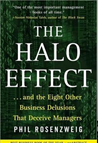
BookWorm: The Halo Effect

June 15, 2016

A book about Halo Effect and eight other business delusions that deceive managers. It attempts to answer the question why is it so hard to understand the high performance of an organization or individual.

Rajiv Bajaj, MD of Bajaj auto, said this in one of his talks –

I joined the company [Bajaj Auto] twenty years back. In my college I was trained to think ‘Just in Time’ because it was supposed to be one solution for all the problems. And then somebody said, Just in Time is not enough. They said there must be Kaizen, World class manufacturing, Toyota production system, Kawasaki system, automation and robotics. Then they said you must also know CAD, CAM, simultaneous engineering, re-engineering, six-sigma, TQM, and you must wear six hats, follow seven habits, look for blue oceans, be a bit of a maverick and indulge in management by walking around. Every time I learnt something I found myself back at the starting point. There was always the new book on the shelf, and there was always the new consultant on the seminar circuit. And these guys would do anything to keep themselves in demand and keep all of us confused. So I decided to ignore all of these.

Rajiv Bajaj turned around Bajaj Auto from a loss making company in the year 2000 to the most profitable auto company in world and it’s pretty clear from his talk that he didn’t do it by listening to those management experts and celebrity CEOs who claim to have the next new thing.
[Read more…] about BookWorm: The Halo Effect

Behaviouronomics: Domain Dependence

June 10, 2016

In theory there is no difference between theory and practice, but in practice there is. That’s because, for human mind, insights do not pass well from one field to another.

Picture the following. You are led into a room with a table. On the table are three items: a box of tacks, a book of matches, and a candle. Your job is to attach the candle to the wall so the wax doesn’t drip onto the table. You can take as much time as you need. How do you proceed?

If you are like over 75 percent of the participants in the now-classic study by a psychologist named Karl Duncker, who created this experiment in 1945, you would likely try one of two routes. You might try to tack the candle onto the wall—but you’ll quickly find that method to be futile. Or you might try to light the candle and use the dripping wax to attach it to the wall. Again, you’d fail. The wax is not strong enough to hold the candle, and your contraption will collapse. What now?

No one sees the solution at once. Some people find it after only a minute or two of thought. Others see it after faltering through several unsuccessful attempts. And many others fail to solve it without some outside help.

Here’s a hint – think outside the box. Isn’t that a cliché? Thinking outside the box is a phrase which is being overused, rather over-abused, by a parade of creativity experts since ages.
[Read more…] about Behaviouronomics: Domain Dependence

Life 2.0: Fasting

May 30, 2016

It’s said that all religions teach the same thing in different ways. But let’s not get into that debate lest this post becomes a philosophical discussion.

But there are few practices that are common across almost all religions. And one of them is fasting. To be precise, the practice of willingly abstaining from food (and sometimes even water) for extended periods of time, has been practiced by people for millennia. The key word here is “willingly” as it is the difference between fasting and starving.

Only recently studies have shed light on the therapeutic effects of fasting on human physiology. But before we get into that, let’s look into some of the myths about eating.

Do you believe that breakfast is the most important meal of the day? May be it’s the most marketed meal of the day.

The popular research on nutrition and food, widely quoted in media, is no longer conducted to improve our health and wellbeing. It is conducted as a method to get us to buy one product over another, and it’s all based on us being ‘constant consumers’. This so called modern research on nutrition is funded by food or supplement companies and the purpose of the research is simply to advertise and market their products.

People with vested interests in selling products have no interest in studying fasting. Much to the dismay of food companies, you can’t put fasting into a pill and sell it.

<!–more–>[show_to accesslevel=’almanack-all’]

When it comes to the science of losing weight, every ‘nutrition guru’ and ‘expert trainer’ has his or her own theory on what does and doesn’t work. Some recommend eating 5-6 small meals every day, some say one should minimize carbohydrates and some others prescribe high protein low fat food. If you have spent some time trying to lose weight by following diets or nutritional programs, I am sure you would agree that weight loss industry is full of nothing but contradiction and misinformation.

Most of these dieting methods seem to work in short term but they fail to produce long term results either because they are unsustainable for busy people like us or they’re just plain bullshit. Dieting is a form of calorie restriction which is very different from fasting. In most forms of dieting, the intake of calories is reduced unlike fasting where the calorie intake is zero. It is easier to fast completely than diet. Because in dieting you put yourself in a state of arousal for food by eating “a little bit”.
That said, it’s important to note that the primary purpose of taking up fasting is not to lose weight but to become healthy and disease free. And if your body requires shedding few pounds to achieve optimum health, fasting will result in weight loss too.

We modern humans have become accustomed to the three-square meals per day regimen spread out every 4 or 5 hours. Animals in the wild, particularly carnivorous animals, don’t eat thrice per day. They eat when they make a kill and that’s how our ancestors, the hunter gatherers, ate. For 3 million years we were nomads and foragers. Farming and growing our own food is very recent phenomenon as compared to the entire history of humankind. It was only a mere evolutionary blip ago (10,000 years) that agriculture revolution domesticated the food production and steady availability of calories became possible.

The process of evolution is very slow and our bodies haven’t evolved yet to adjust to the recent change in food habits which agriculture brought.

When a homo sapiens living in jungle felt hungry he needed to find food which means from an evolutionary perspective the maintenance of a high level of cognitive function under conditions of food scarcity is very important. The research suggests that the behavioural trait of all mammals is to be active when hungry and sedentary when satiated. This indicates that hunger (the state of fasting) makes our brains sharper and more alert.

Nassim Taleb, author of famous books Fooled By Randomness, The Black Swan and Antifragile is a big proponent of fasting. He argues that our body grows stronger when it’s subjected to occasional randomness. Fasting is that randomness. The body is effectively an information machine, says Nassim Taleb, “food brings metabolic noise. Fasting is like silence.”

Many findings from well-controlled experiments on humans indicate that different forms of fasting may provide effective strategies to not only reduce weight but prevent an array of diseases like diabetes, cancer, hypertension, heart disease, asthma, etc.

Several major physiological responses to fasting are similar to those caused by regular aerobic exercise including increased insulin sensitivity and cellular stress resistance, reduced resting blood pressure and heart rate.

Fasting has the potential for applications in both cancer prevention and treatment. Fasting protects from cancer by reducing cellular and DNA damage and also by enhancing the death of precancerous cells. The effect of fasting on chemotherapy toxicity and cancer progression is now being tested in clinical trials in both Europe and the US. Here’s an excerpt from one such study –

…fasting also causes a major sensitization of various cancer cells to chemo-treatment, since it fosters an extreme environment in combination with the stress conditions caused by chemotherapy. In contrast to the protected state entered by normal cells during fasting, cancer cells are unable to adapt, a phenomenon called differential stress sensitization (DSS), based on the notion that most mutations are deleterious and that the many mutations accumulated in cancer cells promote growth under standard conditions but render them much less effective in adapting to extreme environments.

If that’s not enough, many experiments on animals have repeatedly proved that fasting delays ageing.

When you eat multiple times during the day, your body always remains in a fed state. We hardly get to experience fasted state except may be in sleep but that’s not too long either.

As soon as we eat anything, our body gets the signal to process the food and store the energy released. This requires a host of hormones including insulin. In a fed state our bodies are always brimming with these hormones. Medical studies suggest that our bodies need relief from these hormones once in a while. Constant saturation of our blood stream with these hormones is the cause behind all the modern lifestyle diseases including diabetes, hypertension, cancer, asthma, heart diseases, etc.

So how does our body survive when the stock of glucose gets over after few hours of fasting? To answer that, please allow me to get a little technical here.

In most mammals, the liver serves as the main reservoir of glucose, which is stored in the form of glycogen. In humans, depending upon their level of physical activity, 12 to 24 hours of fasting typically results in a 20% or greater decrease in serum glucose and depletion of the hepatic glycogen (stored in liver), accompanied by a switch to a metabolic mode in which non-hepatic glucose, fat-derived ketone bodies and free fatty acids are used as energy sources. Depending on body weight and composition, the ketone bodies, free fatty acids and gluconeogenesis allow the majority of human beings to survive 30 or more days in the absence of any food. The release of these ketone bodies and free fatty acids in our bloodstream triggers a healing process and reverses the damage caused by hormonal rushes that come with the ingestion of food.

So now that you’re convinced about merits of fasting let’s look at some methods of fasting.
The fasting that I have referred to in this post so far is water-only fasting. Please note that a fast without water is quite extreme and not much research is available on the effects of no-water fasting. In fact, in some cases it has been proved to be dangerous and you shouldn’t try it without consulting a medical doctor.

In water-only wasting you ingest only water to keep your body well-hydrated throughout the fasting period. It is much easier for your body to release toxins through water so it’s recommended that sufficient water intake is maintained while fasting.

One of the most popular forms of fasting is Intermittent fasting (IF). In IF you take a break from eating for few hours (up to 24 hours). And this is done 2-3 times a week. Some people follow the 16:8 approach where they restrict their eating to eight-hour window and fast for 16 hours at a stretch and continue this routine every day. Some choose to fast for 24 hours at a stretch once a week and resume their normal diet on other days.

I have been trying intermittent fasting (few days a week) recently. I fast for 16-20 hours 3 times a week. The benefits of fasting are long term so I don’t claim any instant miraculous results but I can tell you that it’s not very difficult. If you aren’t suffering from any serious medical condition, a single day fast won’t kill you. So give it a try and see how it feels. And don’t forget to drink lots of water during your fasting period.

According to Nassim Taleb the most important aspect of fasting is that you feel deep undirected gratitude when you break the fast. What I can tell you from personal experience is that breaking a fast feel like the exact opposite of a hangover. 🙂

I believe fasting isn’t some special treatment or fancy practice. It’s a way of eating that can ultimately grow into a way of life.

The purpose of Life 2.0 series is to share some interesting and actionable ideas with you to make your life better. So that, while value investing principles compound your money, you remain healthy and energetic to enjoy the fruits of your long term wealth.

Disclaimer: The information in this post is for educational purposes only and it’s based on my own interpretation of available research. It is not medical advice and I am not a medical doctor. Always consult your physician before beginning or making any changes in your diet or exercise program, for diagnosis and treatment of illness and injuries, and for advice regarding medications.
[/show_to] [hide_from accesslevel=’almanack-all’]

Want to Read More? This content is exclusive for members of Value Investing Almanack. Login to read if you are a member. Else, click here to subscribe.

Benefits to VIA Members
 
  • Spotlight: Big ideas from Value Investing and why applying them in your investment decision making will be a great deal
  • InvestorInsights: Interviews with experienced value investors, learners, and deep thinkers
  • StockTalk: Thorough analysis of business models of companies (without any recommendations)
  • Behaviouronomics: Deep analysis of human behaviour and how it impacts investment decision making
  • BookWorm: Reviews of the best books on Value Investing and related subjects
  • Free Course – Financial Statement Analysis for Smart People (otherwise priced at Rs 5,900)
  • Archives: Instant access to our huge archive from the past three years
Become a VIA Member. Click to Subscribe
[/hide_from]
  • « Go to Previous Page
  • Page 1
  • Interim pages omitted …
  • Page 50
  • Page 51
  • Page 52
  • Page 53
  • Page 54
  • Interim pages omitted …
  • Page 72
  • Go to Next Page »

Handcrafted with in India