• Skip to primary navigation
  • Skip to main content

The One Percent Almanack

Wit and Wisdom on Investing, Business, and Life

  • Home
  • Members
  • Log In|Log Out
  • Show Search
Hide Search

Bookworm: The Little Book That Beats The Market

June 30, 2017

Before you get put off by the cheesy title, let me share a few words about the author. Joel Greenblatt managed money for Gotham Capital from 1985 to 2006 and generated an annualized returns of 40 percent during that period. In case that didn’t make you jump on your seat, let me put that number in proper perspective (and give you a glimpse into the massive power of compounding). If you invested Rs 1 lac in Gotham fund, over 20 years your initial investment would have turned into a staggering sum of around Rs 8.4 crore

Joel is a practitioner of value investing and pretty successful at it. And to add icing on the cake, Greenblatt is an adjunct professor at Columbia Business School. Which means, he’s an experienced teacher too. This unique mix of skills is extremely rare in the world of investing. This ability to teach by simplifying the ideas is what separates the likes of Warren Buffett and Charlie Munger from all the other successful value investors. Joel Greenblatt is pretty much up there in the same league.

As the title says, it’s a little book. A little over 100 short pages. But don’t get fooled by its brevity and the simplicity of Greenblatt’s message.

<!–more–>[show_to accesslevel=’almanack-all’]

For a part time investor, the most viable option for preserving the capital and beating the inflation, in the long run, is to invest money through SIP (systematic investment plan) in a low-cost index fund. But that will only ensure that your investment returns are same as the broader market. What if you want to return better than indexes? The answer, most people think, is to give their money to professional money managers. Unfortunately, that’s where most people get taken for a ride. Greenblatt writes –

After more than 25 years of investing professionally and after 9 years of teaching at an Ivy League business school, I am convinced of two things:

If you really want to “beat the market,” most professionals and academics can’t help you, and

That leaves only one real alternative: You must do it yourself.

The book, as we’ll shortly see, is primarily about “A Magic Formula”. Although the formula is easy to use and will not take much of your time, it will work for you only if you make the effort to understand why it works, writes Greenblatt. The formula works because at its heart it’s based on the two basic tenets of value investing.

First, buying good companies at bargain prices makes sense. On average, this is what the magic formula does. Second, it can take Mr. Market several years to recognize a bargain. Therefore, the magic formula strategy requires patience.

So, on one hand, this little book simplifies investing for you but on another, the simplicity itself makes it difficult for most people to implement it. Andrew Tobias, who wrote a book called The Only Investment Guide You’ll Ever Need, writes about Joel’s book – The best thing about this book is that most people won’t believe it. Or, believing it, won’t have the patience to follow its advice.

Graham’s Magic Formula

The inspiration for magic formula came from Benjamin Graham, the man who’s considered the father of value investing and pioneer of concepts like Mr. Market and Margin of Safety.

Graham felt that most individual investors, and even many professional investors, would have a hard time making the type of predictions and performing the level of analysis necessary to value and invest in businesses on their own. Graham figured that by sharing a simple formula, one that sense and had worked well in the past, individual investors would be able to achieve excellent investment results with a high degree of safety…Graham’s formula involved purchasing companies whose stock prices were so low that the purchase price was actually lower than the proceeds that would be received from simply shutting down the business and selling off the company’s assets in a fire sale…Graham showed that a simple system for finding obviously cheap stocks could lead to safe and consistently good investment returns.

Unfortunately, Graham’s formula doesn’t work anymore. It was designed for an and era that had severe impressions of 1929 stock market crash and net-net stocks were commonly available. Today, net-nets are almost impossible to find.

The New Magic Formula

Greenblatt’s magic formula is based on two parameters. First is Earnings Yield –

You would rather have a higher earnings yield than a lower one; you would rather the business earn more relative to the price you are paying than less. [In other words] paying a bargain price when you purchase a share in a business is a good thing.

The second is Return on Capital – You would rather own a business that earns a high return on capital than one that earns a low return on capital. [In other words] Purchase a business that can invest its own money at high rates of return rather than purchasing a business that can only invest at lower ones.

Combining these two simple ideas, the magic formula is simply this

– If you stick to buying good companies (ones that have a high return on capital) and to buying those companies only at bargain prices (at prices that give you a high earnings yield), you can end up systematically buying many of the good companies that crazy Mr. Market has decided to literally give away.

So, here’s how the formula works –

The formula starts with a list of the largest 3,500 companies available for trading on one of the major U.S. stock exchanges. It then assigns a rank to those companies, from 1 to 3,500, based on their return on capital. The company whose business had the highest return on capital would be assigned a rank of 1, and the company with the lowest return on capital would receive a rank of 3,500.

Next, the formula follows the same procedure, but this time, the ranking is done using earnings yield. The company with the highest earnings yield is assigned a rank of 1, and the company with the lowest earnings yield receives a rank of 3,500. Likewise, the company with the 153rd highest earnings yield out of our list of 3,500 companies would be assigned a rank of 153.

Finally, the formula just combines the rankings. The formula isn’t looking for the company that ranks best on return on capital or the one with the highest earnings yield. Rather, the formula looks for the companies that have the best combination of those two factors. So, a company that ranked 232nd best in return on capital and 153rd highest in earnings yield would receive a combined ranking of 385 (232 + 153). A company that ranked 1st in return on capital but only 1,150th best in earnings yield would receive a combined ranking of 1,151 (1,150 + 1)

Greenblatt figured that if one chose top 30 stocks from that combined ranking list, the portfolio should produce, in Graham’s words, satisfactory returns. This magic formula was back-tested on 17 years of past data (1988 – 2004), and the results were jaw dropping. The magic formula beat the market (S&P 500 Index) by 18 percent points.

Before you get too excited and put all your money into magic formula, there’s one thing that you should keep in mind. With smaller companies, liquidity may be a problem i.e., small companies have very few shares available for purchase. Which means, even a small amount of demand for those shares can push share prices higher and you may not be able to buy/sell all the shares that you wanted to buy at the current prices. That’s why it’s important that the companies chosen by the magic formula be large. So, instead of ranking the top 3,500 companies, you may want to restrict yourself to top 1000 companies.

Interestingly, when magic formula was back-tested by starting with an initial list of biggest 1000 companies, the formula again trounced S&P 500 by more than 10 percentage points.

The magic formula has another advantage over Ben Graham’s formula. Greenblatt writes –

Remember how Ben Graham had his own “magic formula”? Buying a group of stocks that could meet the strict requirement of Graham’s formula was a great way to make money. Unfortunately, in today’s market, few, if any, companies qualify for purchase under Graham’s original formula. That means Graham’s formula isn’t as useful as it once was. Fortunately, our magic formula doesn’t seem to have that problem. It is merely a ranking formula. By definition, there always have to be stocks that rank at the top. Not only that, because the formula appears to work in order, we’re not limited to just the top 30 stocks. Since the entire group of top-ranked stocks does well, there should always be plenty of high-performing stocks to choose from!

If it’s so simple to produce market-beating returns merely by using a simple formula and if such a known and successful investor like Greenblatt has written openly about it, why is it that even after a decade after this book was published, hardly anyone in the investment world talks about this strategy?

The reason is that the magic formula usually lags the market returns in short term i.e. if one were to compare the magic formula returns with market returns over period of fewer than 5 years, there would be many instances where magic formula will fail to show its magic. However, the moment you extend your horizon to more than 5 years, the magic formula starts shining. In fact, the short term poorer performance of magic formula is what creates the foundation for its eventual superior performance.

If the magic formula worked all the time, everyone would probably use it. If everyone used it, it would probably stop working. So many people would be buying the shares of the bargain-priced stocks selected by the magic formula that the prices of those shares would be pushed higher almost immediately…That’s why we’re so lucky the magic formula isn’t that great. It doesn’t work all the time. In fact, it might work for years. Most people just won’t wait that long. Their investment time horizon is too short. If a strategy works in the long run (meaning it sometimes takes three, four, or even five years to show its stuff), most people won’t stick with it.

In other words, the main (and invisible) ingredient of the magic formula is patience. The formula can only spin its magic if the investor is willing to follow the recipe without letting the moods of Mr. Market affect the decision-making process.

Conclusion

Investing cannot be boiled down to a simple formula. If it was that easy, you won’t see so many people losing their shirt in the stock market. Having said that, the magic formula is very useful for two reasons. First, it’s a great starting point to generate a list of ideas that can be researched further. Second, for those who don’t have time and inclination to study the individual stocks i.e. the part time investors, and still want to beat the index funds, the thought process behind magic formula will help you devise your own method of investing your money safely in stock market.

In the end, the philosophy behind the formula is to ignore the emotions and diligently follow a predefined process. Even if you don’t implement the magic formula, there’s one lesson that you should take from this book – long term success in investing requires extreme patience and a strict discipline to remove factors, like excess emotion and future projections, that often lead to bad investment results.

This little book packs a punch and what’s even more interesting is Greenblatt’s entertaining style of explaining investing concepts in simple language.

[/show_to] [hide_from accesslevel=’almanack-all’]

Want to Read More? This content is exclusive for members of Value Investing Almanack. Login to read if you are a member. Else, click here to subscribe.

Benefits to VIA Members
 
  • Spotlight: Big ideas from Value Investing and why applying them in your investment decision making will be a great deal
  • InvestorInsights: Interviews with experienced value investors, learners, and deep thinkers
  • StockTalk: Thorough analysis of business models of companies (without any recommendations)
  • Behaviouronomics: Deep analysis of human behaviour and how it impacts investment decision making
  • BookWorm: Reviews of the best books on Value Investing and related subjects
  • Free Course – Financial Statement Analysis for Smart People (otherwise priced at Rs 5,900)
  • Archives: Instant access to our huge archive from the past three years

Become a VIA Member. Click to Subscribe
[/hide_from]

InvestorInsights: Shalabh Agarwal

June 20, 2017

Shalabh Agarwal is the founder of Snowball Capital Investment Advisors LLP. After spending a decade in the equities industry, Shalabh quit his steady and lucrative job in one of the best mutual fund houses in India to follow his passion of value investing. With a strong desire to unravel the stock market mystery, he read varied literature on investing – it was all quite confusing till he came in contact with Warren Buffett through his annual letters and books written on him. Since then Shalabh has been an avid follower of the Value Investing philosophy.

Shalabh has a professional experience of more than ten years including seven years as a ‘buy-side’ analyst in the Indian mutual fund industry. He graduated as a Mechanical Engineer from IIT Delhi and went on to acquire an MBA from IIM Bangalore.

Safal Niveshak (SN): Could you tell us a little about your background, and how you got interested in value investing?

Shalabh Agarwal (SA): I graduated from IIT Delhi in Mechanical Engineering in the year 2000. Generally, the fourth year is less intensive and so most of my time was spent on my B.Tech Project (final year major project), billiards and on surfing. Internet was still new to the campus and I remember Moneycontrol launching virtual stock market games. This was a period when markets were going berserk – shares hitting circuits on almost daily basis.

With absolutely no knowledge of stocks, this euphoria was intriguing enough for me to start participating in virtual stock market games. As luck would have it, I won some weekly / monthly portfolio contests and started receiving Rs 200 / Rs 500 bank cheques as prize money. Now this was something big as the dosa (a South Indian delicacy) at IIT Delhi’s subsidized restaurant used to cost ~Rs 5 then – suddenly, the cash starved me had enough to treat his friends!

[Read more…] about InvestorInsights: Shalabh Agarwal

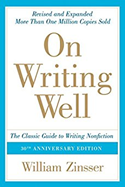
BookWorm: On Writing Well

June 15, 2017

If you trace the life of greatest thinkers you’d find a common thread among them. Almost all of them were great writers too. William Zinsser gives useful and blunt advice about writing better non-fiction.

What differentiates a mediocre investor from a good investor? Knowledge? Knowledge is necessary but not sufficient. The key is having the ability to apply the knowledge wisely. And that ability is a product of how one thinks. If you trace the life of greatest thinkers you’d find a common thread among them. Almost all of them were great writers too.

Writing isn’t merely a tool for expressing one’s thoughts. It’s also a tool to discover new thoughts, structure them, and refine them. All the great thinkers, inventors, scientists, philosophers, communicators I know have vouched that writing and thinking are connected to each other like Siamese twins. Isaac Asimov, the most prolific sci-fi writer of 20th century, wrote more than 400 books. He used to say, “Writing, to me, is simply thinking through my fingers.”

[Read more…] about BookWorm: On Writing Well

Behaviouronomics: The Texas Sharpshooter Fallacy

June 10, 2017

If hindsight bias and confirmation bias had a baby, it would be the Texas sharpshooter fallacy.

Like any other teenager, I was fascinated by the idea of time travel. I watched a lot of sci-fi movies that sparked my imagination about how cool it would be to teleport to the future. More than the idea of going to the future, what excited me was the possibility of seeing the future. Then in 9th standard, I stumbled upon a book called “The Prophecies of Nostradamus”. Nostradamus was a 16th-century French physician who, perhaps as a hobby, published prophecies about future. What’s remarkable about Nostradamus’ is that his first book, which was published in 1955, has rarely been out of print since his death. It’s said that Nostradamus predictions about significant events including the world wars, assassinations of US presidents, many earthquakes, and other natural calamities have come true. Nostradamus has attracted a following that, along with much of the popular press, credits him with predicting many major world events.

The book that I had in my hands was of course not the original text. It was an interpretation of Nostradamus’ French quatrains (stanza of four lines). The translator claimed that Nostradamus intentionally obfuscated his writings to avoid getting persecuted by the 16th-century French government since many of his predictions were about the royal family. But that didn’t stop me from devouring the book and marvelling at this French dude’s clairvoyance.

Could Nostradamus really see the future? While you puzzle over that thought, let me share two interesting stories. Stories about coincidence.

What are the Odds?

The first story is about two US presidents.
[Read more…] about Behaviouronomics: The Texas Sharpshooter Fallacy

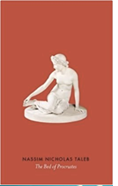
Lessons from The Bed of Procrustes

May 30, 2017

The funny thing about quotes is that you can find anything said by an eminent personality that proves your point. History has produced numerous philosophers and genius thinkers who have made a variety of contradictory statements. Some have contradicted their intellectual rivals and some have even contradicted themselves.

Another risk of using famous quotes to prove your point is that the person reading the quote may not have the proper context in his mind and end up interpreting the sentence in a totally different manner.

Nevertheless, famous quotes are famous for a reason. Einstein’s quotes aren’t famous just because Einstein said them. In fact, many of the aphorisms attributed to Einstein weren’t even uttered by him. The famous quotes have the tendency to get etched in our memory because they pack the right combination of the words to convey a powerful idea in the most efficient manner. They may not be true but they make you think.

A quote has served its purpose if it makes you think. Whether you agree with it is something you can decide after you have worked out your own mental muscles by giving it an independent thought. That’s why reading a book of quotes can be a very rewarding experience. Especially, if the book has been written by your favourite author. Nassim Taleb, known for writing thick and idea-dense books, has also authored a relatively less known book called The Bed of Procrustes. He writes –

Aphorisms, maxims, proverbs, short sayings, even, to some extent, epigrams are the earliest literary form – often integrated into what we now call poetry. They carry the cognitive compactness of the sound bite….Aphorisms require us to change our reading habits and approach them in small doses; each one of them is a complete unit, a complete narrative dissociated from others.

<!–more–>[show_to accesslevel=’almanack-all’]

This book is a collection of Taleb’s own quotes. And the best part about this book is that Taleb has refrained from adding details to his one liners.

If you want to annoy a poet, explain his poetry.” quips Taleb. “Aphorisms lose their charm whenever explained.

I am sure Taleb would be annoyed to find out that someone (yours truly) tried to add commentary to his aphorisms. Well, in my defense I would say that I don’t see this as commentary. You could call it as a chain of thoughts that popped up in my head while mulling over these short sayings. So you’re free to accept/reject/modify these thoughts. In fact, I would love to hear back from you if you have managed to add other interesting dimensions to these maxims.

The person you are the most afraid to contradict is yourself.

Every year one should be killing one of his best-loved ideas. If that’s not happening you’ve wasted that year, argues Charlie Munger. This means that no matter how much caution and analysis you must have carried out while building your portfolio, you should be ready to accept the fact that one (or even multiple) of your investments is going to turn into a dud in future. Question is, are you afraid to discover it? Right now the risk may be limited to the embarrassment associated with contradicting yourself. If that risk is stopping you from discovering your mistake early on then you’re exposing yourself to a bigger risk – the risk of losing your capital and the risk of not learning from a mistake. The key to minimizing mistakes in investing is, to be honest with yourself.

An idea starts to be interesting when you get scared of taking it to its logical conclusion.

Staying consistent with one’s earlier stand is a trait which comes naturally to most human beings. Commitment-and-consistency is a bias which nature has embedded into human mind. The so-called lizard brain – that part inside human skull which has remained unchanged since our ancestors lived a life of hunter-gatherers in a corner of east Africa – creates immense resistance to accept the facts which seem to go against our long-held beliefs. Instead of changing our beliefs we prefer to discard the disconfirming evidence. The brilliant physicist Richard Feynman rightly recognized this human folly when he said, “One should not fool himself because you are the easiest person to fool.” Don’t be afraid to pursue an idea if it seems to threaten your prior worldview. It’s going to be uncomfortable in short term but it has huge payoffs in the longer term.

The test of whether you really liked a book is if you reread it (and how many times).

I would even go as far as saying this – a book not worth reading more than once is not worth reading at all. Google researchers estimated that approximately 130 million books have been published in the entire history of book publishing business. Typically, less than 1 percent of the published books are worth reading. So chances are that majority of the books that you start reading are going to be useless. Only a handful of books is going to make a significant difference in your life. These are the books that deserve multiple readings. When you find a book you think is very enjoyable and useful, you should make it point to re-read it. Not just once but multiple times. Such books are rare. It’s far better to pick up an old book that you liked than a new one.

As a corollary to this rule, don’t feel guilty about not finishing an uninteresting book. Put that book down and move on. Life is too short to be wasted on bad books. My friend Jana, whenever finds a great book, buys all the three versions of the book – hard copy, Kindle, and the audible. It’s a great way to experience the richness of a book from all three dimensions i.e., look, feel and sound.

People focus on role models; it is more effective to find antimodels – people you don’t want to resemble when you grow up.

Heard of the adage – the purpose of some people’s life is to serve as a warning for others. The most robust strategy to be successful is to find the mistakes that caused the failure and then eliminate those mistakes. Charlie Munger’s famous quote – all I want to know is where I am going to die so that I’ll never go there – may sound like a frivolous attempt at humor but has deep wisdom buried inside it. This is especially true in investing. Success is a lousy teacher because in investing there are a thousand ways to succeed but only a handful ways to fail. To find out those losing strategies, study anitmodels – people who failed spectacularly.

Knowledge is subtractive, not additive, writes Taleb, “what we subtract (reduction by what does not work, what not to do), not what we add (what to do). Taleb calls it Via Negativa. Munger calls it the principle of inversion. Do you want to know what works in investing? Sit down and dissect those stocks where you lost money. Have you ever seen how a plane crash investigation team works? They painstakingly go through every tiny piece of flight remains and then finally unearth the cause of the accident. Every stock where you lost money hides in its belly the clues to your next multibagger. In the complex world of investing, detecting patterns of success is less useful and avoiding the false patterns is more important.

In stock market, in brief: participants are calmly waiting in line to be slaughtered while thinking it is for a Broadway show.

It’s a known fact that 98 percent of the investors lose money in the stock market. Most new investors get lured into the world of investing through derivatives. At the beginning, derivatives create the illusion of an easy and quick way to make money. The brokers and financial institutions who are only interested in their commission hardly take it upon them to educate their clients. With no education about investing, money and stock market every new investor is a sitting duck. If they make money in their initial trades, it’s largely because of beginner’s luck which they mistake for their investing skills. The thrill of watching the price movements creates is nothing less than the effect produced by cocaine. It’s said that most investors think they are investing while they are just speculating; most speculators who think they are speculating are just gambling.

To be completely cured of newspapers, spend a year reading the previous week’s newspapers.

If you belong to the camp where newspapers are considered an important source of vital information then you need to try out this exercise. In fact, try reading one-year-old newspapers. Newspapers are perhaps the worst source of educating yourself. Reading newspapers create only an illusion of knowledge. The only reason one should read newspapers is to get some entertainment. And if entertainment is what you’re looking for then you don’t need the latest newspaper. In fact, you’d be more amused when you read old newspapers because you’ll quickly see, with the benefit of hindsight, that 99 percent of news is irrelevant and useless. If you think that you’re going to miss some piece of information that’s going to change the world then you must read this wonderful piece from Morgan Housel – – What we said when the world changed.. He describes how the newspaper media reacted when the two most important innovations in human history were taking shape – the invention of automobile and the invention of airplane.

The fastest way to become rich is to socialize with the poor; the fastest way to become poor is to socialize with the rich.

It’s not greed that drives the world, goes the adage, it’s envy. Comparison with other people is the deadliest trap that drives people to do crazy things. When a multi-millionaire CEO gets involved in questionable activities so that he can increase his worth by couple of hundred million dollars, his primary motivation is to envy. He can’t stand it that his friends are making more money than him. Inspite of being in a position to buy any luxury in this world, comparison keeps happiness unaffordable for him. So, the best way to feel rich is to count your blessings.

In investing, a missed 10-bagger can make an investor feel very poor especially if one of his friends made money through same stock. And a missed reverse 10-bagger can make one very happy if the same friend of his shirt in the same stock. Once you have enough to lead a comfortable life, the feelings of richness and poverty are all tied to what/who you compare with. For that matter, for most people, financial freedom is much nearer than they think, including your truly.

Here’s a timeless lesson on happiness from what Baloo told Mowgli in The Jungle Book – “Look for the bare necessities. The simple bare necessities. Forget about your worries and your strife.” Being rich, poor or financially free is less about having lots of money and more about having more control of our time. The key to riches is not more money but designing a life around the bare necessities.

Conclusion

The Bed of Procrustes is a short book and can be read in one sitting. And I am sure that one sitting is not going to be very comfortable because Taleb’s style isn’t very amicable. It has offended many people and can have the same effect on you too. But that’s the great thing about learning from books. You can disagree with the author, even voice your disagreement in form of marginalia.

I hope you’ll find some useful food for thought in this short book.

[/show_to] [hide_from accesslevel=’almanack-all’]

Want to Read More? This content is exclusive for members of Value Investing Almanack. Login to read if you are a member. Else, click here to subscribe.

Benefits to VIA Members
 
  • Spotlight: Big ideas from Value Investing and why applying them in your investment decision making will be a great deal
  • InvestorInsights: Interviews with experienced value investors, learners, and deep thinkers
  • StockTalk: Thorough analysis of business models of companies (without any recommendations)
  • Behaviouronomics: Deep analysis of human behaviour and how it impacts investment decision making
  • BookWorm: Reviews of the best books on Value Investing and related subjects
  • Free Course – Financial Statement Analysis for Smart People (otherwise priced at Rs 5,900)
  • Archives: Instant access to our huge archive from the past three years
Become a VIA Member. Click to Subscribe
[/hide_from]
  • « Go to Previous Page
  • Page 1
  • Interim pages omitted …
  • Page 37
  • Page 38
  • Page 39
  • Page 40
  • Page 41
  • Interim pages omitted …
  • Page 72
  • Go to Next Page »

Handcrafted with in India