• Skip to primary navigation
  • Skip to main content

The One Percent Almanack

Wit and Wisdom on Investing, Business, and Life

  • Home
  • Members
  • Log In
  • Show Search
Hide Search

Special Report

Corporate Governance: Charlie Munger on Governance

May 20, 2015

Charlie Munger is widely quoted in value investing community for his multidisciplinary ideas. However, he has some unconventional advice on the subject of corporate governance also which deserves a discussion. Let’s look at some of the insights from Munger on the issue of governance.

Munger believes more in the spirit of corporate governance rather than enforcement of compliance rules and regulations. If the intention is not right, people can always bend the rules and find workarounds for carrying out unethical practices without breaking the law. But when you know that the intentions are right then even an occasional instance of non-compliance doesn’t bother you because you trust the person and know that things will eventually get sorted out.

Munger is of the opinion that different companies have different cultures and you cannot come up with a one-size-fits-all solution in form generic compliance rules. An organization is made up of diverse set of people with different interests and values. Such collection of people behaves as a complex adaptive system. The moment complex rules are infused to command more control it invariably results in unintended consequence. So the solution is not to device more rules but to make the system simpler.

In the annual meeting for Wesco Financials in 2007, Munger pointed out –

A lot of people think if you just had more process and more compliance—checks and double checks and so forth—you could create a better result in the world. Well, Berkshire has had practically no process. We had hardly any internal auditing until they forced it on us. We just try to operate in a seamless web of deserved trust and be careful whom we trust.

This brings us to the Munger’s first idea for simplifying the corporate governance puzzle.

Seamless Web of Deserved Trust

A system in which the individuals making decisions do not bear the consequences of those decisions seems incompatible with a seamless web of deserved trust. Munger explains –

Good character is very efficient. If you can trust people, your system can be way simpler. There’s enormous efficiency in good character and dis-efficiency in bad character.

Moreover, unethical behavior is contagious. Gresham’s law says that bad values (or currency or people) drive out the good values from a system. If you find that it’s easy to cheat and steal in an organization, it’s just a matter of time before majority of the people in that system start exhibiting dishonest and unethical behaviour. Even if everybody was absolutely honest to begin with. Such is the human behaviour.
[Read more…] about Corporate Governance: Charlie Munger on Governance

SuperInvestor: Philip Fisher

April 30, 2015

In the first part of this series to highlight the biggest ideas from the world’s best investors, I present the ideas from
the legendary Philip Fisher. If you want to become a successful investor, you cannot ignore what Fisher suggests.

If you are a Warren Buffett fan, chances are slim that you haven’t heard of Philip Fisher. He belongs to the league of those very few super investors who have shaped Buffett’s investing style.

In his 2013 letter to investors, Buffett rankedFisher’s book next to Ben Graham’s books –

 …Phil Fisher put it wonderfully 54 years ago in Chapter7 of his Common Stocks and Uncommon Profits, a book that ranks behind only The Intelligent Investor and the1940 edition of Security Analysis in the all-time-best list
for the serious investor.

Despite being considered as a super investor, Philip Fisher was little known to general public and rarely interviewed. He is widely respected and admired in the value investing circles all over the world. He is also known for his ‘scuttlebutt’ approach, which simply means seeking information from competitors, customers, and suppliers, all of whom have a vested interest in the company.

He wasn’t among those who made decisions just by reading annual reports. He believed in getting first hand information about the company from various sources.


<!–more–>

Want to Read More? This content is exclusive for members of Value Investing Almanack. Login to read if you are a member. Else, click here to subscribe.

Benefits to VIA Members
 
  • Spotlight: Big ideas from Value Investing and why applying them in your investment decision making will be a great deal
  • InvestorInsights: Interviews with experienced value investors, learners, and deep thinkers
  • StockTalk: Thorough analysis of business models of companies (without any recommendations)
  • Behaviouronomics: Deep analysis of human behaviour and how it impacts investment decision making
  • BookWorm: Reviews of the best books on Value Investing and related subjects
  • Free Course – Financial Statement Analysis for Smart People (otherwise priced at Rs 5,900)
  • Archives: Instant access to our huge archive from the past three years
Become a VIA Member. Click to Subscribe

How to Get Smarter:A Guide to Reading for Investors

April 30, 2015

‘What to read’ is a key question a lot of investors ask, given that there’s so much to read and so little time (or so it seems). In this post, I try to answer the question in some way, and with a lot of help from Prof. Sanjay Bakshi.

I do not take a single newspaper, nor read one a month, and I feel myself infinitely the happier for it. The man who reads nothing at all is better informed than the man who reads nothing but newspapers.~ Thomas Jefferson

Long time readers of Safal Niveshak blog and attendees to my investing workshops know my dislike for reading newspapers. The dislike is so deep that I’ve not had a newspaper subscription at my home for the past six years now, and neither do I consume news via electronic media. This also holds true of business television which I watch very occasionally and only when I want to get a hearty laugh and there’s nothing else that’s as funny on television at that time.

<!–more–>

Want to Read More? This content is exclusive for members of Value Investing Almanack. Login to read if you are a member. Else, click here to subscribe.

Benefits to VIA Members
 
  • Spotlight: Big ideas from Value Investing and why applying them in your investment decision making will be a great deal
  • InvestorInsights: Interviews with experienced value investors, learners, and deep thinkers
  • StockTalk: Thorough analysis of business models of companies (without any recommendations)
  • Behaviouronomics: Deep analysis of human behaviour and how it impacts investment decision making
  • BookWorm: Reviews of the best books on Value Investing and related subjects
  • Free Course – Financial Statement Analysis for Smart People (otherwise priced at Rs 5,900)
  • Archives: Instant access to our huge archive from the past three years
Become a VIA Member. Click to Subscribe

Life 2.0: Staying Active

April 29, 2015

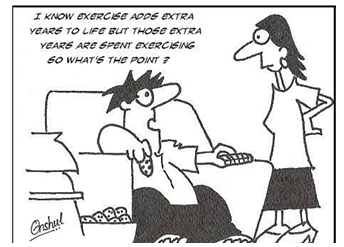
I acknowledge how clichéd the title sounds. I mean who doesn’t know that being active is a good thing? But when I heard the following five words, it got my attention immediately – “Sitting is the new smoking.”

Whosoever came up with this line, understood the power of inversion.

In last seven years, I have tried four different gyms, two swimming pool memberships and started preparing for numerous marathons. Every time the initial motivation lasted only for few weeks and then life (career, family, friends, IPL) got in the way.

I am sure many of you have had the same experience. You make a plan and commit yourself to it but soon life’s randomness and uncertainties throw you off. The randomness of life, its uncertainties – I call it “the chaos monkey”.

The gym operators understand this and you would be surprised to know that they plan their capacity taking this into account. So if the gym can accommodate 50 people at a time, they would actually sign up 100 people because they know that 50% of them will just give up after some time.

I soon realized that the solution wasn’t to reduce or control the randomness of life but to come up with a system which works in spite of the uncertainty of our environment and to certain extent thrives on that uncertainty – a true anti-fragile approach. If you aren’t familiar with the concept of anti-fragility, I would strongly recommend Nassim Taleb’s book Antifragile.
[Read more…] about Life 2.0: Staying Active

Corporate Governance: How They Pay Themselves

April 20, 2015

The organizers of a tennis tournament needed money. They approached the CEO of a big company and asked him to sponsor the tournament.

“How much?” asked the CEO.

“One million,” said the organizer.

“That is too much money,” said the CEO.

“Not if you consider the fact that you personally can play one match, sit at the honorary stand next to a member of the presidential family and be the one that hands over the prize,” said the organizer.

“Where do I sign?” said the CEO.

That’s the power of incentives, you see. People do what they perceive as in their best interest and are biased by incentives.

Look at the brokerage business. Stock brokers have a strong incentive to get us to trade. They advise us what to buy and sell. Volume creates commissions. Investment bankers encourage overpriced acquisitions to generate fees. Investment bankers have every incentive to get initial public offerings (IPO) deals done, regardless of the company’s quality. Their compensation is tied to the revenues the deal brings in. Analysts are rewarded for helping sell the IPO. Brokers want to move the stock.

What did Groucho Marx say? “I made a killing on Wall Street a few years ago…I shot my broker.”

Similarly, in the medical field, some psychologists ensure themselves future income by telling their patients that another visit is required. And they don’t talk about the limits of their knowledge. Their careers are at stake. As American actor Walther Matthau said, “My doctor gave me six months to live. When I told him I couldn’t pay the bill, he gave me six more months.”
[Read more…] about Corporate Governance: How They Pay Themselves

  • « Go to Previous Page
  • Go to page 1
  • Interim pages omitted …
  • Go to page 16
  • Go to page 17
  • Go to page 18
  • Go to page 19
  • Go to page 20
  • Go to Next Page »

Handcrafted with in India