
Is it worth studying the macro factors while analysing a stock? The answer is both Yes and a No. We explore what kind of macro should an investor be concerned about and what should be avoided.
We don’t know what lies ahead in terms of the macro future. Few people if any know more than the consensus about what’s going to happen to the economy, interest rates and market aggregates. Thus, the investor’s time is better spent trying to gain a knowledge advantage regarding ‘the knowable’: industries, companies and securities. The more micro your focus, the great the likelihood you can learn things others don’t.~ Howard Marks
We look at opportunities, as they come along, we try to figure whether we can understand the long term economic prospects of the business. A lot of times the answer is no, then we forget it. We are not making any judgment about where the market is going or we are not looking at any macro factors.
My partner Charlie Munger and I have been working together now 55 years. We’ve talked about every business you can imagine and stocks. We have never had one decision that involved a macro factor. It just doesn’t come up.” ~ Warren Buffett
A profession that has been the butt of most jokes is that of an economist. Though I am sure it is not fun being an economist, whose work involves examining a system with, literally, billions of different moving parts and then trying to come up with predictions or reasonable explanations that, quite frankly, don’t actually exist.
I still remember what they taught me in my college’s macroeconomics class. The equations were always assuming something.
If government increases spending by X, output would grow by Y, but only if you assume taxes weren’t used to support the spending, only if you assume full employment, only if you assume full price elasticity, only if you assume no substitution effect, etc. In short, macroeconomics was and remains a science that behaves with the certainty of physics, but has the track record of alchemy.
[show_to accesslevel=’almanack-all’]
Now the fact that most of the time, economists don’t really have anything better than an educated guess is a sign that macroeconomics is just too complex a discipline to be completely understood. And thus, it is interesting to see most people in the stock market taking economists and their analysis and forecasts very seriously.
So, when China’s monetary policies are not worrying investors, it is Greece’s fiscal deficit or Spain’s interest rates, or Indian RBI’s inflation targets. What is more, the business media creates such a hype around each macroeconomic development that’s easier for investors watching or reading such media to start worrying about what could happen next, and how they must ‘re-strategize’ their investments.
Just listen to some CNBC anchors analyzing how the 0.01% change in inflation or 10 paisa drop in the Rupee in the week gone by must cause you to change whether you must buy banking stocks or those from the infrastructure stocks. It’s sheer madness out there!
“But shouldn’t a value investor worry about the macros?” you may be wondering. “After all, only when the macro is good a business will perform well, right?”
Well yes, it is true that businesses generally do well when the economy does well, and badly when the economy is going downhill. But that’s not the point about whether you should focus on macroeconomics or not.
My moot point is what Charlie Munger says –
There’s too much emphasis on macroeconomics and not enough on microeconomics. I think this is wrong.
And then –
..I don’t think macroeconomics people have all that much fun. For one thing they are often wrong because of extreme complexity in the system they wish to understand.
The biggest problem with worrying about what’s going to happen on the macro front and how should you position your investments accordingly is that this approach is difficult and risky, being vulnerable to error at every step. You must accurately forecast macroeconomic conditions and then correctly interpret their impact on various sectors of the overall economy, on particular industries, and finally on specific companies.
Now, as if that were not complicated enough, it is also essential for investors focusing on macros to perform this exercise quickly as well as accurately, or others may get there first and, through their buying or selling, cause prices to reflect the forecasted macroeconomic developments, thereby eliminating the profit potential for latecomers. So you not only need to work very hard, but also faster than others. And then, to get any advantage from your macro expertise, you must be –
1. Correct on the big picture (e.g., are we entering an unprecedented era of monetary loosening or tightening),
2. Correct in drawing conclusions from that (e.g., will the Chinese central bank be able to manage its currency by managing inflation and interest rates)
3. Correct in applying those conclusions to attractive areas of investment (e.g., buy companies that sell to China or the ones that buy from China)
4. Correct in the specific stocks purchased; and,
5. Be early in buying these stocks before others can buy and take them beyond your comfortable valuations.
You can see the magnitude of problem in assessing the macro situation, don’t you? So why even worry about it while making your investments? Instead, as Munger suggests, focus on the micro – the microeconomics of the business you are looking to buy – demand, supply, production costs, selling price etc. – and how they may change over the next 5-10 years.
Not only are your odds of successful macro-forecasting low, but the impact of being wrong is large. While micro decisions impact a company, macro decisions cut across your whole portfolio. Like if you continue to sit on sidelines or sell your stocks just because ‘China’s economy will go down’, or ‘Brazil’s currency will crash’,
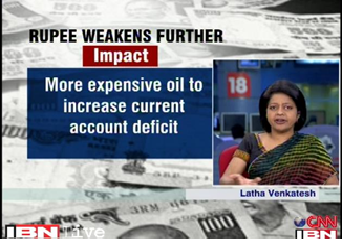

or ‘India’s interest rates will rise’, and you get it wrong and the inverse happens, your portfolio returns can take a big hit. Plus, you may lose out on the time to compound your money that you waste on reading about and making macro forecasting.
Peter Lynch said –
Nobody can predict interest rates, the future direction of the economy, or the stock market. Dismiss all such forecasts and concentrate on what’s actually happening to the companies in which you’ve invested.
So Should You Ignore Macros Completely?
No! I will be foolish and unrealistic to say, “I don’t care about what’s happening in the world, I know a cheap stock when I see one.” When I write that you must avoid the macros, it’s more about the macro-economic predictions that analysts and economists make than assessing the ‘temperature’ of the economy or markets to adjust your tactics (like getting aggressive when most people see the world as falling apart, and getting defensive when everyone is looking at an extremely bright future, which also shows up in the valuations).
Sometimes the investing world is highly hospitable when prices are depressed, and sometimes it is very hostile when prices are elevated. It is much easier to make money when the world is depressed, and you can only know that when you have some idea about what the broader picture looks like (though you don’t need to make a prediction of where the world or stock markets may be heading in the next few days or months).
Focus on the Micro
But keep your focus on the micro – what’s happening with businesses. Whether the automobile company you are eyeing will be able to adapt to the changes brought about by electric and driverless vehicles is more important for you to understand than where car loan interest rates are headed in the next few months. Knowing where steel demand-supply and pricing are headed is more important than knowing what the GDP growth will be in the next quarter or full year.
Like, if you had focused only the micro – what businesses were doing and what prospects they had in the next 10 years – and chose your stocks accordingly before the markets and global economies (the macro) started falling like a pack of cards in 2008, you would have done well or badly in the next few years depending entirely on the kind of businesses you chose (see chart below, which I shared in the last issue of VIA).
If you chose a good business irrespective of what experts were forecasting on the macro front, you would have done well. And if you chose bad businesses then, your portfolio would have been toast. Charlie Munger says,
Gigantic macroeconomic predictions are something I’ve never made any money on, and neither has Warren.
They cannot do it i.e., macro predicting etc., and neither can you. So do not try to do so. Life is so much easier when you accept this and you sleep so much better too.

Focus on the Micro
[/show_to] [hide_from accesslevel=’almanack-all’]- Spotlight: Big ideas from Value Investing and why applying them in your investment decision making will be a great deal
- InvestorInsights: Interviews with experienced value investors, learners, and deep thinkers
- StockTalk: Thorough analysis of business models of companies (without any recommendations)
- Behaviouronomics: Deep analysis of human behaviour and how it impacts investment decision making
- BookWorm: Reviews of the best books on Value Investing and related subjects
- Free Course – Financial Statement Analysis for Smart People (otherwise priced at Rs 5,900)
- Archives: Instant access to our huge archive from the past three years