
Richard Branson is a British business magnate, investor, author, and philanthropist. He’s the founder of the Virgin Group, which controls more than 400 companies.
When someone asked Branson how to be a millionaire, he replied, “Start with a billion dollars and invest in an Airline.”
Vijay Mallya would probably be questioning Branson, “Aisa tha to pehle kyun nahi bataya?” (translation: why didn’t you tell me this earlier?)
So that’s the first way to go from riches to rags — buy an airline. Now, I don’t know of a way to verify if Branson actually said that. So let me tell you another story which is true, verifiable, and recent.
[show_to accesslevel=’almanack-all’]
The story of a money manager named James Cordier. He ran a Florida based hedge fund through Optionseller.com and managed money for many high net worth individuals. As you can guess, Cordier specialized in derivatives (writing commodities options).
On Nov 14, 2018, Cordier’s fund was wiped out and he lost $150 million of his investors’ money. A few days later he released this apology video. (Click here if you can’t see the video below)
Indeed a riches to rags story.
In his 2002 letter to shareholders, Warren Buffett referred to derivatives as financial weapons of mass destruction. He wrote —
Charlie and I believe Berkshire should be a fortress of financial strength — for the sake of our owners, creditors, policyholders and employees. We try to be alert to any sort of mega catastrophe risk, and that posture may make us unduly apprehensive about the burgeoning quantities of long-term derivatives contracts and the massive amount of uncollateralized receivables that are growing alongside. In our view, however, derivatives are financial weapons of mass destruction, carrying dangers that, while now latent, are potentially lethal.
Although Buffett himself has traded derivatives many times, he has always adviced the common investors to avoid derivatives. “Do as I say not as I do,” Buffett quips.
Derivatives are highly complex financial instruments and they require deep understanding and expertise on how to use them safely. Most part-time investors don’t have the time, patience, and willingness to learn this type of investing but that doesn’t stop them from giving in to the seduction of making quick money.
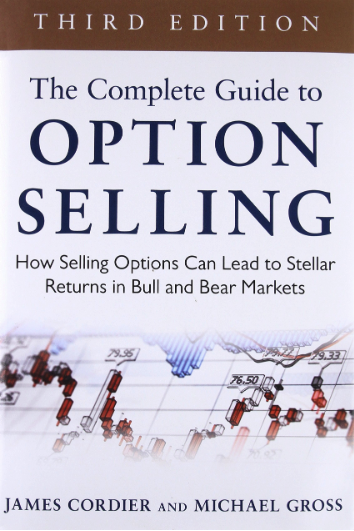 However, Cordier was a professional investor having years of experience in option selling. He even wrote a book called The Complete Guide to Options Selling. The odds are very low that his blunder was a result of a lack of his knowledge. For him, derivatives weren’t risky. Risk, as Buffett often says, comes from doing something that you don’t know. And Cordier knew his game.
So what went wrong? It wasn’t the derivatives that caused the trouble. It was overconfidence and leverage.
I have never invested my money in derivatives because I don’t understand them. Honestly, I have never tried to understand them before. But when I read about optionseller.com debacle, I thought I should at least know the basics.
I am going make an attempt to explain options in elementary terms, primarily as an excuse to get some clarity myself. Be warned that the explanation below is an overly simplified version of actual trades and I might have omitted a lot of details.
To learn anything new, it helps to start with something we already know and then build over it. We’re all familiar with how insurance works. By paying a small premium, we’re effectively buying a contract from the insurance company to assume our risk. In finance, “options” is the jargon reserved for such premium collecting or premium paying contracts.
Let’s say natural gas (an energy commodity) is trading at ₹100. Being an expert in natural gas commodity, you firmly believe that the price will never cross beyond ₹200 by the end of this month. So you enter into a contract (sell) where you agree to pay up if natural gas goes beyond ₹200 (strike price). In exchange for this assurance, you get paid a premium from the contract buyer who wants to secure himself from an unexpected rise in natural gas (Ng) prices. The difference between the current price and the strike price is the margin requirement which is your investment. Assuming that premium is 3% per month, you end up making ₹36 in a year on your investment. That’s 36% annual return. With that kind of profits, you can double your investment in two years.
Typically, you are always aware of that Ng prices can cross 200 anyday so you don’t invest all your money. So if you have ₹200, you could choose to invest only ₹100 and keep remaining ₹100 as cash to cover your margins if the Ng price rise. That margin of safety reduces return. How much safety one should have is very subjective but based on the degree of confidence one could go in the other direction also, i.e., borrowing money to increase returns.
Ng future is itself a leveraged instrument. To maximize returns Cordier added more leverage to his bets. On top of that, he wrote something called naked options. In simple words, he was so confident of the Ng prices that he didn’t bother to buy protective calls. His downside was potentially unlimited.
Simply put, Cordier was picking up free pennies in front of a road roller. That road roller ran over him when Ng prices vaulted in a surprise move which hadn’t happened in the last eight years. The price swings in gas, as well as in oil, were a “rogue wave” that “likely cost me my hedge fund,” said a teary-eyed Cordier in his 10-minute video.
So that’s the second and reliable way to go from riches to rags — leverage with a healthy dose of overconfidence with no regard to downside protection.
James Cordier’s tale pales in comparison to what the LTCM did. Long Term Capital Management — a hedge fund promoted by two Nobel prize-winning economists — virtually eclipsed every other Wall Street financial institution in the 1990s. At its peak, LTCM controlled bigger asset base than other behemoths like Morgan Stanley and Lehman Brothers. The rise of LTCM was nothing short of spectacular. So was its fall.
At the heart of LTCM’s strategy were two things – Arbitrage and Debt. In 1996, they had an astounding $140 billion in assets, out of which 97% was funded by debt. That’s a debt to equity ratio of 30:1.
According to LTCM’s models, the probability of losing everything in a single year was only in a septillion (ten to the power of twenty-four). In other words, it was virtually impossible. And yet, on 17th August 1998, the impossible happened. The Russian government defaulted on its debt and devalued its currency. By the end of August, LTCM has lost 45 percent of its capital. At this time their leverage ratio was 55 to 1 and they were stuck with $125 billion of illiquid assets.
The equation of LTCM’s downfall is the blueprint for a journey from riches to rags. In his book When Genius Failed, Roger Lowenstein writes —
LTCM’s saga of riches to rags was replete with lessons for investors. Its astonishing profits looked less impressive in the light of the losses that followed. As with an insurer who collects heady premiums but gives them back when a big storm hits, Long-Term’s profits were not, in a sense, all “earned”; in part, they were borrowed against the day when the cycle would turn.
The story of Long Term Capital Management is more fascinating than sad, writes Morgan Housel, “The guys at LTCM believed in their (mostly true) rules so much they closed their eyes, held the rules to their chest, and ran as fast as they could towards a cliff.”
They were smart enough to accurately calculate everything except the limits of their intelligence. Reflecting on LTCM meltdown, Warren Buffett wrote —
To make money they didn’t have and didn’t need, they risked what they did have and did need. And that is just plain foolish. If you risk something important to you for something unimportant to you, it just doesn’t make any sense.
So in both cases — Cordier’s and LTCM’s — we see that it wasn’t just the combination of debt and derivatives that brought the downfall. The third and the most dangerous ingredient to their failure was hubris.
Becoming bigger or wealthier is often associated with success and success is almost always accompanied by hubris. And hubris is beginning of the end of success.
I’ll leave you with this remarkable observation by Housel:
[/show_to] [hide_from accesslevel=’almanack-all’]I’ve noticed a pattern: Getting rich can be the biggest impediment to staying rich.
It goes like this. The more successful you are at something, the more convinced you become that you’re doing it right. The more convinced you are that you’re doing it right, the less open you are to change. The less open you are to change, the more likely you are to tripping in a world that changes all the time.
There are a million ways to get rich. But there’s only one way to stay rich: Humility, often to the point of paranoia. The irony is that few things squash humility like getting rich in the first place.
- Spotlight: Big ideas from Value Investing and why applying them in your investment decision making will be a great deal
- InvestorInsights: Interviews with experienced value investors, learners, and deep thinkers
- StockTalk: Thorough analysis of business models of companies (without any recommendations)
- Behaviouronomics: Deep analysis of human behaviour and how it impacts investment decision making
- BookWorm: Reviews of the best books on Value Investing and related subjects
- Free Course – Financial Statement Analysis for Smart People (otherwise priced at Rs 5,900)
- Archives: Instant access to our huge archive from the past three years