
We live in a world that we don’t fully understand. And with this incomplete knowledge, when we build complex things and hope that everything will work out the way we planned, it makes us more vulnerable to the impact of the improbable.
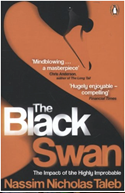
Someone once told me – Most books should have been blog posts and most articles should have been a 140-character tweet. Totally agree. I have read more than my fair share of such terrible books and bloated blogs. There are way too many mediocre and awful books out there. And when it comes to business books, most books aren’t even books – they are ego trips for the businessmen and a resume building gimmick for their ghost-writers.
But among every dozen business books that I have picked up, there have been few great ones two. They are truly worth their weight in gold. They changed my life. Even for Warren Buffett, the greatest investment wasn’t a stock or business but a book written by Benjamin Graham. As Buffett put it, “of all the investments I ever made…[it] was the best.”
[show_to accesslevel=’almanack-all’] Nassim Taleb is one such author whose books have had a remarkable impact on the way I view the world. We’ve already written about his other two books – Fooled by Randomness and Antifragile – in our Bookworm series. Let’s discuss few ideas from his book The Black Swan.
Famous blogger and author, Ryan Holiday included Black Swan in his list of 26 all-time best business books. He writes –
Nassim Taleb is in the same category as Peter Thiel—a deep, thoughtful, well-read writer and thinker whose work breaks new ground. This book is a required reading for any executive trying to think about risk but it is really for anyone who wants to make better decisions and not fall prey to our common cognitive fallacies.

So, what is a black swan? Black swan, a Latin expression – was commonly used as a metaphor to describe something impossible or something non-existent. It came from the old-world belief that all swans are white since no one had seen a black swan before. Every time someone spotted a white swan, it was confirmation of their belief i.e. “All swans are white”. But this long held notion was invalidated the day first black swan was spotted.
Anyways, moving on to Nassim’s version of The Black Swan.
Black Swan
A black swan event has following three attributes, writes Taleb –
First, it is an outlier, as it lies outside the realm of regular expectations, because nothing in the past can convincingly point to its possibility. Second, it carries an extreme impact (unlike the bird). Third, in spite of its outlier status, human nature makes us concoct explanations for its occurrence after the fact, making it explainable and predictable.
The 9/11 terrorist attack was a black swan event. The 2008 financial crisis was one too. No one saw them coming. Both events had a huge impact on the economy and a large segment of population and pundits had a convincing explanation (with the benefit of hindsight) to claim that those events were inevitable. For that matter, black swan events are very subjective too. For a tribal community living in a remote corner of east Africa, both these events were of no significance. But for a guy trapped on the top floor of the burning world trade center, it was a black swan. For AIG, which sold billions of dollar of credit default swaps on subprime mortgage bonds, 2008 crash was a black swan.
The idea is that one can never predict black swan. What you can, however, do is to arrange your affairs in such a manner that you aren’t exposed to such events. Having leverage exposes you. So does indulgence in dangerous activities like doing drugs and racing trains, says Charlie Munger.
Apart from the central theme of black swan, Taleb’s book is choc-full of mind stretching ideas. Here’s are few of them.
Antilibrary
Taleb tells the tale of Umberto Eco, an Italian novelist and philosopher Umberto Eco, and his large personal library. Eco figured that the visitors to his library could be split into two groups.
…those who react with “Wow! what a library you have! How many of these books have you read?” and the others – a very small minority – who get the point that a private library is not an ego-boosting appendage but a research tool. Read books are far less valuable than unread ones. The library should contain as much of what you do not know…Indeed, the more you know, the larger the rows of unread books. Let us call this collection of unread books an antilibrary.
I have experienced this personally. No one has ever looked at my book shelves and asked, “How many of these you haven’t read yet?” And that included me until I read Umberto Eco’s statement. In fact, the first thing I did after my introduction to Eco’s philosophy was to discard all the books that I had read and didn’t like. I realized that the purpose of those books was just to stroke my ego. That left me with books that I hadn’t read yet or had read and wanted to read again. My own antilibrary.
Extremistan and Mediocristan
To understand the difference between these two terms – Extremistan and Mediocristan – let’s do a thought experiment.
Assume you round up a thousand people randomly selected from the general and have them stand next to each other in a stadium…Imagine the heaviest person you can think of and add him to that sample. Assuming he weighs three times the average, between four hundred and five hundred pounds, he will rarely represent more than a very small fraction of the weight of the entire population (in this case, about a half a percent.) … You can get even more aggressive. If you picked the heaviest biologically possible human on the planet (who yet can still be called a human), he would not represent more than, say, 0.6 percent of the total, a very negligible increase.
Now, let’s replace weight with wealth i.e. repeat the above experiment by selecting people and measuring their net worth.
Consider by comparison the net worth of the thousand people you lined up in the stadium. Add to them the wealthiest person to be found on the planet — say Bill Gates, the founder of Microsoft. Assume his net worth to be close to $80 billion — with the total capital of the others around a few million. How much of the total wealth would he represent? 99.9 percent?
The point is that weight, height, calorie consumption etc. are from the world of Mediocristan. Whereas wealth is a resident of the world of Extremistan. Because of the non-linear characteristics of Extremistan world, the black swan events are invariably found in the domain of Extremistan.
In Extremistan, writes Taleb, “inequalities are such that one single observation can disproportionately impact the aggregate, or the total.”
If you think about this concept little more deeply, you would figure that Mediocristan is essentially the domain of natural things where as Extremistan is ruled by man made things e.g. financial systems, skyscrapers, flying machines, credit default swaps and above all money.
The Turkey Problem
Consider a turkey that is fed every day. Every single feeding will firm up the bird’s belief that it is the general rule of life to be fed every day by friendly members of the human race ‘looking out for its best interests,’ as a politician would say. [But] on the afternoon of the Wednesday before Thanksgiving, something unexpected will happen to the turkey. It will incur a revision of belief.
The folly in Turkey’s belief was a blind reliance on the practice of using past events to predict the future. The turkey’s feeling of safety reached its maximum when the risk was at the highest!” Taleb writes.
The genius Nobel laureates at LTCM bet on the idea that bond prices always converge to their historical averages. They were so convinced with it that they took on more than $100 billion dollars of debt to play this game. For first 3 years their fund returned a CAGR of 40 percent and in the fourth year, they were wiped out when the history refused to repeat itself.
Similarly, the 2008 US subprime mortgage crisis was a result of the assumption that home prices always go up. This idea fuelled the perverse incentives of the Wall Street investment bankers and brought down the whole financial system on its knees when that historical trend of ever increasing real estate prices reversed.
Taleb’s book came out in 2007, right before the US financial markets blew up. In his interviews, right before the crisis surfaced, Taleb was hollering how the greed and envy of Wall Street bankers had created a huge bubble. But all the interviewer wanted to know was about Taleb’s latest trading strategies. I am sure Taleb would have felt vindicated after the 2008 meltdown.
Hedonic Happiness
I was pleasantly surprised to find some interesting ideas about human nature and happiness.
Making $1 million in one year, but nothing in the preceding nine, does not bring the same pleasure as having the total evenly distributed over the same period, that is, $100,000 every year for ten years in a row. The same applies to the inverse order – making a bundle the first year, then nothing for the remaining period. Somehow, your pleasure system will be saturated rather quickly, and it will not carry forward the hedonic balance like a sum on a tax return. As a matter of fact, your happiness depends far more on the number of instances of positive feelings, what psychologists call “positive affect,” than on their intensity when they hit. In other words, good news is good news first; how good matters rather little. So to have a pleasant life you should spread these small “affects” across time as evenly as possible. Plenty of mildly good news is preferable to one single lump of great news…The same property in reverse applies to our unhappiness. It is better to lump all your pain into a brief period rather than have it spread out over a longer one.
Conclusion
A mind stretched by an idea, goes the adage, can never go back to its original form. That’s what books like Black Swan do. They stretch your mind, shake your world view and give you a new pair of lenses to understand the world. Books like these aren’t to be read once. You have to read them not once, not twice but at least half a dozen times to really grasp the knowledge in a useful form. It’s only on the third or fourth read you begin to connect the dots between seemingly scattered ideas. All of Taleb’s books fall into this special category called – “ever in antilibrary”. No matter how many times you’ve read such books, they always leave you with a feeling that there’s more in the book that you are yet to grasp.
I’ll leave you with the very last passage from the book which I found remarkably comforting. Taleb writes –
[/show_to] [hide_from accesslevel=’almanack-all’]I am sometimes taken aback by how people can have a miserable day or get angry because they feel cheated by a bad meal, cold coffee, a social rebuff or a rude reception…We are quick to forget that just being alive is an extraordinary piece of good luck, a remote event, a chance occurrence of monstrous proportions.
Imagine a speck of dust next to a planet a billion times the size of the earth. The speck of dust represents the odds in favour of your being born; the huge planet would be the odds against it. So stop sweating the small stuff. Don’t be like the ingrate who got a castle as a present and worried about the mildew in the bathroom. Stop looking the gift horse in the mouth – remember that you are a Black Swan.
- Spotlight: Big ideas from Value Investing and why applying them in your investment decision making will be a great deal
- InvestorInsights: Interviews with experienced value investors, learners, and deep thinkers
- StockTalk: Thorough analysis of business models of companies (without any recommendations)
- Behaviouronomics: Deep analysis of human behaviour and how it impacts investment decision making
- BookWorm: Reviews of the best books on Value Investing and related subjects
- Free Course – Financial Statement Analysis for Smart People (otherwise priced at Rs 5,900)
- Archives: Instant access to our huge archive from the past three years