
Continuing the trend from the last month’s bookworm, I am revisiting the book —The Checklist Manifesto by Dr. Atul Gawande — which we had covered in Mar 2015 issue of Value Investing Almanack.
Before we delve deeper, a word about Syntopical Reading.
Mortimer Adler, in his book How To Read A Book, writes that Syntopical Reading is the highest form of reading. In syntopical reading, you read multiple books (in parallel) on the same topic. The goal is not to understand everything discussed in the book, but rather to understand the subject and develop a deep fluency on that one chosen topic. This is all about identifying and filling in your knowledge gaps.
In this post, we’ll go into more details on the topic of checklists. The primary book would be Gawande’s The Checklist Manifesto and we’ll also rummage for investing related insights in Guy Spier’s book — The Education of a Value Investor.
Atul Gawande recently shot to fame when it was announced that three large US corporations — Amazon, JP Morgan, and Berkshire Hathaway — have joined hands to created a healthcare venture and appointed Gawande as the CEO.
[show_to accesslevel=’almanack-all’]
Rare are people who come gifted with a remarkable blend of being world class practitioners and great communicators. Dr. Gawande is one such person. Because of his vast experience in the field of surgery, he brings captivating stories of interesting medical cases. His style of describing what goes inside an operation theatre is absolutely stunning.
One such riveting story comes from John — a practicing surgeon in San Francisco and Gawande’s classmate from medical school.
It was Halloween night and John was summoned into Emergency to attend to a stab wound victim. The patient had been to a costume party where he got into a fight with another person.
When he was wheeled into Emergency, the patient was stable. He was breathing normally and he didn’t complain of any pain. He was drunk and just babbling to the nurses. So, they cut off his clothes and examined his body from head to toe. They found the stab wound in his belly. Although it was a two-inch long cut, prima facie, it didn’t look like a bad injury. The trauma team decided to take him to the operating room, check to make sure that his bladder wasn’t injured, stitch up the little gap, and let him go.
Then a nurse noticed that the patient had stopped talking. His heart rate was shooting up. His eyes were rolled back. And he stopped responding. His blood pressure was barely detectable. Suddenly there was panic in the room. They immediately rushed the patient into the operation theatre. The nurses quickly got the surgical equipment set up. A resident doctor splashed a whole bottle of Betadine antiseptic onto his belly, and John grabbed a blade and sliced down through the skin of the man’s abdomen in one clean swipe from rib cage to pubis. The moment John opened the abdominal cavity, an ocean of blood burst out of the patient. They were shocked when they realized what had happened.
The assailant’s knife had gone more than a foot through the man’s skin, through the fat, through the muscle, past the intestine, along the left of his spinal column, and right into the aorta which is the main artery from the heart. Fortunately, after some efforts, they were able to stop the bleeding.
It turned out that the attacker at the costume party was dressed as a soldier with a bayonet.
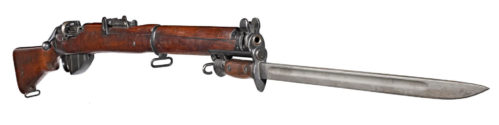
There are a thousand ways that things can go wrong when you’ve got a patient with a stab wound, says John, “But everyone involved got almost every step right—the head-to-toe examination, the careful tracking of the patient’s blood pressure, pulse, rate of breathing, the monitoring of his consciousness, the fluids run in by IV, the call to the blood bank to have blood ready, the placement of a urinary catheter to make sure his urine was running clear, everything. Except no one remembered to ask the patient what the weapon was.”
These are the failures which are entirely avoidable for such errors aren’t attributable to lack of knowledge.
Today, we have accumulated immense know-how. And this know-how has been put in the hands of some of the highly trained, highly skilled, and hardworking people in our society. The problem is that this know-how has become unmanageable.
The volume and the complexity of our knowledge have gone far beyond our individual ability to translate the benefits of that knowledge accurately and reliably, writes Gawande, “Knowledge has both saved us and burdened us.”
During the 1930s, the aviation industry was grappling with the same problem. The new airplanes were becoming too complex for humans to handle. No matter how well they were trained, pilots invariably missed some basic steps which would often lead to costly disasters.
In a complex environment, the main difficulty people face is the fallibility of human memory and attention, especially when it comes to mundane, routine matters that are easily overlooked under the strain of more pressing events.
Realizing that a different strategy was required, the engineers at Boeing introduced a pilot’s checklist. Their checklist was simple, brief, and to the point—short enough to fit on an index card, with step-by-step checks for takeoff, flight, landing, and taxiing. It had the kind of stuff that all pilots already know. They check that the brakes are released, that the instruments are set, that the door and windows are closed, that the elevator controls are unlocked—dumb stuff.
A checklist wasn’t really groundbreaking innovation in the traditional sense but it had a massive impact in terms of reducing errors. Thanks to simple idea of Checklist, commercial aviation has become one of the safest industries in the world.
In 2001, taking inspiration from pilot’s checklist, Dr. Peter Pronovost decided to run an experiment in John Hopkins hospital in the US. He wanted to address a problem which occurs very frequently in most ICUs in hospitals — line infections. Infections caused by ventilator tubes and catheter tubes. Line infections are so common that they are considered a routine complication. Dr. Pronovost devised a simple 5 point checklist when putting a central line in a patient. The doctors were supposed to do these steps.
- Wash their hands with soap
- Clean the patient’s skin with antiseptic.
- Put sterile drapes over the entire patient.
- Wear a mask, hat, sterile gown, and gloves.
- Put a sterile dressing over the insertion site once the line was in.
Pronovost asked the nurses in the ICU to observe the doctors for a month as they put lines into patients and record how often they carried out each step. They discovered that in more than 30% of the cases, the doctors skipped at least one step. The next month, Pronovost persuaded the Hospital administration to authorize nurses to stop doctors if they saw them skipping a step on the checklist. Then they monitored the progress for one year. The results were dramatic. The line-infection rate went from 11 percent to zero. So they followed patients for fifteen more months. And only two line infections occurred during the entire period. They calculated that, in this one hospital, the checklist had prevented forty-three infections and eight deaths and saved two million dollars in costs.
Checklists have proved to be extremely effective decision-making tool in fields as diverse as aviation, medicine, and construction. But there is one more field where checklists have found enthusiastic takers — Investing.
Charlie Munger — the vice chairman at Berkshire Hathaway — is a big proponent of using checklists in investing. When he read Gawande’s article on checklists, Munger sent a $20,000 cheque as a gift to him.
The genesis of Gawande’s book was in an article that he wrote for New Yorker in 2007. Mohnish Pabrai, a renowned value investor, discovered the article and realized that the idea of checklist would be tremendously useful in investing also. Although, unlike medicine, the mistakes are rarely fatal in investing, still the errors can be terribly expensive.
So let’s bring in the second book to explore the topic in the context of investing.
In his book The Education of a Value Investor, Guy Spier writes —
Mohnish pursued the checklist idea with ferocious intensity and rigor. He began by marshaling a group of us to recall a slew of investing mistakes we had made. We combined these with some (infrequent) errors that we had seen Buffett and Munger make, including their investments in NetJets, Dexter Shoe Company, and Diversified Retailing.
What’s most important about investment checklists is that they have to be calibrated according to every investor’s own temperament, experience, and past mistakes. In his book, Guy Spier describes four of his investment mistakes and how those errors helped him design his own checklist. Here are the four items from Spier’s checklist —
- Are any of the key members of the company’s management team going through a difficult personal experience that might radically affect their ability to act for the benefit of their shareholders? Also, has this management team previously done anything self-serving that appears dumb?
- Is this company providing a win-win for its entire ecosystem?
- How could this business be affected by changes in other parts of the value chain that lie beyond the company’s control? For example, are its revenues perilously dependent on the credit markets or the price of a particular commodity?
- Is this stock cheap enough (not just in relative terms)? Am I sure that I’m paying for the business as it is today— not for an excessively rosy expectation of where it might be in the future? Does this investment satisfy me psychologically by meeting some unmet personal need? For example, am I keen to buy it because it makes me feel smart?
To a man with a hammer, Munger often says, “everything looks like a nail.”
Every tool, including Checklists, runs the danger of turning into the proverbial hammer. Spier writes —
…a checklist is emphatically not a shopping list of the desirable attributes that we’re looking for in a business. I’ve seen investment checklists that ask questions like: “Is this company cheap?” Or: “Does it have a high return on equity?” In my opinion, this is a misguided way to use checklists. I prefer to use them in much the same way that pilots use them. They don’t ask: “Does this plane fly fast?” Or: “Am I flying to a sunny destination?” Rather, the items on their checklists are designed to help them avoid mistakes that have previously led to plane crashes. In investing too, the real purpose of a checklist is to serve as a survival tool, based on the haunting remembrance of things past.
Building a checklist is an ongoing process. It’s very subjective. Everyone needs to incorporate their mistakes and past experiences into their own personal checklist.
In the end, the purpose of a checklist is to protect yourself against your own follies and avoid preventable failures.[/show_to] [hide_from accesslevel=’almanack-all’]
- Spotlight: Big ideas from Value Investing and why applying them in your investment decision making will be a great deal
- InvestorInsights: Interviews with experienced value investors, learners, and deep thinkers
- StockTalk: Thorough analysis of business models of companies (without any recommendations)
- Behaviouronomics: Deep analysis of human behaviour and how it impacts investment decision making
- BookWorm: Reviews of the best books on Value Investing and related subjects
- Free Course – Financial Statement Analysis for Smart People (otherwise priced at Rs 5,900)
- Archives: Instant access to our huge archive from the past three years