
Dan Ariely, in his own witty and entertaining way, refutes the assumption that we behave in fundamentally rational ways. Our misguided behaviours are systematic and predictable – making us predictably irrational
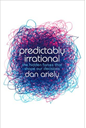 Dan Ariely’s Predictably Irrational was probably one of the first few books that I read on the subject of human irrationality and psychological bias.
Ariely is a Professor of Psychology and Behavioral Economics at Duke University. He has an unusual way of looking at things which is quite evident from the way he designs his experiments to gain insights on human behaviour. A lot of credit goes to him for transforming the academic studies about human biases into interesting and entertaining text.
The topic of psychological biases and human irrationality isn’t a new one but what Ariely has done is shift a lot of the thinking developed by such pioneers as Kahneman & Tversky who worked in behavioural economics, and moved it into the everyday sphere.
[show_to accesslevel=’almanack-all’]
Ariely in his book has included a wide range of scientific experiments, findings, and anecdotes that are in many cases quite amusing. Here are some of the ideas from the book which I found very insightful.
The Zero Price Effect
Would you buy something if it were discounted from Rs 500 to Rs 200? May be. What if it was discounted from Rs 500 to Rs 10? Possibly. How about if it were discounted to zero? Absolutely!
Getting something for free feels good. The ‘cost of free’ is zero which is a source of irrational excitement. Check out the pile of free key chains, free pencils and notepads lying at some corner of your house. Well that pile may be harmless but there are other situations where this irrational affinity for FREE stuff can cause us to make bad decisions.
For example, when you want to buy a good quality socks but end up buying another brand of socks (of probably an inferior or unknown quality) just because it has a ‘buy one get one free’ offer, you gave up a better deal and settled for something that was not what you wanted, just because you were lured by the FREE!
So what explains our unusual love for FREE! stuff? Ariely writes –
Most transactions have an upside and a downside, but when something is FREE! we forget the downside. FREE! gives us such an emotional charge that we perceive what is being offered as immensely more valuable than it really is. Why? …There’s no visible possibility of loss when we choose a FREE! item. But suppose we choose the item that’s not free…now there’s a risk of having made a poor decision – the possibility of a loss.
Even Warren Buffett admits to falling for the force of FREE. He once wrote in his letter to shareholders, “I’ll be happy to accept a lottery ticket as a gift – but I’ll never buy one. Who, after all, refuses free lottery tickets?”
I have regularly given in to this zero price effect in my day to day decisions, in spite of being aware of it at the time of making decisions. That’s why knowing about human biases can’t insulate you from their effects.
Amazon offers zero shipping charges if I make a minimum purchase of Rs 499. Every time I order a book which costs less than 499, I end up buying another book (which I don’t plan to read) just to avail the FREE shipping offer. I just can’t let go off the FREE offer.
So next time when you see an offer – buy two get the third one free – think again. Do you really need three or just one?
The Cost of Social Norm
We live simultaneously in two different worlds – one where social norms prevail, and the other where market norms make the rules. Let’s first define these two terms.
Social norm is where people make friendly requests to each other. It provides pleasure to both parties and people neither feel compelled to reciprocate nor do they expect a return of favour immediately.
In the world of market norms, exchanges are sharp edged and there is no presence of warm fuzzy feeling about the transactions. Wages, price, rents, interest, etc. are some of the examples. When you’re in the domain of market norms, you get what you pay for which implies comparable benefits and prompt payments.
When social norm and market norm are kept on separate paths, things go smoothly. When people work under market norm, their output is expected to be in proportion to the money they receive. When we’re asked to work for a noble cause, charity or request the context of the environment changes to social norm and people sometimes work more than what they would have if they were paid for it.
Gifts, in spite of being financially inefficient, are an important social lubricant and fall in the category of social norm. But by mentioning explicitly the cost of gift the market norm is created and social norm is lost. When a social norm collides with a market norm, the social norm goes away for a long time.
Ariely quotes a fascinating study done in Israel which explains the above idea – financial payment in a situation that is governed by social norms, the added payment could actually reduce their motivation to engage and help out.

A few years ago, they studied a day care center in Israel to determine whether imposing a fine on parents who arrived late to pick up their children was useful deterrent…Before the fine was introduced, the teachers and parents had a social contract, with social norms about being late. Thus, if parents were late – as they occasionally were – they felt guilty about it – and their guilt compelled them to be more prompt in picking up their kids in the future. But once the fine was imposed, the day care center had inadvertently replaced the social norms with market norms. Now that the parents were paying for their tardiness, they interpreted the situation in terms of market norms. In other words, since they were being fined, they could decide for themselves whether to be late or not, and they frequently chose to be late. Needless to say, this wasn’t what the day care center intended.
Similarly, a business has to think hard before having customer policies with mixed norms. When a company spends a lot of money on ads for establishing their business as customer friendly (creation of social norm), even a single incident violating the norm (e.g. charging a customer for an isolated case) can bring in the market norm in the equation.
When it comes to employee motivation, it has been proved again and again that social rewards (social norm environment) like comprehensive medical benefits, personal gifts, recognition etc. are much more effective than pay compensation. In fact, money is the most expensive way to motivate people.
The important lesson for corporates here is that social norms are cheaper and more effective. Warren Buffett is very generous in praising his employees and managers but frugal in remunerations. He understands the power of social norms very well.
Market rules are just some of the forces that operate on us. As social animals, we also have social forces to contend with. When social and economic forces mix, the outcome is sometimes different from what we would expect. The basic lesson is, when we offer people a financial payment in a situation that is governed by social norms, the added payment could actually reduce their motivation to engage and help out.
Price of Ownership
Our propensity to overvalue what we own is a basic human bias, known as Endowment Effect. It reflects a general tendency to fall in love with, and generally be overly optimistic about anything that has to do with ourselves.
One of the peculiarity of ownership is – the more work you put into something, the more ownership you begin to feel for it. So if a piece of furniture or an electrical gadget requires you to assemble it, your sense of ownership for that item increases quite a bit.
Another interesting human quirk related to endowment effect is the “virtual ownership”. In fact, it’s one of most effective weapons used by advertising industry. Often companies have “trial promotions” where they allow you to use their product or service for free for a limited period. However, once we start using the product, it becomes our own and the sense of ownership doesn’t let us return it. In that sense, “trial period” is a trap.
Similarly, the “30-day money back guarantee” is clever marketing gimmick. We fail to appreciate how our perspective will shift once we bring the item at our home, and how we will start viewing it – as ours – and consequently start viewing returning it as a loss. We might think we are taking it home only to try it out for a few days, but in fact we are becoming owners of it and are unaware of the emotions the temporary ownership can ignite in us.
“Ownership is not limited to material things”, says Ariely, “It can also apply to points of view. Once we take ownership of an idea – we love it perhaps more than we should.” In psychology this tendency to fall in love with our own ideas is also known as commitment and consistency bias.
Conclusion
So is there nothing we can do about human irrationality? Ariely writes –
Although irrationality is commonplace, it doesn’t necessarily mean that we are helpless. Once we understand when and where we may make erroneous decisions, we can try to be more vigilant, force ourselves to think differently about these decisions, or use technology to overcome our inherent shortcomings.
Unlike most books on psychology, Ariely’s book is surprisingly entertaining. He has a great talent for explaining boring subjects like economics and study of human behaviour in a fun and insightful way.
If one is getting started on the topic of psychological biases and human irrationality, it’s one of the best books to start with. I can’t imagine any other book which introduces you to behavioural economics in such a simple manner.
Let me wrap up here with my standard disclaimer
Reading this book review is by no means a replacement for the book. This is meant to rekindle the fire of curiosity inside you. I am sure the bookworm in you will find this book worth reading. The importance of reading books can never be overemphasized. The purpose of reading isn’t just for becoming more knowledgeable but to become a better human being.
Remember, there is no secret to reading more. It’s all about the game of setting the right priorities. You just have to change your perception so that reading becomes an extension of who you are and what you do.
Happy reading!
[/show_to] [hide_from accesslevel=’almanack-all’]- Spotlight: Big ideas from Value Investing and why applying them in your investment decision making will be a great deal
- InvestorInsights: Interviews with experienced value investors, learners, and deep thinkers
- StockTalk: Thorough analysis of business models of companies (without any recommendations)
- Behaviouronomics: Deep analysis of human behaviour and how it impacts investment decision making
- BookWorm: Reviews of the best books on Value Investing and related subjects
- Free Course – Financial Statement Analysis for Smart People (otherwise priced at Rs 5,900)
- Archives: Instant access to our huge archive from the past three years