We, as a society, love the idea that runaway success stories are a simple function of individual merit. This is especially true when people try to explain the cases of extreme successes like billionaires and the world-class performers. Work ethic, talent, and attitude are only part of the success puzzle. The other pieces like circumstantial factors are either frowned upon or ignored.
“I started investing at the age of 11,” says Warren Buffett, “I was wasting my life until then.” With that kind of early start, today 87 years old Buffett has accumulated a whopping 76 years of investing experience. Who in the world can match that? No wonder Buffett has held the spot of second richest man in the world since last twenty-five years.
So, does it mean that anyone who, with Buffett’s level of intelligence, spends three-quarters of a century analyzing businesses and studying annual report can become as successful as Warren Buffett?
We like to think that most wildly successful people have earned their success only through talent and hard work. It’s quite rare to find a biography of a successful person which credits his or her success to pure dumb luck. Dig deeper into their stories, and you’d discover that many unseen factors influenced the outcome. Interestingly, most of those elements lie beyond an individual’s control.
[show_to accesslevel=’almanack-all’]
However, it’s important to highlight a subtle distinction which many people miss. The argument here isn’t that a person’s success is not in his control. The point is that when it comes to these rare cases, i.e., people who experience notably high levels of success (being a wildly wealthy investor like Warren Buffett or a billionaire businessman like Bill Gates), it takes far more than merely attributing the cause to individual effort or innate abilities.
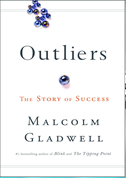
Work ethic, talent, and attitude are only part of the success puzzle. The other pieces, i.e., environmental factors are either scoffed at or ignored. This is especially true when people try to explain the cases of extreme successes like billionaires and the world-class performers. Unfortunately, our culture has taken the idea of self-made success too far. The “self-made man” is a myth. A very popular myth. Malcolm Gladwell, in his book Outliers, challenges this myth using stories of men and women who do things that are out of the ordinary. The geniuses, business tycoons, rock stars and software programmers. In his own words –
We’re going to uncover the secrets of a remarkable lawyer, look at what separates the very best pilots from pilots who have crashed planes, and try to figure out why Asians are so good at math. And in examining the lives of the remarkable among us – the skilled, the talented, and the driven – I will argue that there is something profoundly wrong the way make sense of success.
That sounds like a promise hard to deliver on, isn’t it? However, Gladwell is a gifted storyteller. Before Outliers, he wrote two best-selling books: The Tipping Point and Blink. The Tipping Point explores the reason why some ideas spread like wildfire, such as the rapid popularity of Hush Puppies in the 1990s. Blink explains what happens during the first two seconds we encounter something before we start to think.
So, what’s an outlier? The word comes from statistics. In statistics, any observation or data point that lies way outside the normal range, i.e., far away from the averages is called an outlier. So, a person who has achieved something statistically extraordinary, is an outlier.
Early Advantage
In the mid-1980s, Roger Barnsley, a Canadian psychologist, noticed an unusual pattern in birthdates of Canada’s professional hockey players. There were nearly five times as many players born in January as were born in November. The reason was simple. In Canada, the eligibility cut-off for age-class hockey is January 1. A boy who turns ten on January 2, writes Gladwell, “could be playing alongside someone who doesn’t turn ten until the end of the year – and at that age, in preadolescence, a twelve-month gap in age represents an enormous difference in physical maturity.” In other words, December babies compete with kids who are basically a year older than they are.
At 12, Buffett had read every book about investing in Omaha library, and by the time he was 15, he had turned every single page of finance books in the library of congress. Having the assiduity to read so much is remarkable. But what’s more remarkable is having access to resources like the library of congress. The privilege came because his father was a congressman. At the age of 20, Buffett had not only read Benjamin Graham’s investment classic The Intelligent Investor, he was already Graham’s favorite student in Columbia Business School. Buffett and the professional hockey player have one thing in common. Neither of them started as outliers. They just started a little bit earlier than their peers.
The sociologist Robert Merton famously called this phenomenon the ““Matthew Effect” after the New Testament verse in the Gospel of Matthew: “For unto everyone that hath shall be given, and he shall have abundance. But from him that hath not shall be taken away even that which he hath.” It is those who are successful, in other words, who are most likely to be given the kinds of special opportunities that lead to further success. It’s the rich who get the biggest tax breaks. It’s the best students who get the best teaching and most attention. And it’s the biggest nine- and ten-year-olds who get the most coaching and practice. Success is the result of what sociologists like to call “accumulative advantage.
This insight – starting early – ties back beautifully to the idea of compounding. An investor who starts investing even a few years earlier than his peers can eventually end up amassing significantly more wealth. In Outliers, two stories stick out particularly well. The story of a nerd who has dominated the Forbes list for past 30 years and the story of the most successful rock band of the 20th century. In the 1960s, when most colleges in the US hardly had any computers, the Lakeside private school in Seattle installed an advanced computing machine called an ASR-33 Teletype. It was a time-sharing terminal with a direct link to a mainframe computer. This caught the attention of a precocious child named Bill Gates. As an eighth-grader in 1968, Gates had an early start with computers. But that was just first among a series of advantages Gates had early in his life.
Opportunity number one was that Gates got sent to Lakeside. How many high schools in the world had access to a time-sharing terminal in 1968? Opportunity number two was that the mothers of Lakeside had enough money to pay for the school’s computer fees. Number three was that, when that money ran out, one of the parents happened to work at C-Cubed, which happened to need someone to check its code on the weekends, and which also happened not to care if weekends turned into weeknights. Number four was that Gates just happened to find out about ISI, and ISI just happened to need someone to work on its payroll software. Number five was that Gates happened to live within walking distance of the University of Washington. Number six was that the university happened to have free computer time between three and six in the morning. Number seven was that TRW happened to call Bud Pembroke. Number eight was that the best programmers Pembroke knew for that particular problem happened to be two high school kids. And number nine was that Lakeside was willing to let those kids spend their spring term miles away, writing code.
1970: Paul Allen (with glasses) and Bill Gates working at the computer terminal at Lakeside School. (Image Source: Bruce Burgess Photo Archive)
Bill Gates wasn’t alone to benefit from extraordinary favourable circumstances. If you trace back the history of many of the Gates’ contemporary tech czars, there’s an eerily familiar story of birthday patterns. Steve Jobs, Steve Ballmer, Paul Allen, Vinod Khosla, Bill Joy and Scott McNealy were all born between 1953 and 1956.
Many veterans of Silicon Valley claim that the year 1975 was the beginning of the history of the personal computer revolution. The perfect age to be in 1975, write Gladwell, “is old enough to be a part of the coming revolution but not so old that you missed it. Ideally you want to be twenty or twenty-one, which is to say, born in 1954 or 1955.”
This doesn’t necessarily suggest that every software tycoon in Silicon Valley was born in 1955. Many weren’t. However, the pattern certainly debunks our deeply held belief about success being exclusively a matter of individual merit.
These are stories, instead, about people who were given a special opportunity to work really hard and seized it, and who happened to come of age at a time when that extraordinary effort was rewarded by the rest of society. Their success was not just of their own making. It was a product of the world in which they grew up.
Ten Thousand Hours
Another useful insight discussed in this book is about the idea of 10,000 hours. According to numerous studies, to achieve world-class mastery at anything you need to clock a critical minimum amount of time – around 10,000 hours – practicing. Gladwell writes –
The idea that excellence at performing a complex task requires a critical minimum level of practice surfaces again and again in studies of expertise. In fact, researchers have settled on what they believe is the magic number for true expertise: ten thousand hours.
The story of Beatles has been masterfully woven in the book to bring home the point of ten thousand hours.
The Beatles—John Lennon, Paul McCartney, George Harrison, and Ringo Starr—came to the United States in February of 1964, starting the so-called British Invasion of the American music scene and putting out a string of hit records that transformed the face of popular music. The first interesting thing about the Beatles for our purposes is how long they had already been together by the time they reached the United States. In 1960, “while they were still just a struggling high school rock band, they were invited to play in Hamburg, Germany. The Beatles ended up traveling to Hamburg five times between 1960 and the end of 1962. All told, they performed for 270 nights in just over a year and a half. By the time they had their first burst of success in 1964, in fact, they had performed live an estimated twelve hundred times. Do you know how extraordinary that is? Most bands today don’t perform twelve hundred times in their entire careers. The Hamburg crucible is one of the things that set the Beatles apart.
If you count the numbers of hours Beatles spent practicing in Hamburg, you will arrive at roughly ten thousand hours. Apparently, that figure happens to be the common thread between Beatles’ story and Bill Gates’ life.
By the time Gates dropped out of Harvard after his sophomore year to try his hand at his own software company, he’d been programming practically nonstop for seven consecutive years. He was way past ten thousand hours. How many teenagers in the world had the kind of experience Gates had? “If there were fifty in the world, I’d be stunned,” Gates says. “There was C-Cubed and the payroll stuff we did, then TRW—all those things came together. I had a better exposure to software development at a young age than I think anyone did in that period of time, and all because of an incredibly lucky series of events.
Like Gates and Beatles, not everyone gets the opportunity to spend this much time practicing something. Early start, state-of-the-art resources, encouragement from family, friends, coaches, teachers and unexpected help from kind strangers are things which are available to very few.
Conclusion
One key takeaway from the book is the idea of talent threshold. Talent is essential in defining one’s fortune in the chosen field but it doesn’t guarantee success. Being tall is a prerequisite for a basketball player, but after reaching a “threshold” height, an extra couple of inches don’t make much difference.
Related skills and traits are necessary foundations for achievement in a field and they do ensure some degree of success, but they only take you so far.
Lucky breaks and favourable circumstances play the defining role to reach the absolute top. As they say, in business and investing, talents and skills can make you a millionaire. But to enter the billion-dollar club, you need an extra-large helping of luck.
Both Bill Gates and Warren Buffett have been lady Fortuna’s blue-eyed boys. But that doesn’t, in any way, diminish the role of their natural talent and incredible work ethics for their respective passions. Had they not been so lucky, they would still be doing very well in their chosen profession, but the world wouldn’t have known about them the way they are recognized today.
In the end, the notion of outliers rests upon wild-success which is a subjective term. What’s wild-success to you could be of least interest to someone else. In the eyes of a small investor who is hoping to be financially free one day, Warren Buffett is an outlier. A young entrepreneur who has quit the day job and running pillar to posts to find investors for his startup, Bill Gates is an outlier. But you don’t have to build Microsoft or be the chairman of Berkshire Hathaway to become an outlier. You already are.
Ask someone who lives on less than Rs 100 per day. Talk to someone who is about to die in a few months. They will tell you that you are an outlier.
If you are reading this on a screen, sitting on a comfortable chair, if your heart is still thumping inside your chest, you’re an outlier.
[/show_to]
[hide_from accesslevel=’almanack-all’]
Want to Read More? This content is exclusive for members of Value Investing Almanack. Login to read if you are a member. Else, click here to subscribe.
Benefits to VIA Members
Spotlight: Big ideas from Value Investing and why applying them in your investment decision making will be a great deal
InvestorInsights: Interviews with experienced value investors, learners, and deep thinkers
StockTalk: Thorough analysis of business models of companies (without any recommendations)
Behaviouronomics: Deep analysis of human behaviour and how it impacts investment decision making
BookWorm: Reviews of the best books on Value Investing and related subjects
Free Course – Financial Statement Analysis for Smart People (otherwise priced at Rs 5,900)
Archives: Instant access to our huge archive from the past three years