
The first iPhone was released on June 29, 2007. Steve Jobs, dawning his showman hat, unveiled Mac’s revolutionary device with much hype and media coverage. The first iPhone had a touch screen, wifi and Bluetooth connectivity, a music player, a camera, an on-screen keyboard, and a browser to surf the Internet. In the first week, 300000 iPhones were sold.
Fast forward 12 years. Apple recently came out with the iPhone 11 Pro Max which is the 16th version since the first iPhone.
[show_to accesslevel=’almanack-all’]
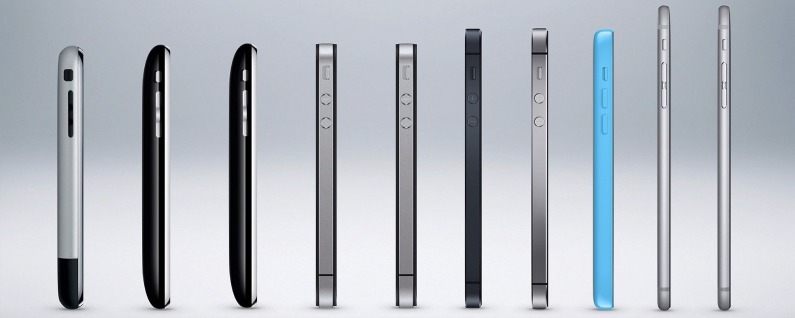
What has changed between iPhone and iPhone 11 Pro Max?
“A lot.” An iPhone fan might quip. Well, let’s see. Is there any difference between iPhone and iPhone 11 in the way a user makes a call? Is there a difference in how people listen to music on their phones? How about using the onscreen keyboard for typing? I think the answer to all those questions is an emphatic no.
Yes, the new iPhone has twice the screen size, it has four cameras, comes in five different colors, and the app store has millions of apps. For iPhone aficionados, those things matter a lot. That’s why there is no dearth of people who would upgrade as soon as the new iPhone model hits the retail shelves.
Now, there’s nothing wrong with upgrading with technology. However, I am using the iPhone example to illustrate something which Nassim Taleb calls the treadmill effects. In his book Antifragile, Taleb writes —
With so many technologically driven and modernistic items — skis, cars, computers, computer programs — it seems that we notice differences between version rather than commonalities. We even rapidly tire of what we have, continuously searching for versions 2.0 and similar iterations. And after that, another “improved” reincarnation. These impulses to buy new things that will eventually lose their novelty, particularly when compared to newer things, are called treadmill effects…People acquire a new item, feel more satisfied after an initial boost, then rapidly revert to their baseline of well-being. So, when you “upgrade,“ you feel a boost of satisfaction with changes in technology. But then you get used to it and start hunting for the new new thing.
This irrational love for the modern for its own sake is what Taleb has termed as Neomania.
Sometime back, I had written about Lindy Effect. It’s a powerful heuristic for making decisions in the face of Neomania. Lindy effect says that for many things, every additional day of existence may imply a longer life expectancy.
Lindy Effect applies to anything that is non-perishable like a technology. The longer a technology lives, the longer it can be expected to live. A simple tool like a spoon has been there, unchanged, for thousands of years. People have been using spoons and forks for eating since Roman times. We rarely see spoon as a technology. According to the oldest archeological evidence, the spoon was in use in Egypt 3000 years ago. The spoon is a revolutionary technology that we don’t hesitate to allow inside our mouths countless times during the day without thinking about how old this design is and how it hasn’t changed in the last three millennia.
In the futuristic movie The Matrix, Neo (the protagonist) is baffled by a child who is able to bend a spoon just by staring at it. The child tells him, “Don’t try and bend the spoon. That’s impossible. Instead, only try to realize the truth.”
“What truth?” asks Neo.
“There’s no spoon.” replies the spoon boy.
“There’s no spoon?” wonders Neo.
“Then you’ll see that it’s not the spoon that bends. It is only yourself.” explains the little kid who resembles a Buddhist monk.
Maybe the spoon will be used in the future not for sipping your soup but as a tool for realizing the truth. But until then, I am sure the spoon isn’t going to be disrupted for its functional utility.
Here are a few more examples like the spoon —
- A 5500-year-old mummified man discovered in the Austrian Alps glaciers was found with shoes that weren’t much different (in design) from what we wear these days. Though the mummy didn’t have air cushion inside his shoe sole but that’s because he didn’t have to play Tennis or Basketball — games which didn’t exist two hundred years back.
- A glass that we use to drink water and other liquids definitely qualifies as the “killer app” which has been in existence for perhaps longer than the spoon. Isn’t it amazing that there hasn’t been much disruption in how humans have been gulping their drinks?
- Our prehistoric forebears learned to use fire for cooking their meat. This technology — using fire for making food palatable — is hundreds of thousands of years old. Well, today the fire remains the primary mode of cooking. So much for the 21st-century technological advancement.
- While reading this, I am guessing you’re sitting on a device designed three thousand years ago. Yes, I am talking about your chair. Maybe you have a reclining backrest, a seat height adjustment, and wheels but that’s more like plugins to the main product, i.e., a flat board resting on four legs with support for the back and that functional aspect of the chair isn’t a modern invention.
Taleb again —
Consider the futuristic projections made throughout the past century and a half, as expressed in literary novels such as those by Jules Verne, H.G. Wells, or George Orwell, or in now forgotten narratives of the future produced by scientists or futurists. It is remarkable that the tools that seem to currently dominate the world, such as the Internet were completely missing from these forecasts. But it is not here that the major error lies. The problem is that almost everything that was imagined never took place…And we tend to be blind to that fact — there seems to be no correcting mechanism that can make us aware of the point as we go along forecasting a highly technocratic future.
Today, the unboxing videos on YouTube garner millions of views. It’s a testimonial to our obsession with the ephemeral feeling of getting something. The charm of new decays faster than the functional life of objects. We buy things not for their utility but for their newness.
Unfortunately, this Neomania of consumption has spillover effects in how we invest our money. Neomania hurts stock market investors in more ways that one can imagine.
“A new investing formula to sure shot profits in the stock market.” shouts a self-proclaimed investing guru promoting his new book.
“My startup has built a revolutionary product that will change the way people do XYZ.” claims the 18-year old new-age entrepreneur riding high on his latest round of VC funding.
Chances are that all these new investing strategies and business fads will fade away into obscurity and yet another set of so-called life-changing ideas will take their place. And like the never-ending cycle of iPhone upgrades, the investing Neomania keeps the investor busy for years with nothing to show for at the end.
A word of caution here. Neomania shouldn’t be confused with a blind disregard for change. Morgan Housel in his recent blog post warns —
It’s intuitive to look for investing patterns that have worked for decades or centuries. But there’s a balance between using enough history to ensure you’re not cherry-picking ideas while not using so much that you’re relying on outdated trends markets have adapted to…A good way to think about history is through the lens of Voltaire’s quote, “History never repeats itself; man always does.” There are timeless truths about how and why people do things you can learn from history. But understanding that things change and you should pay the most attention to your modern world is not an ignorance of history – it’s probably one of history’s greatest lessons.
Benjamin Graham’s investment principles made Warren Buffett billions. Still, Buffett was smart enough to know that Graham’s principles were timeless but his methods — buying net-nets, cigar butts, etc. — were outdated.
In the end, successful investing is all about figure out when to ignore “this time it’s different” and when to embrace “when the facts change, I change my mind.”
[/show_to]
[hide_from accesslevel=’almanack-all’]
- Spotlight: Big ideas from Value Investing and why applying them in your investment decision making will be a great deal
- InvestorInsights: Interviews with experienced value investors, learners, and deep thinkers
- StockTalk: Thorough analysis of business models of companies (without any recommendations)
- Behaviouronomics: Deep analysis of human behaviour and how it impacts investment decision making
- BookWorm: Reviews of the best books on Value Investing and related subjects
- Free Course – Financial Statement Analysis for Smart People (otherwise priced at Rs 5,900)
- Archives: Instant access to our huge archive from the past three years