
Before we get started on the discussion today, I would like to invite you to have an intellectual and emotional experience. Take a few seconds and just look at the picture below.
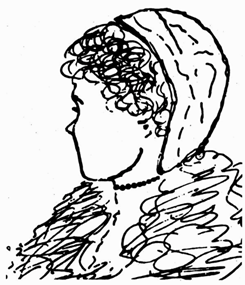
What do you see? You’d probably see a woman who is looking away from you. You’d also notice that she’s wearing a necklace. She also seems to have high cheekbones, long eyelashes and a petite nose. Alright, now I ask you to take your eyes off her and focus on the second picture below –
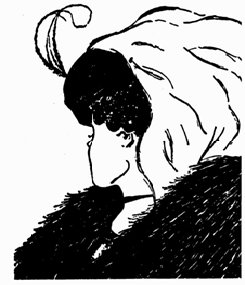
What do you see now? Another woman? How old would you say she is? What does she look like? What is she wearing? In what kind of roles do you see her?
You probably would describe this woman as beautiful as the first one. You might guess that she’s about 25 years old, very lovely, rather fashionable and with a demure presence. If you were a single man you might even like to ask her out.[show_to accesslevel=’almanack-all’]
But what if I were to tell you that you’re wrong? What if I said this second picture is of a woman in her 60’s or 70’s who looks sad, has a huge nose, and is certainly no model. She’s someone you probably would help across the street.
I am sure you’d strongly disagree with me. “How can you mistake a young attractive woman for an old lady? You should get your eyes checked.”, you might want to say.
But I insist that you look at the picture again. Can you see the old woman? If you can’t, keep trying. Can you see her big hook nose? Her shawl?
If you and I were talking face to face, we could discuss the picture. You could describe what you see to me, and I could talk to you about what I see. We could use a pencil to point the facial features until you clearly showed me what you see in the picture and I clearly showed you what I see. Since we don’t have the luxury of face to face discussion, please scroll down to Page 7 and study the picture there and then look again at the second picture above. Can you see the old woman now? It’s important that you see her before you continue.
The point I am trying to make here is this – when people find that someone doesn’t share their views or observations, they normally conclude that the other person is wrong i.e., he must be uninformed, irrational or simply biased. We assume that other reasonable people would see things the same way we do. And if they disagree with us, they obviously aren’t seeing clearly.
In social psychology, this tendency is known as Naive Realism. The term was coined in 1990s by social psychologist Lee Ross. By Naive Realism Ross means the seductive sense that we’re seeing the world as it truly is, without bias or error. This is such a powerful illusion that whenever we meet someone whose views conflict with our own, we instinctively believe we’ve met someone who is deluded, rather than realising that perhaps we’re the ones who could learn something.
Reminds me of this song from Madonna from her Album Frozen –
You only see what your eyes want to see,
How can life be what you want it to be
You’re frozen,
When your heart’s not open.
We believe our own judgments are less biased and more independent than those of others partly because we rely on introspection to tell us what we are thinking and feeling, but we have no way of knowing what others are really thinking.
Naive realism presupposes two things –
- People who are open-minded and fair, must come to a common agreement with a reasonable opinion.
- Any opinion I hold must be reasonable; if it weren’t, I wouldn’t hold it.
So a naive realist is someone who thinks – “If I can just get my opponents to sit down here and listen to me, so I can tell them how things really are, they will agree with me. And if they don’t, it must be because they are biased.”
When someone holds a contrary opinion to ours, we conveniently assume that he’s either lazy or unable to come to a rational conclusion. And if we find ourselves unable to convince him we believe that the other person has been brainwashed or is under a distorting influence such as bias or self-interest.
We don’t accept the possibility that the individual has been exposed to a different set of information. Just like we saw in the example of young/old lady example. People who saw the old lady’s image (image-3) first, saw an old lady in the second picture(image-2). And people who were first exposed to the first image (image-1), saw a young lady in the same image (image 2).
Even when we take a tolerant view of those who disagree with us, our empathy only goes so far. For example, we might allow that someone takes a different view because of their cultural upbringing — but we would tend to feel that they might learn the error of their ways, rather than that we will learn the error of ours.
What’s Real?
It is hard to combat naive realism because the illusion that we see the world objectively is such a powerful one. Reality is merely an illusion, quipped Albert Einstein, “albeit a very persistent one.”
Remember the famous conversation between Morpheus and Neo in the movie The Matrix. Let’s revisit it. It’s my favourite.
Neo: This isn’t real.
Morpheus: What is real? How do you define “real”? If you’re talking about what you can feel, what you can smell, what you can taste, and see then “real” is simply electrical signals interpreted by your brain.
Carol Tavris and Elliot Aronson, in their book Mistakes Were Made But Not By Me, write –
The brain is designed with blind spots, optical and psychological, and one of its cleverest tricks is to confer on us the comforting delusion that we, personally, do not have any. In a sense…people unintentionally blind themselves so that they fail to notice vital events and information that might make them question their behavior or their convictions. Along with the confirmation bias, the brain comes packaged with other self-serving habits that allow us to justify our own perceptions and beliefs as being accurate, realistic, and unbiased.
Listeners and Tappers
Remember the listeners and tappers problem? We discussed it in August 2015 issue of VIA. Listeners and tappers problem is based on an experiment conducted in Stanford university.
They designed a simple game in which people were assigned one of two roles: “tappers” or “listeners.” Tappers received a list of twenty-five well-known songs, such as “Happy Birthday to You”. Each tapper was asked to pick a song and tap out the rhythm to a listener (by knocking on a table). The listener’s job was to guess the song, based on the rhythm being tapped.
Over the course of the experiment, 120 songs were tapped out. What’s interesting is that listeners guessed only 2.5 percent of the songs. But here’s what made the experiment seminal in psychology. Before the listeners guessed the name of the song, the tappers were asked to predict the odds that the listeners would guess correctly. They predicted that the odds were 50 percent.
The tappers got their message across 1 time in 40, but they thought they were getting their message across 1 time in 2. Why?
When a tapper taps, she is hearing the song in her head. Go ahead and try it for yourself – tap out “Happy Birthday to You.” It’s impossible to avoid hearing the tune in your head. Meanwhile, the listeners can’t hear that tune – all they can hear is a bunch of disconnected taps, like a kind of bizarre Morse Code.
In the experiment, tappers are flabbergasted at how hard the listeners seem to be working to pick up the tune. Isn’t the song obvious? Have those listeners gone deaf? Poor tappers don’t realize that they are behaving like naive realists.
The truth is that the tappers aren’t alone. We all have biases that shape what we see. David McRaney, author of You Are Not So Smart, writes –
The last one hundred years of research suggest that you, and everyone else, still believe in a form of naive realism. You still believe that although your inputs may not be perfect, once you get to thinking and feeling, those thoughts and feelings are reliable and predictable. We now know that there is no way you can ever know an “objective” reality, and we know that you can never know how much of subjective reality is a fabrication, because you never experience anything other than the output of your mind. Everything that’s ever happened to you has happened inside your skull.

In Investing
When you buy stock, you are assuming that you know something which the seller doesn’t know. Buying then isn’t just an act of arrogance, but it also includes the possibility of naive realism.
You’re behaving as if the person who is selling you the stock is either misinformed or irrational. Don’t forget that the other person is probably making the same assumptions about you. And unlike the old/young lady problem, the possibility of both the buyer and seller of stock being simultaneously right is close to zero.
Before making any investing decision, ask yourself – “Am I being naive realist”. What could be the possible circumstances under which the seller could be right? That opens up your mind (or defreezes your heart as Madonna would like to say). And it can save you from many avoidable blunders.
Conclusion
It’s naive to think evidence presented from the sources you trust will sway your opponents because when they do the same, it never sways you. So before you jump to conclusions, factor in the probability of the other person being right and you being wrong. And it’s also possible that both of you are wrong.
Shane Parrish, author of Farnam Street Blog, writes –
We’re happy to learn about biases, we even apply this knowledge to better predict the behavior of others. However, when it comes to ourselves, we’re unmoved. You probably think you’re an above average driver. Now I can shake you and tell you that most people have an inflated view of themselves. I can tell you that you’re biased. I can tell you to be realistic. And you’re still going to look at me and say “Other people may be biased but I really am an above average driver.
“Have you ever noticed when you’re driving,” the comedian George Carlin commented, “that anybody driving slower than you is an idiot, and anyone going faster than you is a maniac?” I don’t know about you but I don’t agree with Carlin except when I am behind the steering wheel.
[/show_to] [hide_from accesslevel=’almanack-all’]- Spotlight: Big ideas from Value Investing and why applying them in your investment decision making will be a great deal
- InvestorInsights: Interviews with experienced value investors, learners, and deep thinkers
- StockTalk: Thorough analysis of business models of companies (without any recommendations)
- Behaviouronomics: Deep analysis of human behaviour and how it impacts investment decision making
- BookWorm: Reviews of the best books on Value Investing and related subjects
- Free Course – Financial Statement Analysis for Smart People (otherwise priced at Rs 5,900)
- Archives: Instant access to our huge archive from the past three years