
We make hundreds of decision every day, most of which are trivial but end up taxing our mental resources, the so called willpower. And it’s dangerous to make critical decisions when the limited stock of willpower is running low.
Mark Zuckerberg, founder of Facebook, recently became father to a baby girl. So after two months of paternity leave, when he returned to work he asked his followers, showing off his wardrobe, for a suggestion about what he should be wearing to office. This is how his wardrobe looks.
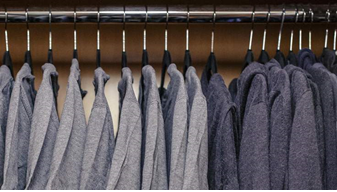
Pretty drab collection, isn’t it? Zuckerberg has been wearing the same outfit, a grey t-shirt, for many years. For that matter even Steve Jobs mostly wore a black turtleneck. So why do these billionaires, who could afford to buy almost anything in this planet, choose to stick to a simple attire?
The answer is – It’s their hack to simplify life.
According to Zuckerberg, making clothing decisions each day was a “frivolous” waste of time. He says “I really want to clear my life to make it so that I have to make as few decisions as possible about anything except how best to serve this community.”
It’s estimated that in an average day, you will make somewhere around 35,000 decisions. Many of them are unconscious like walking, blinking and don’t require any mental effort. But the sheer volume of even those decisions that require at least some mental effort like what to wear, where to eat, how to get to work, who to call when you get there, is staggering.
[show_to accesslevel=’almanack-all’]
By the time you arrive at work, you’ve already made more decisions than most of our ancestors would make in a day. It’s pretty obvious that we make more decisions now than at any point in history.
Every time you have to make a conscious call to make a decision it consumes some mental energy and a bit of willpower. Problem with willpower is that it’s like a battery. After a while it runs out. It’s a like a prepaid card which has a limited validity and limited usage.
The limited willpower theory explains why most diet and exercise plans don’t work. Scott Adams, creator of the famous cartoon strip Dilbert, writes in his book – –
Science has demonstrated that humans have a limited supply of willpower. If you use up your supply resisting one temptation, it limits your ability to resist others.
That explains how someone can resist junk all day but gorge on a bag of chips right before bed. Resisting a temptation drains the willpower.
Making decisions, as we have seen, is another source of willpower depletion. And not just the willpower but making choices reduces physical stamina, reduces persistence, and even encourages procrastination.
In other words, after a day of exhausting decision making, your brain slowly loses the stamina for peak critical thinking. You could say that the decision muscle wears out. This is called Decision Fatigue. Unlike ordinary physical fatigue you’re not consciously aware of being tired, but you’re low on mental energy. There’s no telltale symptom of when that willpower is low.
The more the options (choices) available for you to decide, higher the rate of consumption of willpower. Just as an animal freezes when it sees a predator, humans react to the bombardment of too much information with paralysis, a concept Barry Schwartz writes about in great length in his book, The Paradox of Choice.
Decision fatigue helps explain why ordinarily sensible people get angry at colleagues and families, splurge on clothes, buy junk food at the supermarket and can’t resist the dealer’s offer to rustproof their new car. Simply put, decision fatigue leads to irrational behaviour and impulses to eat, drink, spend and say stupid things feel more powerful.
Daniel Kahneman, a Nobel laureate and author of Thinking Fast and Slow, , writes –
Several psychological studies have shown that people who are simultaneously challenged by a demanding cognitive task and by a temptation are more likely to yield to the temptation. Imagine that you are asked to retain a list of seven digits for a minute or two. You are told that remembering the digits is your top priority. While your attention is focused on the digits, you are offered a choice between two desserts: a sinful chocolate cake and a virtuous fruit salad. The evidence suggests that you would be more likely to select the tempting chocolate cake when your mind is loaded with digits.
Decision fatigue can have very serious implications especially in areas like judicial process. Here’s an example from the book Art of Thinking Clearly –
Four prisoners in an Israeli jail petitioned the court for early release. Case 1 (scheduled for 8.50 a.m.): An Arab sentenced for 30 months for fraud. Case 2 (scheduled for 1.27 p.m.): A Jew sentenced to 16 months for assault. Case 3 (scheduled for 3.10 p.m.): A Jew sentenced to 16 months for assault. Case 4 (scheduled for 4.35 p.m.): An Arab sentenced for 30 months for fraud. How did the judge decide?
More significant than the detainee’s allegiance or the severity of their crimes was the judge’s decision fatigue. The judges granted request 1 and 2. However, they struck out applications 3 and 4 because they could not summon enough energy to risk the consequences of an early release…A study of hundreds of verdicts shows that within a session, the percentage of courageous judicial decisions gradually drops from 65% to almost zero.
Which means when the judges feel mentally drained, they don’t want to take chances and stick to status quo. Taking a cue from this example, Dobelli suggests that if you ever have an option of presenting a promising idea to your boss, take the morning slot.
There is no direct way to deal with decision fatigue. You can’t fight it; you can’t undo it. The only way to replenish the willpower quota is to take a good night’s sleep. Although refuelling (food) can also reverse the decision fatigue to some extent but stuffing yourself with calories, just to keep willpower up, isn’t really a bright idea.
So the simplest solution is to reduce the number of decisions you make.
One recommended way to narrow your options is to automate as many decisions as possible. Habit formation becomes an increasingly useful tool, because it allows your brain to operate on a set routine that requires very low level decision making. Even automating little things like what you eat for breakfast, what you wear every day, and when to go to bed, all help you reduce the amount of decision fatigue.
How do you automate the problem of what to wear? Zuckerberg’s wardrobe is the simplest answer.
Now even if you automate and avoid low level decision making you may still be left with a lot of unexpected and unplanned activities presenting themselves during the day which require you to flex your decision muscle.
If you continue to make decisions under the spell of decision fatigue, the quality of your decisions will go down rapidly. Persistent cognitive fatigue results in burnout at work, lower motivation, increased distractibility, and poor information processing.
So to ensure that your limited stock of willpower is utilized for important decisions is to make those critical decisions earlier in the day, which means addressing the critical tasks before getting on to trivial stuff. It’s a great way to beat decision fatigue by saving small decisions for after work (when decision fatigue is greatest) and to tackle complex decisions in the morning, when your mind is fresh. You don’t want your important decisions to be lined up for the later part of the day, after you have squandered the limited quota of willpower on relatively unimportant decisions.
The best decision makers are the ones who know when not to trust themselves. That’s why the truly wise don’t restructure the company at 4 p.m.
Decision fatigue is found in all sorts of different professions and activities. One Harvard Business Review article claims –
Evidence for the same type of cognitive fatigue has been found in other contexts, including consumers choosing among various products and physicians prescribing antibiotics. Primary care doctors often prescribe unnecessary antibiotics for acute respiratory infections (ARI), researchers have found. As the physicians appeared to “wear down” during their morning and afternoon clinic sessions, the rates at which they prescribed antibiotics increased. About 5% more patients receive antibiotics at the end of a clinic session as compared to the beginning, this research shows. Thus, while clinicians make many patient care decisions each day, the cumulative demand of these decisions leads to more inappropriate choices later in the day.
If you are still not convinced, here’s what Barack Obama, supposedly the most powerful person on earth and perhaps the busiest too, has to say –
You’ll see I wear only grey or blue suits. I’m trying to pare down decisions. I don’t want to make decisions about what I’m eating or wearing, because I have too many other decisions to make.
Social psychologist Roy F. Baumeister has done extensive study on the subject of decision fatigue. “Good decision making is not a trait of the person, in the sense that it’s always there,” Baumeister says. “It’s a state that fluctuates.”
His studies show that people with the best self-control are the ones who structure their lives so as to conserve willpower. They don’t schedule endless back-to-back meetings. They avoid temptations like all-you-can-eat buffets, and they establish habits that eliminate the mental effort of making choices. Instead of deciding every morning whether or not to force themselves to exercise, they set up regular appointments to work out with a friend. Instead of counting on willpower to remain robust all day, they conserve it so that it’s available for emergencies and important decisions.
In Investing
When it comes to making decision in investing, noted value investor Guy Spier writes –
I actually think it’s quite possible that my returns would not be much worse and might even be better if I was only allowed to trade on one day a year, so every January 1st or the first week in January, make all my trades and then not do anything for another year and just let those decisions build up.
Charlie Munger says –
The way to win is to work, work, work, work and hope to have a few insights.
Now, the question is – how many insights do you need in your investing lifetime?
Not many, as Munger says…
…you don’t need many in a lifetime. If you look at Berkshire Hathaway and all of its accumulated billions, the top ten insights account for most of it. And that’s with a very brilliant man—Warren’s a lot more able than I am and very disciplined—devoting his lifetime to it. I don’t mean to say that he’s only had ten insights. I’m just saying, that most of the money came from ten insights.
So you can get very remarkable investment results if you think more like a winning pari-mutuel player. Just think of it as a heavy odds against game full of craziness with an occasional mispriced something or other. And you’re probably not going to be smart enough to find thousands in a lifetime. And when you get a few, you really load up. It’s just that simple.
Warren Buffett is supposed to have said this at a business school…
I could improve your ultimate financial welfare by giving you a ticket with only twenty slots in it so that you had twenty punches – representing all the investments that you got to make in a lifetime.
And once you’d punched through the card, you couldn’t make any more investments at all. Under those rules, you’d really think carefully about what you did, and you’d be forced to load up on what you’d really thought about. So you’d do so much better.
The problem with most of us investors is that, too often, we scatter money around while saying to ourselves, “Okay, let me throw a little money in this stock and little in that stock and then see what happens. At least, one of the stocks will work!”
Now, that’s a sure shot road to a hell lot of risk – first you don’t know where you are scattering your money, and then you think you are investing while the reality is that you are speculating in the hope of hitting the “right” stock.
Buffett wrote this in his 1993 letter to shareholders…
Charlie and I decided long ago that in an investment lifetime it’s just too hard to make hundreds of smart decisions. That judgment became ever more compelling as Berkshire’s capital mushroomed and the universe of investments that could significantly affect our results shrank dramatically.
Therefore, we adopted a strategy that required our being smart – and not too smart at that – only a very few times. Indeed, we’ll now settle for one good idea a year. (Charlie says it’s my turn.)
Munger adds…
To me, it’s obvious that the winner has to bet very selectively. It’s been obvious to me since very early in life. I don’t know why it’s not obvious to very many other people.
Now, making fewer decisions doesn’t mean reading fewer books or analysing fewer businesses. Please don’t confuse between decision and activity. In fact, making fewer decisions gives you more space for increasing your activities.
Conclusion
Too many choices can be overwhelming to your brain, so it’s best to make some cuts to allow for more focused thinking.
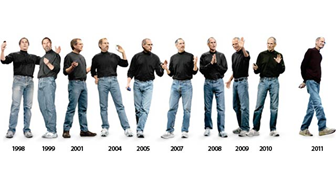
Whether it’s Steve Jobs’ famous black turtleneck or Mark Zuckerberg’s grey t-shirt and hoodie, they are all simple results of daily routines intended to cut down on decision fatigue.
But if it seems too weird to stick to a monochromatic attire, you might consider laying out your outfit at night so you don’t even have to think about it when you wake up.
The learned man aims for more. But the wise man decreases and then decreases again.
Decide less, decide better.
[/show_to] [hide_from accesslevel=’almanack-all’]- Spotlight: Big ideas from Value Investing and why applying them in your investment decision making will be a great deal
- InvestorInsights: Interviews with experienced value investors, learners, and deep thinkers
- StockTalk: Thorough analysis of business models of companies (without any recommendations)
- Behaviouronomics: Deep analysis of human behaviour and how it impacts investment decision making
- BookWorm: Reviews of the best books on Value Investing and related subjects
- Free Course – Financial Statement Analysis for Smart People (otherwise priced at Rs 5,900)
- Archives: Instant access to our huge archive from the past three years