Have you ever sat on a park bench and observed how an orphan leaf dances with the wind, arm in arm? If you haven’t, do it. It’s an instructive exercise.
The last time I tried it, I couldn’t continue for more than five minutes. My phone interrupted with a buzz. And before I realised, I had wasted twenty minutes looking at my WhatsApp messages, and other social media feeds. Of course, the leaf had eloped with the wind by that time.
Isn’t it a common sight – people sitting on park benches with their eyes glued to their smart devices? Forget park benches; it has become difficult for most people to resist the urge to look at their mobile phones while waiting at the traffic light.
Here’s an interesting trivia. Since 2007, the sale of Wrigley’s chewing gum has been declining. And the reason behind it, they later figured, was an unusual candidate – smartphone. Flabbergasting, isn’t it?
Earlier, a significant portion of chewing gum sale came from the customers waiting in the long queues at the billing counters. Wrigley’s cleverly placed their products near the checkout counter. Apparently, chewing a piece of gum relieves the mental torture of waiting for your turn.
<!–more–>[show_to accesslevel=’almanack-all’]
With a smartphone in hand, they don’t need gum anymore.
The product has changed – from gum to a mobile phone – but the problem remains. What problem? Boredom. Human mind finds it extremely difficult to deal with a state when it has nothing to do.
“Boredom is a waste a time, and it doesn’t feel nice either, so what’s wrong with avoiding the boredom?” you might want to argue.
Let’s examine.
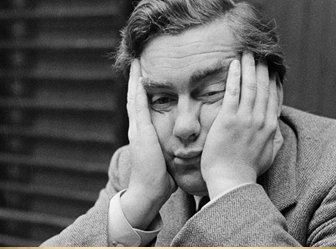
In my experience, boredom in itself isn’t a problem. It’s the restlessness that we experience while we are bored. The uneasiness emanates from our resistance to the present moment where the mind wants to get rid of the current state. And it believes that it can do that by getting itself involved in external stimuli. It wants something to do. It doesn’t have any interest in what’s happening currently. It wants some motion, some disturbance, some entropy, some movement. Instead of observing what’s transpiring, it wants to be the doer and make something happen. Which means it believes that by doing something it will reach a state which will feel better than now.
Part of the problem is that modern business coaches and time management experts have declared that it’s a sin to sit and do nothing. It’s a loss of productivity, they proclaim. The world today is obsessed with the idea of squeezing out efficiency from every minute. Any moment spent doing nothing is counted as wastage.
Chewing gum as a solution to deal with boredom wasn’t destructive. But using smartphone distraction as a medicine has debilitating side effects.
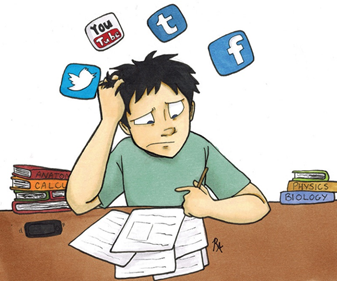
Distraction kills the boredom, but at the same time, it hampers our brain’s ability to focus on one thing for a longer time. The bite-sized chunk of information streaming on our handheld devices trains the mind to switch rapidly between topics.
One moment you’re forwarding a funny pic from one WhatsApp group to other, the very next moment you’re scrolling through your Twitter and Facebook feed. And in between, if you’re sitting in front of the TV, your other thumb would be hammering the remote to surf through the channels. And all this while you are plugged with noise-cancelling headphones, playing the latest chartbusters.
The trouble with these days is that it’s really hard to get bored, says Neil Gaiman, a famous author, “I have 2.4 million people on Twitter who will entertain me at any moment…it’s really hard to get bored.”
This constant attention switching online has a lasting negative effect on the brains, writes Clifford Nass, the late Stanford communications professor who was well known for his study of behaviour in the digital age. In one interview, Nass said –
So we have scales that allow us to divide up people into people who multitask all the time and people who rarely do, and the differences are remarkable. People who multitask all the time can’t filter out irrelevancy. They can’t manage a working memory. They’re chronically distracted. They initiate much larger parts of their brain that are irrelevant to the task at hand … they’re pretty much mental wrecks.
The sad part is we don’t realise that distraction has become so chronic that it is silently rewiring our brain and draining away the ability to concentrate. Once our grey cells are accustomed to on-demand distraction, wrote Nass, it’s hard to shake the addiction even when you want to concentrate. Chronic distraction isn’t a choice; it’s a debilitating habit and very hard to overcome.
Cal Newport, in his book, Deep Work concludes –
If every moment of potential boredom in your life— say, having to wait five minutes in line or sit alone in a restaurant until a friend arrives— is relieved with a quick glance at your smartphone, then your brain has likely been rewired to a point where, like the “mental wrecks” in Nass’s research, it’s not ready for deep work— even if you regularly schedule time to practice this concentration.
If you’re reading this, my guess is that you’re a knowledge worker. A knowledge worker is someone who needs to spend a lot of time reading to gather knowledge and learn new skills. Whether you’re a doctor, software engineer, student or an investor. Unless you live under a rock, you are a knowledge worker. And for the knowledge workers, the ability to concentrate for extended periods of time is the most fundamental requirement.
Focusing the attention intensely on one thing is a skill that must be learned and practiced. The way physical muscles gain strength by subjecting them to controlled strain, the mental muscle for concentration needs to be deliberately put under frequent stress to make it stronger.
There are a lot of useful techniques mentioned in Newport’s book for building this skill. I highly recommend it for all those who are committed to becoming lifelong learners.
However, the first step towards concentration is to de-addict from a psychedelic called distraction. Efforts to deepen your focus will be struggle if you don’t simultaneously wean your mind from a dependence on distraction, argues Newport, “Much in the same way that athletes must take care of their bodies outside of their training sessions, you’ll struggle to achieve the deepest levels of concentration if you spend the rest of your time fleeing the slightest hint of boredom.”
The first step to learning intense concentration is to become comfortable with boredom. I am sure you must have heard this quote before but let me make you read it one more time. It’s often attributed to famous scientist Blaise Pascal. He said, “All of men’s misery comes from his inability to sit in a room quietly and do nothing.”
In fact, one of the tricks used by many accomplished creative artists is to allow themselves to get bored. Gaiman, in one of his interviews said –
I think it’s about where ideas come from, they come from day dreaming, from drifting, that moment when you’re just sitting there…I’m much better at putting my phone away, going for boring walks, actually trying to find the space to get bored in. That’s what I’ve started saying to people who say ‘I want to be a writer,” I say ‘great, get bored.’
It’s not an accident that this theme, permitting yourself to get bored, is a pattern among many influential thinkers and authors. Carl Newport writes –
There’s really no substitute for hours and hours of just thinking. The more time I spend just walking and cogitating and being bored in a given season, the more I produce.
My favourite investment writer, Morgan Housel, claims that almost all his ideas take shape while taking long boring walks. There’s scientific research which backs this hypothesis on boredom. When our mind is in a relaxed state with no compulsion to indulge in any deliberate activity, it slips into a state that scientists call Diffused Mode of Thinking. Surprisingly, this state of mind is fertile ground for fresh insights and creative ideas.
If you want to know more about the diffused mode of thinking, you should read Barbara Oakley’s book –A Mind for Numbers. I also recommend her wildly popular online course called Learning How to Learn.
Berkshire Hathaway is valued at $280 billion today. Warren Buffett and Charlie Munger hold the top two management positions in the company, i.e., chairman and vice-chairman respectively.
But the duo has an unconventional method of operations. They have organised their life so that they get a lot of uninterrupted time to focus on what they do best, i.e., reading, learning, and thinking.
It’s said that Buffett (aged 87) and Munger (aged 93) still spend 6 to 8 hours every day reading. They don’t have cell phones or any other source of distractions. In fact, Buffett often likes to flash his blank appointment book. That’s his way of saying that he has complete control of how he spends his time every day.
As an investor, the most important activity that will define the long-term success is how much you read/learn and how effectively you understand and assimilate it. Which directly correlates to how much time you spend in boredom (away from chronic distraction) and in deep concentration.
So, don’t fear boredom. Invite it. Embrace it. Make it a stepping stone for doing focused work, your best work.
[/show_to] [hide_from accesslevel=’almanack-all’]- Spotlight: Big ideas from Value Investing and why applying them in your investment decision making will be a great deal
- InvestorInsights: Interviews with experienced value investors, learners, and deep thinkers
- StockTalk: Thorough analysis of business models of companies (without any recommendations)
- Behaviouronomics: Deep analysis of human behaviour and how it impacts investment decision making
- BookWorm: Reviews of the best books on Value Investing and related subjects
- Free Course – Financial Statement Analysis for Smart People (otherwise priced at Rs 5,900)
- Archives: Instant access to our huge archive from the past three years