 What does it take to be the best? The best manager, the best website designer, the best boxer, the best marketer, or the best investor?
The off-the-cuff answer is 10,000 hours, popularized by the Malcolm Gladwell book Outliers As per Gladwell, 10,000 hours is what you need to become a renowned concert violinist, a brilliant mathematician, a chess grandmaster, a Pulitzer-winning novelist.
In other words, that’s 20 hours a week (or 3 hours a day) for 10 years. Well, you may look at this in one of two ways. You might get depressed looking at the 10,000 hours number and re-consider trying to be great in what you aspire to be. Or you may decide to sit down and start working away those hours.
But there are some serious problems with both of those approaches.
The problem with the first approach i.e., giving up, is that it assumes there’s nothing to be gained between hour 1 and hour 10,000.
“I will be nothing until I’ve mastered greatness,” you might say to yourself, “And the road is too hard and long, so what’s the point?”
The problem with the second approach i.e., settling in to grind the hours out, is that it matters ‘a lot’ what kind of practice you put in for 10,000 hours.
<!–more–>[show_to accesslevel=’almanack-all’]
10,000 hours of studying how to become a great stock picker is easy, but it won’t get you to achieve Buffett-like returns. And even 10 hours of the right kind of practice will bring you something meaningful and interesting, and it builds the foundation for something you can start using today, not 10 years from now.
10 Hours to Greatness?
In his book Talent is Overrated, Fortune Magazine editor Geoff Colvin highlights recent studies that show that greatness can be developed by any man, in any field, through the process of what he calls “deliberate practice”.
But how does one practice deliberately?
Colvin proposes five elements that allow a man to practice deliberately and thus achieve greatness over the long term.
1. Deliberate Practice is designed to improve performance
Most of us practice by mindlessly repeating an activity over and over without any clear goal of what we want to accomplish.
For example, let’s say I want to improve my cricket skills. If I’m like most men (and budding cricketers out there), I’ll just go to the nets and try smacking each delivery to the boundary without thinking much about specific ways I can improve my defence and shot-taking. 300 balls later, I wouldn’t have improved at all. In fact, my shots may have gotten worse.
Deliberate practice, on the other hand, is what Sachin Tendulkar did every time he practiced in the nets. As is widely reported, Tendulkar focused not on hitting every delivery out of the park, but on strengthening his defence. He had a clear objective and goal in mind when he got down to practice, and that is what made him one of the greatest cricketers of all time.
Video: Geoff Colvin on Deliberate Practice
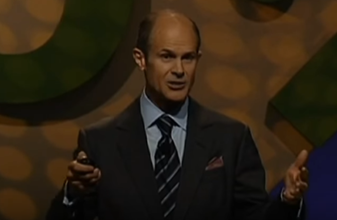
Also Watch: Geoff Colvin – Talent is Overrated
2. Deliberate Practice can be repeated
If you’re a writer, you write a lot. If you are a musician, you know the importance of repeating your notes. If you’re a website designer, you know why it is important to work on great designs again and again.
The idea of ‘deliberate practice’ is to decide about the realm you want to master – like becoming a master investor – and then focus your time there.
You know that there are no short cuts to success. If you want to be the best investor you can be, you’ll have to commit yourself to years of deliberate practice.
3. Deliberate Practice constantly refers to results-based feedback
In the world of investing, this means you aren’t making or losing money in a dummy stock market game. Instead, you’re out there investing with your own hard-earned money.
Constant feedback is crucial for your improvement as an investor. You must see the results of your efforts (the return on your investment) to evaluate if the way you’re doing things is working or if you need to change things up to improve.
4. Deliberate Practice takes significant mental effort
Now this – the significant mental effort required – is the key factor that separates deliberate practice from mindless practice. When you’re practicing deliberately, you’re focusing and concentrating so much on your performance that you’re mentally exhausted after your practice session. And that’s why it is advised that such practice need to be done over small sessions of 60-90 minutes few times a day.
Muhammad Ali said, “I don’t count my sit-ups; I only start counting when it starts hurting because they’re the only ones that count.” You may replace Ali’s physical efforts with the mental efforts of someone practicing a mind sport, and this is what deliberate practice is all about.
5. Deliberate practice isn’t much fun
Colvin writes in his book…
Most people don’t enjoy doing activities that they’re not good at. It’s no fun to fail repeatedly and receive criticism on how you can improve. We’d rather do stuff at which we excel because succeeding is enjoyable, and it strokes our egos. Yet deliberate practice is specifically designed to focus on things you are weak at and requires you to practice those skills repeatedly until you become a master at them.
And focusing on your weaknesses, especially when you are not expected to get positive feedback for an extended time isn’t fun you see.
How Much Deliberate Practice You Need to Master Investing?
The truth is, you don’t need to put in 10,000 hours to be able to become a master investor capable of earning great returns on your investments.
Alternatively, just because you spend a lot of time deliberately practicing how to pick stocks better, you won’t become a master investor.
Like if you’re 5-foot, no amount of practice will allow you to slam dunk like Michael Jordan.
Or if you’re as impatient as a lover, no amount of coaching or drilling on long-term investing will make you a long-term investor.
What the theory of ‘deliberate practice’ suggests is that you’re not as limited by your natural talent as you often think you are. You can make yourself what you will.
Strangely, that idea is not popular. People love having the notion that they would coast to fame and riches if they found their talent. But that view is tragically limiting, because when they hit life’s inevitable bumps in the road, they conclude that they just aren’t gifted. And then, they give up.
As Colvin writes in his book…
Deliberate practice is also not what most of us do when we think we’re practicing golf or the oboe or any of our other interests. Deliberate practice is hard. It hurts. But it works. More of it equals better performance. Tons of it equals great performance.
Remember what you said the last time your portfolio was in the dumps? If you’re like most investors, you must have told yourself, “I’m not made for the stock markets! This isn’t the right place for me.
Of course, trying to become a great stock picker is just too demanding. But the liberating news is that greatness isn’t reserved for a destined few.
It is available to you and to everyone. You just need a vision and deliberate practice to achieve the same.
[/show_to]
[hide_from accesslevel=’almanack-all’]
- Spotlight: Big ideas from Value Investing and why applying them in your investment decision making will be a great deal
- InvestorInsights: Interviews with experienced value investors, learners, and deep thinkers
- StockTalk: Thorough analysis of business models of companies (without any recommendations)
- Behaviouronomics: Deep analysis of human behaviour and how it impacts investment decision making
- BookWorm: Reviews of the best books on Value Investing and related subjects
- Free Course – Financial Statement Analysis for Smart People (otherwise priced at Rs 5,900)
- Archives: Instant access to our huge archive from the past three years