
Sugar should be treated like an illicit drug, a kind of legal form of heroin, a dark force to be avoided, and a substance whose use leads to physical ruin.
“My God! It’s everywhere!” I almost blurted out while scanning the food section in a supermarket in an attempt to find at least one product which didn’t have sugar in it.
If you thought that sugar is mostly in candies and desserts, you are too naive. Tomato sauce, yogurt, dry fruits, corn flakes, and bread – sugar is added in all of these. I realized that it’s difficult to find any processed food item which doesn’t contain sugar.
I suspect that even the shampoos and the soaps have sugar in it. You know, just in case it goes in your mouth while bathing, they don’t want to miss that one chance to feed you sugar.
And do you know the biggest disguise used by processed food industry to hide sugar is the term – low fat. Products labelled “low-fat” could still contain, and usually do contain, a lot of sugar. And remember, it’s not just fat that makes your fat. Sugar is the biggest culprit in making obesity an epidemic.
Am I complaining too much? Let me change the mood for a bit. Time for some fun trivia.
Did you know that until few hundred year ago, sugar used to be a very expensive item? In fact, it was considered a fine spice and was only available to rich. But from about the year 1500, technological improvements turned sugar into a much cheaper bulk commodity.
Ironically, sugar was imported by Greeks and Romans for its medicinal properties. When it was scarce and expensive, it was a fine spice. Now when it is abundant and cheap, it has turned into a fine poison.
Sugar is slower to impact our health (as we don’t die from an overdose right away), and it’s that slow destructive process that is the most dangerous. Unfortunately, most people don’t know the damage until it has already been done (diabetes for example).
[show_to accesslevel=’almanack-all’]
It won’t be an exaggeration if I say that sugar is not only toxic but highly addicting. It should be treated like an illicit drug, a kind of legal form of heroin, a dark force to be avoided, and a substance whose use leads to physical ruin.
The detrimental effects of sugar on human body isn’t something new. It’s scientifically proven and widely acknowledged fact that excessive sugar consumption is the reason behind most of the modern degenerative diseases including obesity, hypertension, diabetes, cancer, Alzheimer’s and stroke.
Brain, Body and Sugar
Have you ever wondered what happens when the sugar hits the tongue?
It sends a signal to a specific part of our brain which releases a feel good hormone. It’s how nature has built us. It’s nature’s way of saying “This has lots of energy. Eat it.” So the brain craves for more of such rewarding hormones.
The more sugar is consumed the more acquainted the reward system of our body becomes with sugar. Slowly it needs more and more sugar to generate the same amount of feel good hormone.
Our body needs to generate insulin to process the sugar and with more exposure to sugar, human body increasingly becomes resistant to insulin. At certain point, the body develops so much resistance to insulin that it stops the secretion of insulin altogether. That’s diabetes.
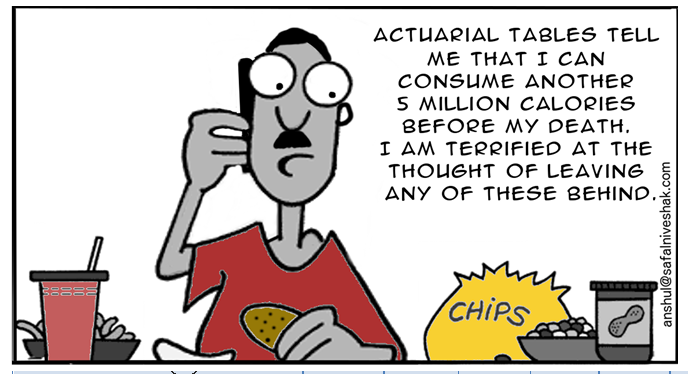
The implications are fairly obvious, from a diet perspective. The only bitter thing about this sweet poison is the truth that we are eating too much of it and it needs to stop.
Your sweet tooth needs a root canal.
To certain extent, nature has given us a built-in intelligent mechanism to check the intake of excessive sugar. Did you know that if you took 34 grams of refined sugar (a can of Coke contains that much) directly, your body will vomit it out?
So why does a Coke tastes so good instead of inducing a vomit. That’s because people who invented coke, figured that adding phosphoric acid kills sugar’s sweetness. Interesting isn’t it?
If sugar is harmful, why is it so difficult to cut down its intake? Why is it so hard to resist sugar?
I think two reasons – it’s available everywhere and it’s addictive.
As an armchair philosopher and self-declared health guru, I can go on for hours together about the devilish nature of sugar. Instead let’s get down to some ideas which can give you a better return for your time.
Here are some practical tips to cut down the sugar intake.
Read Labels
The first step to break any habit or solve any problem is to bring the awareness. Bringing awareness creates a hole in the hypnotic effect of addictions. So how do you bring awareness in this case?
Learn to read labels on the products that you buy for consumption. Educate yourself about what you’re putting into your body. The longer the list of ingredients, the more likely sugar is going to be included on that list. It would be a fun experiment for your next grocery shopping. Just count how many processed food items on the shelf don’t contain any sugar. Check for these terms on the label – glucose, fructose, sucrose, maltose, dextrose, lactose or starch. They are all forms of sugar.
I was surprised to find that the Chavanyaprash of a famous brand contains 70% pure sugar. I am sure whatever herbs it had was being nullified by toxic sugar content.
This will also create an awareness about what all are you putting in your body. Just the awareness that you are putting dangerous amounts of sugar in your body everyday will create a subconscious aversion to sugar.
Out of Sight, Out of Mind
This one is painfully obvious but needs to be told again because it’s so important. Get rid of all the sweet stuff from home, including the refined sugar itself. If it’s easily available and visible, resisting it is going to be difficult and drain your limited quota of daily willpower. It may sound as an extreme step and cold turkey approach, but it needs to be done – if you want to live a healthy and longer life. So keep sugary snacks out of your house and office. It’s difficult to snack on things that aren’t there! Isn’t it?
Get Adequate Sleep
So what would sleep have to do with cutting down sugar? Well, it will help by reducing your cravings for sugar as well as processed foods that contain sugar.
Different studies have found that sleep deprivation of two hours or more of the recommended seven to nine hours of sleep leads to overeating and junk food cravings. In fact, lack of sleep is even more dangerous than excessive sugar. Sweeter the dreams, lesser the sugar!
Hydrate
Drink lots of water. Sometimes drinking water can help with the sugar cravings. Also sometimes what we perceive as a food craving is really thirst disguised as hunger.
Please don’t drink soft drinks. Yes, they hydrate but the sugar content is so high that it just defeats the purpose. So hydrate but use good old plain unflavoured water.
Pure and healthy stuff usually comes unflavoured. Think about the air we breathe – the more tasteless and odourless it is, fresher it feels. So is the case with water.
One Grain at a Time
Warren Buffett said, “Chains of habit are too light to be felt until they are too heavy to be broken” Any habit that you have formed, took time and was built over a period of time. Addiction to sugar or the cravings for sugar is akin to a very strong habit and it has formed and strengthened over many years.
It would be an unreasonable expectation to get rid of sugar in a day. You have to go slow. So slow that your brain barely notices it. I read a story of a lady who wanted to remove sugar from her diet. She started by reducing just one extra grain of sugar from her morning tea. It took her own sweet time (pun intended) to arrive at sugar less tea, but the trick worked and created a lasting effect. So the key is to take baby steps.
Conclusion
Don’t let ubiquity of sugary food and their addictive nature become excuses. It’s your life and your body and the only person who can be held responsible for it is the person sitting on your chair. Once you get rid of sugar, life will seem sweeter without sweets.
[/show_to]
[hide_from accesslevel=’almanack-all’]
- Spotlight: Big ideas from Value Investing and why applying them in your investment decision making will be a great deal
- InvestorInsights: Interviews with experienced value investors, learners, and deep thinkers
- StockTalk: Thorough analysis of business models of companies (without any recommendations)
- Behaviouronomics: Deep analysis of human behaviour and how it impacts investment decision making
- BookWorm: Reviews of the best books on Value Investing and related subjects
- Free Course – Financial Statement Analysis for Smart People (otherwise priced at Rs 5,900)
- Archives: Instant access to our huge archive from the past three years