
 When was the last time you did something for the first time?
It’s an ordinary looking question but it has the power to create magic in our lives. How? Please allow me to digress a bit for a while and I’ll circle back to this line of thought little later in the post.
It’s common knowledge that every action produces an equal and opposite reaction. That’s Newton’s Law. Simply put, every cause has an effect. What’s noteworthy about this phenomenon is that some actions produce immediate effect, for example if you put your hand in fire you get burnt. Some other actions have delayed effect like you overeat unhealthy food and it makes you fat but the result isn’t immediate.
The above two cause-effect relationships are well known to everybody but there are some actions which may not seem to produce any recognizable effects, immediately or even in perceivable near future, but they end up creating significant unintended consequences.
Notice the term ‘unintended’ which means you could never have known in advance about the kind of consequences or results that will eventually be produced by your actions. Let me tell you a story.
This is a story of a guy with an uninteresting and dead end corporate job. There was no hope for him to become wealthy in his career. However in his spare time, i.e., weekends and evenings, he was always involved in some hobby projects or activities.
He learnt computer programming and developed few computer games which nobody bought. He came up with few business plans but could never convince any investors for his ideas. He attended business writing classes. He used to draw cartoons and send them for publication. He did public speaking courses. He learnt about human psychology.
[show_to accesslevel=’almanack-all’]
One fine day his cartoon sample was picked up by a publisher’s husband who found it funny. Soon the publisher, trusting her husband’s sense of humour, thought of giving a chance to the cartoon. Scott Adams has never looked back after that and his cartoon strip Dilbert has been one of the most successful strips ever and still going on after almost 25 years.
“Well, big deal!” you might say, “It was just a stroke of luck.” But there is no shame in accepting that a lot in life is controlled by luck. Question is – can you control your luck?
You see luck didn’t just happen to Scott. He went out looking for it, and he was ready for it when it came.
You might be thinking “Oh! Not again. I hope you’re not going to start throwing the same old self-help motivational clichés at me.”
The harder I work, the luckier I get.” or “You create your own luck by hardwork and determination.
Although I myself believe that these motivational quotes are very useful to keep yourself going during challenging times. And for my own convenience I have categorised this type of luck as brute force luck. But today I am not going to bore you with those hackneyed motivational stuff.
My intention today is to look at the idea of luck from another angle. Instead of relying only on brute force luck, let’s brainstorm over another very interesting question – “Can luck be manipulated in your favour?”
Let’s look at the definition of luck. Luck can be defined as – Success or failure apparently brought by chance rather than through one’s own actions.
When luck brings you success we call it good luck and when it brings failure, it’s bad luck. But what about the case when it brings something totally unexpected (but very much desirable), something which wasn’t even there in your field of possibilities.
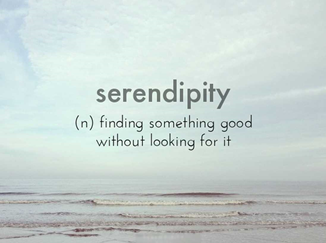
It’s called serendipity. Serendipity means a “fortunate happenstance” or “pleasant surprise.”
[show_to accesslevel=’almanack’]
It might sound like a fancy word but think about it, every human relationship is a result of serendipity. Even the most obvious relationship – that of parent and child – begins entirely with a coincidence. You took birth because some serendipity brought your parents together. Of course a child doesn’t have any say in this.
You might think that friends choose each other. Or so it seems? Even these choices are reactions to whatever random coincidence made the resulting friendship possible. Serendipity again!
Not just the human relationships, serendipity pervades in wide array of human endeavours. It won’t be an overstatement if I say that serendipity is the art of profiting from unexpected occurrences.
Open any history book and you’ll find stories of curious people looking for one thing and finding another. When they found something unexpected, they would take that and do something else to get unexpected results in another line, and then they would do that on a third line and then all of a sudden found that one of these lines had something to do with the other. In this process a discovery was made that they never could have made by going on a direct road.
The notion of serendipity is a common occurrence throughout the history of scientific innovation such as Alexander Fleming’s accidental discovery of penicillin in 1928 and the invention of the microwave oven by Percy Spencer in 1945, the invention of the Post-it note by Spencer Silver in 1968. (Source: Wikipedia)
Serendipity isn’t just an exception; it looks more like a common thread everywhere. For that matter I believe that Scott Adams consciously employed a strategy which gave luck a chance to find him.
This brings us back to my question about manipulating luck in our favour. Does serendipity offer any clue for answering that question? I think it does.
Nassim Taleb, author of wildly popular book Fooled by Randomness,, proposes a strategy for this – “expose yourself to positive black swans.” Positive black swan is a metaphor for extremely rare and unexpected event which results in extraordinary gains. He writes –
Remember that positive Black Swans have a necessary first step: you need to be exposed to them. Many people do not realize that they are getting a lucky break in life when they get it. If big publisher (or a big art dealer or a movie executive or a hotshot banker or a big thinker) suggests an appointment, cancel anything you have planned: you may never see such a window open up again. I am sometimes shocked at how little people realize that these opportunities do not grow on trees. Collect as many free non-lottery tickets (those with open-ended payoffs) as you can, and, once they start paying off, do not discard them. Word hard, not in grunt work, but in chasing such opportunities and maximizing exposure to them. This makes living in big cities invaluable because you increase the odds of serendipitous encounters – you gain exposure to the envelope of serendipity.
While we’re having this intense discussion about serendipity, let me lighten up the mood for a moment with a joke.
A devoted god fearing man would go to the temple everyday and pray, “God! I beg you! Please make me win a lottery.” This continued for years. The man would go to the temple everyday with the same request but nothing happened.
Finally one day the man lost his patience. He went to the temple for one final try and complained to God, “I have been your biggest devotee for so many years. You still haven’t answered my prayers. I have lost faith in you and now I have come to say good bye!”
Suddenly to his utter surprise the God appeared in front of him and said, “Son! All this while, even I have been wanting you to win the lottery. But for that you have to first buy a lottery ticket!”
How about you? Have you been hoping to win lottery without buying the ticket?
Of course, I am talking metaphorically. I don’t mean that you should literally go and buy a lottery ticket. It’s a sheer waste of money. By lottery ticket I mean selecting those acts which expose you to serendipitous events.
But it seems paradoxical. On one hand I am saying that you can’t really plan the unexpected and on the other hand I am asking you to deliberately create serendipity. Isn’t it?
Well there is no defined and structured way to plan serendipity but you can always make space for it.
Planned Serendipity
The basic requirement for good luck to happen to you is that you have to be in the right place at the right time. How? Let’s look at some ideas.
The first key part of serendipity is being aware of the direction you intend to go in. Second, be open to new opportunities as you move along your chosen path. In other words you’re focused on your goal, but at the same time you keep an open mind to embrace new ideas. It means that you go out of your way to have new experiences and meet new people, because those new experiences are where luck is waiting to find you.
Routines are a good way to optimize your daily tasks and make sure that important things get done without fail. But sometimes the same routine inhibits serendipity. So one way to increase the chances of pleasant surprises is to break your routine once in a while. Or bring some creativity and create fresh routines to accomplish the same tasks.
Take a new route to office. Join a new gym. Go to a different grocery store for shopping. Learn a new language.
All these things increase the chances that you will meet different people or stumble upon different experiences.
Next time you’re travelling in a train or flight, strike a casual conversation with the person sitting next to you. Make friends with the old gentleman you see every day during your morning walk.
Reach out to people you admire, send them a short message showing your appreciation. Send out a hand written New Year card to (not an e-greeting) to your favourite author.
Visit a different department inside your company. Attend a conference in an area related to your job, or even pick a different place to sit for lunch in the cafeteria each day.
What would happen when you try out these things? Well, let the surprise be your prize my friend! Just go on sprinkling the seeds of serendipity and the magic will surprise you.
Remember not to bring any expectations in your acts else it will defeat the purpose. Since you can’t pin point which serendipitous event was a result of which act, it becomes emotionally very taxing if you bring in any expectations.
These random acts should themselves be the source of happiness. Serendipity by definition is just a by product.
For that matter, blogging is a great way to increases the odds of serendipitous events in your life. So start your blog or revive the one which was abandoned few years ago.
You never know when someone you meet, or someone who hears of you (through your blog), will be the person who opens up the door to your next opportunity I think reading books on different subjects and reading a lot of books (discarding many of them on the way, half read) is another form of tinkering and exposing yourself to many ideas, increasing the chance that you will find the right idea soon. For that matter, a big library or an anti-library (a word coined by Nassim Taleb in his bookThe Black Swan)) is the hotbed of serendipity. With a library, it is easier to hope for serendipity than to look for a precise answer.
The question that I asked at the beginning of this post, let’s look at it again.
“When was the last time you did something for the first time?”
I hope it makes much more sense now. Isn’t it a great hack to bring serendipity in your life?
For adding closing thoughts, I would like to take help from Steve Jobs. He said –
When you grow up, you tend to get told that the world is the way it is and your life is just to live inside the world….try to have a nice family…save a little money. That’s a very limited life. Life can be much broader …and you can change it, you can influence it. The minute that you understand that you can poke life and actually something will, you know if you push in, something will pop out the other side, that you can change it, you can mold it. That’s maybe the most important thing….Once you learn that, you’ll never be the same again.
So poke life my friend and make your own luck!
[/show_to]
[hide_from accesslevel=’almanack-all’]
- Spotlight: Big ideas from Value Investing and why applying them in your investment decision making will be a great deal
- InvestorInsights: Interviews with experienced value investors, learners, and deep thinkers
- StockTalk: Thorough analysis of business models of companies (without any recommendations)
- Behaviouronomics: Deep analysis of human behaviour and how it impacts investment decision making
- BookWorm: Reviews of the best books on Value Investing and related subjects
- Free Course – Financial Statement Analysis for Smart People (otherwise priced at Rs 5,900)
- Archives: Instant access to our huge archive from the past three years