
A super-smart lawyer and an enterprising value investor shares his insights and experiences in sensible, long-term investing and money management while drawing parallels between analyzing legal cases and investment ones.
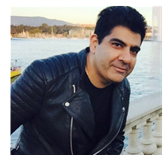
Safir is a keen and accomplished Senior Partner with India’s finest law firm for Intellectual Property domain – Anand and Anand.
He is truly a polymath, an entrepreneur, avid reader, trader, long term investor, fashion aficionado and more. Safir has a wide breadth and depth of understanding of Indian equity markets from all slants and bends. He is an avid investor, music fan, movie buff, travel enthusiast and brand strategy consultant.
In his interview with Safal Niveshak, Safir shares his wide investment experience and how small investors can practice sensible investment decision making.
Safal Niveshak (SN): Could you tell us a little about your background? You are lawyer by profession. So how did you get interested in investing?
[show_to accesslevel=’almanack-all’]
Safir Anand (SA): I am an Intellectual Property lawyer and a brand strategist. My journey in academics started at Modern School with a focus in Commerce followed by an Honours in Economics from Shri Ram College of Commerce (SRCC) in Delhi and then a post-graduation in Law from Delhi University.
As part of a desire to pursue added knowledge, apart from legal cases and Acts, I used to read up on finance, marketing, brand evolutions, brand fall outs, role of strategies in branding and was quite intrigued with the world of brands. I even got sets of MBA books and teaching material and read it to fulfil my desire to also be an MBA in Finance and Marketing, a choice I would have taken had I not lost my father and bread earner to the family early during the last year of college.
The journey into investing happened more out of need to save and fascination of stocks and without seeking parental support on a corpus. I had saved some pocket money, some Rs 4,000 odd while I was still in the early years of college, which was my first investment amount. Being in SRCC, I had read stocks go up and can give meaningful returns but did not know how to buy, what to buy and when to sell. I heard the Hindi song “Thoda hai, Thode ki zaroorat hai” (I have little, but I want a little more) and thus went to a CA (a relative) seeking his advice on where I could invest my first pocket money saving. He bought me 100 shares of Nagarjuna Fertilizers, telling me it was cheap and would do well.
In the months that passed, I found the stock plunge to Rs 13 and was curious to know why a stock could fall when it was cheap, why a professional would not know this, what was the mystery in certain stocks becoming rewarding while others losing much price value.
Clueless, I felt it was better to “do it yourself” and learn from experience. Hence, I made a beginning by initially buying several companies in very small holdings. I used to feel happy owning the stocks as if within them lied the hidden treasures.
Some stocks would do well and some would falter. I never knew why but with time some reasons started popping. I realized cheap was not always good and good was not always cheap. Some companies did well for some time and then plunged into dark results, even losses, and many “disappeared” after being hot stocks. I realized I wasn’t even aware of their products and had only bought a fiction story. I also realized post the Ketan Parekh scam how gullible people are to “fads” isolated to any understanding of business, value or consistency. So I burnt my hands in those initial years but had valuable lessons.
My inner sense desired then to own blue chip stocks like Bajaj Auto, Colgate, Cadbury India, Castrol etc. because I had read Peter Lynch and felt these companies won’t disappear. But I could not buy them from the market given my corpus of funds (minimum lot was 100 in physical shares) and thus I began to travel on weekends to different parts of Delhi and buy odd lots from sellers.
In fact, at one point of time for almost one year I continuously bought small odd lots of Gillette India till they all added up to make roughly 100 shares. I felt proud. So, Warren Buffett was not the only man waking up to the joy of thinking every day how many people shaved, I was waking up to how many odd lots of shaving I had saved.
SN: That’s a wonderful journey you have travelled Safir, and would surely inspire people starting on their own investment journey. Anyways, in what way being a lawyer has helped you while building your investment process? Do you solve investment cases like you solve legal ones?
SA: Being a lawyer is fascinating. I really enjoy my field of law as it is very creative, very progressive. It makes me intrigued and focus on facts, pros and cons and the “relevance” of things vs perceptions. A lawyer knows a different set of facts can produce a different result and it is wrong to assume facts but interesting to probe them.
A lawyer is also accustomed to alternate set of arguments or theories with good reasoning and prepares his case based on his assessment of the best case scenario, knowing what lies ahead if he goes wrong.
Beyond that it is more of a curious mind willing to learn that drives good decisions and once experience sets in, he become more logical and methodological.
He also becomes more inclined to finding alternative solutions as opposed to just one, as he realizes the interplay between time, money, human desire for certainty and risk averseness. He thus migrates into a discipline of reading and keeping up, inculcates an interest in psychology, sociology, philosophy. I think behavioural science is one of the biggest catalyst of investing and is guided by an assessment of facts based on all pros and cons-that helps in investing.
SN: Your thoughts remind me of Peter Bevelin’s wonderful book on Sherlock Holmes.. It’s great how you have drawn the relationship between solving legal cases and solving investment ones. Mr. Munger would be very proud of you I believe. Anyways, how have you evolved as an investor and what’s your broad investment philosophy? Has your investment policy changed much through the years?
SA: An investor is always on the path of evolution and that’s why it is a progressive journey rather than a target for me. In good times, you foolishly begin to get the feeling that you have learnt enough and see the results in buoyant stock prices. You feel that’s due to your skills or talent but don’t see the fact that many millions of people are taking decisions on your stock at that point of time by buying/selling/holding to influence a result. You don’t control them and hence don’t control the stock but you think you do. All of a sudden, some event strikes which shows the effect of human behavior and you are left behind with lessons gyrating between greed and fear.
Hence, in a sense, I don’t attribute a stock value to only a price. I think a stock is a friend which continuously teaches you, humbles you, and keeps you intrigued. When it goes wrong it comes back to make you a thinker, behave more disciplined and focus on being a better planner. And then you err again and learn again. A stock is a coach.
It is also important in life to realize that investing is not an all or nothing game. You don’t have to get everything right or leave all when things are going wrong. Most times when things go wrong, it could be company specific and hence the rest of your portfolio will hold well. Or they are fear driven when you need to stand away from irrationality and buy or sometimes even do nothing. It’s about hanging on, chipping in when you can and re-evaluating what you own rather than the market.
I don’t even know why there is so much fascination with Sensex or Nifty levels when investors don’t own them. Time and conviction play a critical role in investing and I feel it is ideal to have a constant cash flow that allows opportunities to be seized as in when they occur. That makes you look for opportunities rather than run away.
There is definitely a huge change in my investment philosophy and I hope to learn far more. Earlier, as a new entrant in the market for several years I was fascinated by the concept of “cheap” and investment decisions were guided by a stock’s EPS versus that of its peers. I also used to look at a stock as if it was a silo. But in reality a lot is co-related. A company can glow at the cost of innovation, location, unique business plans but that assumes competition has inefficiencies. It also gets impacted more now than ever with effect of globalization, governments, regulations, taxes, etc.
This concept of my earlier thoughts of silo and cheap had too many flaws and I later learned that companies are cheap for a reason. Consistency is far more rewarding than being cheap and the ability of a management to create consistency is a bigger catalyst than the cheapness of a stock.
I am still learning on opportunities size before a business and whether there are examples of success not overtly complicated or dependent upon variables beyond a management. Whether there is a risk of going wrong and what it will do in the larger scheme of things. I like simplicity and innovative approach (branding, process, management) rather than companies that are dependent on global prices, cycles, land bank sales, eye balls, buying multiple subsidiaries all over the world.
SN: What has been the best and worst times in your experience as an investor in stocks? How did you handle, say, a situation line 2008?
SA: The worst of time and learnings (hopefully) include –
• 2008 – I think I was smart to feel markets were overvalued at 22,000 and sold a bit at the peak. But I was ignorant and perhaps even arrogant to see the Sensex falling from 22,000 to 16,000 and then going shopping as if I had hit the buzzer first. Within days I saw the Sensex at 8,000. The pain of a fall is far more even mathematically than an equal percentage gain. With whatever was left of the “2008 ruins” I re-built block by block (“little by little, a little becomes a lot” used to be my motivating mantra) and I knew from my experiences in life that bad times don’t last and it is in the human spirit to evolve that pulls through.
You can’t give up on the market though the market can in phases give up on you. But over time it becomes a friend.
• Ketan Parekh days – This was the time when trends were pushed and complexities were created in Media, Telecom and IT valuations. The best faltered in greed and in being in the same party. The pursuit of quick returns relative to your neighbour and the feeling of being left out was a disaster. Those who steered clear learnt that “owner’s envy, neighbours’ pride” works when lofty valuations are left dry. Investing is not be taken for granted and too much noise can and will deafen you.
• Derivatives can kill – I made money on a derivative stock and how. My broker used to call me every day at 3.30 beaming with joy asking me to guess how much mark-to-market profits I made. Images of the wolves of Wall Street would flash. Investing looked too easy… till I realized the impact of what happens when the tide turns. Unlike a stock bought in cash on paid and disposable (controlled) money, derivatives have margin pressures (time bombs) that don’t give you sanity of thought and drive panic decisions. They create a havoc with cash flows. Easy money flows tempt and are like sugar. The more you take, the more you like heavy rock and sing “In the name of derivatives, pour some sugar on me.” Once the stock falls, the tables turn and you can be wiped off.
Anyways, I lost my gains on that stock and even though I survived, it was at the cost of impacting sleep, selling some stocks, being in a bad mood and may be lots more. Hope is not a strategy in investing. It could be dangerous in trading derivatives.
My learning (and thus I hope) from these experiences have been a few –
a) One should invest within means and believe that it is a long term process where even small amounts of incremental capital adds up to create a good corpus. To let go that temptation to make an extra could save you a life of investing;
b) There are bound to be certain turbulence beyond control. You need a determined mind but also cash flows to swim through.
c) The best times usually come from watching scripts grow over time and the best feeling is when the dividend payout of a company itself becomes meaningful to a return parameter on your buying price. For example, I own a stock which whenever it rises three percent on its market price, doubles my return on the investment price.
d) Investing is a feel good factor. It is gratifying to see a general progress year on year as it inculcates a belief in the human spirit of moving on and not giving up which may not be measurable in financial terms but is a strong measure of inner success and confidence. I believe in placebo.
SN: Some wonderful learnings there, Safir. Thank you so much! Let’s now talk about your process of analyzing businesses. What are some of the characteristics you look for in businesses you are looking to buy? What are your key checklist points you consider while searching for such businesses?
SA: The key characteristics that I look for in businesses are –
• The ease of the business to the extent that your answering what drives a stock should sound like a teenager answering a question casually rather than a complexity of such sorts. In fact, so simple that the listener thinks it can’t be so simple.
• I do not concentrate so much on short-term earnings since with globalization and the opening of economies and the huge increase in interplay of behavioural science, it has become more comforting to look at the big picture i.e., does the company have a sizable opportunity, is it run by people who are aligned, consistent and ethical, can it capture even some part of the sizable opportunity, if so will it make a difference to its earnings, is the earnings sustainable and is the quality of it acceptable and does it have any variables beyond its control that can impact your assumption such as commodities, order intake, governance, taxes, dumping duties.
On the other hand, by concentrating on the projected earnings alone, a lot of room for disappointment may arise or stock may look overvalued because of a myth in earning while that myth may be insignificant from a larger opportunity perspective.
• I don’t like businesses that need to invest too much in hard assets at the cost of distributable cash flows. Similarly, I don’t like holding companies knowing they will never sell what they hold.
• I don’t like companies that keep announcing too much acquisition or restructuring. I feel the managements here are trying too hard to please markets and fool investors into complexities.
• I do look for some simple facts such as promoter education, pedigree, business model, sustainability and consistency or efforts made towards that, capital history, return on capital, related party transactions and their minimum presence, competitive landscape etc.
SN: Thanks Safir! A real life example here would be of great help. So can you explain your thought process as you went about selecting any one of your best performing stocks using the process you just mentioned? In hindsight, did it meet all your above criteria?
SA: One example that comes to mind is Century Ply. I was reading through Super Brands and noticed how Century had been featured in the leading brands of India for several years.
I had also gone through the reports of GreenPly and how the company had created an excellent business which kept growing. The sector intrigued me and I was looking for a mispriced opportunity that was hit by market sentiments but which would benefit with a not too complex growth.
The Century Ply stock was going at a ridiculously low price (and market cap) of about Rs 18-20 per share and was “much ignored” partly by general market sentiment and a bit aided by fears of slowdown in ply woods under the belief that the housing segment was in for a rough ride.
The promoters were doing their bit to enhance brand value and I would frequently find examples of innovative ads on TV or YouTube. When I explored further, I found that the company had commissioned new plants, doubled laminate capacity, was enhancing brand value, had tapped newer markets mainly in rural and semi urban areas, had a consistent story in revenue growth but for the time being was impacted by lower margins. I felt given the positives, the valuation was completely disproportionate to the market price and unless there was a fear of a business closure or some corporate governance, Mr. Market was getting it wrong.
I also saw increased use of branded wood in houses and offices and on a casual survey of the market in Defence Colony here in New Delhi, I found that the product of this company had a market premium due to quality. There was in fact a transition from unorganized to organized sector due to a fall in prices and yet the shopkeepers were not pushing this product or even GreenPly but newer products where it was implicit they had better trading margins. The inquiry also suggested that buyers were retail (end user clients not industrial) and here a trade-off seemed to exist in brand faith vs a pack it all situation. With a decent size of the plywood market, laminate market and a container station being build up and a 5-year data that suggested revenue growth and a temporary margin issue for a branded player (recognized in India’s leading brands) and product visibility and distribution, I felt the stock was cheap. Yet when I discussed the stock with a few friends, I heard remarks like “nothing exciting” etc. I went against that opinion, and the investment paid off well.
Second example would be of Eveready, a company I first invested round at Rs 25 odd levels. Again a phenomenal brand that appeared to be sleeping with a nothing great happening to batteries and torches for a while. While digitization had set in, the perception was that the batteries would die on account of China and that American companies made superior batteries (I agree). However, I found that Chinese batteries were being only used as a one-off in the nature of a pre-inserted deal if you bought a battery operated gadget. Consumers were not going to retail to demand Chinese battery replacements and in a price sensitive market like India, hit by inflation, not everyone was willing to pay 3-4 times the price for superior American batteries. Many did not in fact want to jeopardize their equipment due to a battery issue.
I also noticed and learnt from an interaction how the consumption of batteries was going up due to TV remotes, video remotes, AC remotes, set up box remotes and thus the volume intake was rising in every house. For every 1 TV, the result was almost 6 batteries to be replaced even more frequently and recurring due to multiple channel flicking. The question was could the company take advantage of volume growth (i.e., optimize some ideal capacity) and also increase top line by price increments.
Eveready went on to make eight price increments thereafter and almost simultaneously there was an acquisition of one of Gillette’s battery brands by Warren Buffett at a comparatively high enterprise value. The company also transited into LED though that was not the catalyst.
I can add examples of tyre companies like MRF and Ceat too on a similar thought process.
SN: Wonderful…and thanks for sharing! Anyways, how do you think about valuations? Have you bought companies that might not fulfil the conservative wisdom of value investing, but just because they were great businesses? If so, what was your rationale?
SA: Valuations are again a function of the opportunity size. For example, a company that is creating an interesting transition of habits which are simple, resourceful (such as convenience) and capable of mass replication may be undervalued given its market share and potential but may look fairly valued or overvalued when it comes to earning per share or asset value. A company in a growing sector is better than a super-efficient company that already has a substantial part of the masses and needs a bigger chunk of it to grow in an uncertain environment of disruptive innovation and nothing much to do on the efficiency matrix.
The question also assumes importance in light of the environment around i.e., is the company a standalone case of an over-valuation in an undervalued market with all capabilities in place, or is the entire market towards maturity.
In a country like India, several small-caps and mid-caps have market caps totally misaligned to growth potential and may be cheap on a price to growth matrix. They may be cheap for example on a distribution network that’s not been leveraged or which may be hard to replicate and is not threatened by, say, online.
Valuation should also be evaluated as a function of the delivery of the company i.e., companies should not leave too much room for disappointment at their end due to say a move from petrol to electric cars or by regulatory, currency or external issues.
The concept of value investing for me is a bet on best capital allocation option at a given point of time and not a pursuit of a few companies where I would not buy at the current market price if I had money. It is unfair to state portfolio returns based on “money invested” in stocks and ignore or not state the return of rest of the capital by keeping it in banks or fixed deposits. As long as I find an opportunity that beats my deposit or cash even if it is not in my scheme of pre-owned stocks but looks consistent, I would buy it. I would sell such a company as a currency trade when my pre-owned stocks become cheap or I find a better option.
I don’t believe in holding cash as a pre-defined strategy and believe in being invested most of the time.
You may lose a few percentage point in a correction but do not suffer from a price anchoring or a decision bias, if you were to buy the stock again. I find many investors lose opportunities when they sell a stock on the rise and say we like it but will buy it only when it falls well below our selling price. Very few investors truly get multi-baggers and here lies the difference.
Just as an example, I had bought a company and written about the growth potential of the sanitation sector in India only because of socio-economic factors such as –
• People migrating from villages to cities to work;
• In cities, finding offices that had washrooms;
• Realizing importance of sanitation;
• Going back to the villages and discovering that there is no proper sanitation and the state of mind was no longer accustomed to using the fields or open areas for sanitation purpose and therefore the desire to create a basic sanitation infrastructure at home;
• Realizing that in a society where men (unfortunately) play a sole voicing role in rural areas to find women power in demanding proper sanitation facilities in homes and threatening to walk out of marriages on discovering their marital homes did not have a basic washroom;
• Finding that even cosmopolitan cities don’t have washrooms at crowded markets, metros but have the same people visit airports and malls and realize their convenience;
• When the decision on road travels on where to stop are governed not just by food but these utilities;
• When there is a less than 5 percent penetration by the whole industry in an inevitable growth sector that cannot die out.
I got three random villages and three towns surveyed by people from my office who had homes there and the lack of facilities was not only an opportunity but even for them a growing concern.
These were powerful catalysts for me. I wrote on this even before the Swachh Bharat movement got started or Mr Narendra Modi got elected.
The question then was would you bet on a company moving to expensive products well beyond the reach of a common man and impacted by another business threatened by plastic substitution, or would you bet on high quality products at reasonable prices with no meaningful threat of import substitution, currency, government intervention other than as a buyer, time lag or durability etc. as a choice. The company paid well.
A similar catalyst was the US healthcare bill and transition of Indian pharma. One had to see impact of cheap medicines in India, off generic drugs, manufacturing capacities and potential of both volume and price growth on one hand and the move away from basic generics to API or specialized drugs (Value Migration) or where there were undertaking Contract Research Manufacturing without any undue capital expenditure that could run dry. To allow scrutiny into their factories, improve manufacturing processes and by maintaining data in an integral form is in fact good for them than bad even now. Lifestyle deterioration and disease management cycles with the onset of a better infrastructure even in India of chemists and pharmacies like 98.4 or Apollo or Fortis was another catalyst for even a domestic growth. Insurance in medical and better hospitalization was another. The result was some of the pharma stocks zoomed to multi-bagger returns and some are getting even better.
Housing finance was another example. In a country like India, aspirations of owing a first house cannot even go. There was much debate on slowdown on real estate and high interest rates. That may impact a speculative investment in the sector but does not deter either a company to buy an office or to lease it and create return for its owner or for a person to live the dream of his first house. A house signifies his image to his family, his friends, colleagues and almost akin to a purpose in life. On the contrary a stagnation in real estate prices or a downfall brings demand of an end user vs a speculative investor and housing companies prosper more in the hands of the former than in the hands of a person with investment surplus. Housing finance is still massively under penetrated and despite market sentiments, a majority of companies in the sector have outperformed markets for several consecutive years.
SN: So which industries are you betting on next apart from the ones you’ve mentioned? Any broader theme you like at this time from a long term perspective?
SA: I like autos (commercial segment is bound to pick up), some technology driven auto ancillaries, non- banking finance companies, pharma, housing finance, technology embracing and leading private sector banks. In most of the companies, the managements are the ones usually who are part of discussions on changes, the vision statements are not esoteric but specific, the focus has been one sided and not up and down and yet the size of market is nowhere close to stagnation or competitive loss. Companies don’t just benefit by doing right things, they also benefit when the competition does a lot of wrong things.
I continue to look for and own small and mid-caps too and there some companies may be beyond the above sectors due to cost advantages (sustainable on the face of it) or business models and of course ridiculous market caps (margin of safety).
SN: How do you determine when to exit from a position? Are there some specific rules for selling you have?
SA: Given the choice, I would not prefer to exit from a position. My rationale is saving, corpus building, riding on competencies of managements who know their job better and can grow. My focus should be on creating a consistent cash flow of disposable money that is available for investing – even if it is small and putting that to use when available for the most opportune investment. However, having said this, history teaches us that the only constant in life is change and several businesses with leadership status self-destruct when they do not keep pace with the world and do not innovate to maintain or grow their leadership or respond to market realities. Thus any change in the dynamics of a business brought by a disruption such as a technology (example, Internet) or by price or convenience (such as Uber or Ola) could cause me to disbelief consistent growth at the cost of tapering and may be even dying out – I would then sell.
I also believe companies that are at the high end of price to earnings have to be seriously evaluated vis-à-vis their competition and disruptions. Markets revert to mean and pockets of “abundance” create vacuums that fill. To say for example, that another garment brand will not enter the market of innerwear or lingerie or that a cloud based company will always sustain at the cost of any valuation poses a risk. They may be good companies but good companies at not so good prices can hurt.
For example, some auto ancillary companies could be at risk but I see less risk to a company that deals with aesthetics inside the car – in fact even entry level cars are trying to maximize customer experience. Automation is at lesser risk than labour and Asia at lesser risk in manufacturing than rest of the world. Today the fact that ease of manufacturing is complex is an opportunity rather than a risk.
When in doubt on selling, it is better to sell some part of the position. If you are right, you will feel good about what you sold and if you are wrong, and it goes up, you would be happy that you kept some part with you. Somehow the mind is too powerful and usually sends you a feeler post a transaction to tell you if it is the right thing to do. Again, you don’t need to be 100 percent bang on.
Similarly, if a better opportunity arises, you may sell a stock, or if there is a significant change brought in such as by management or of Indian companies buying overseas assets (which is counterproductive when funded in foreign currency), or companies that come with too many variables outside their primary control one should ideally sell.
Leverage vs debt free, deterioration in cash flows and collectibles, moving from competencies that are yet growing into newer and untested shores are some other factors.
Market exuberance if you can sense it is the magical one. Experience and a few losses are the fee for this.
SN: When you look back at your investment mistakes, were there any common elements of themes? Please explain with a few real-life examples if possible.
SA: The common investment mistakes involved include –
Social impact – the world is far more connected today than it ever was and sometimes having taken a stand on a company you may hold your views against the tide for fear of social impact. You can get carried away when too many people write on your stock as a buy. You need to get over such sentiments.
The second mistake is leverage or even investing beyond disposable savings
The third mistake is buying on any third party recommendations without any hard work or believing that you possess some special information about a company that the market is unaware of could be a folly. Many things are planted to encash human tendency to be more secure in a crowd.
Similarly buying a company because somebody else who is a known name in the market has bought could be a poor decision as for that person if the investment falters, the impact could be minor while for you it could make an impact on the portfolio. Besides you may never learn in good time that he/she sold off.
For example, I was one of the very early investors in a crockery company but sold off early when I interacted with many people who created doubts on scalability, integrity, import threat, margins and financials etc. The stock moved up to 20 times post my selling. It’s good to hear others but not always and sometimes you need to work harder to see if your facts are supported on the ground rather than in sentiments.
Another example is the resistance of temptation to buy something just because a known name in the market has taken a stake in that business. I find many investors take it for granted that a big name buying is always right, will leave lots of room for the stock to perform and “must know” more than the “obvious”. Several companies in fact owned by the biggies too have faltered big time and have underperformed.
You need to evaluate stocks on your own and not by the behaviour of 1 or 2 people as humans do err like they get it right at other situations.
SN: What has caused bigger regrets for you from the past – Missing out on early opportunities or selling stocks too soon, both being the inevitable flaws of value investing? Please help with an example of both the situations if possible.
SA: My biggest regrets could be summed as an accumulation of –
• Not understanding the concept of efficiency in capital employment and cash flows early on and concentrating on relatively irrelevant factors.
• Another mistake could be having conviction in a stock but getting influenced by debating on the stock beyond a ‘circle of competence” with misaligned views and not following a process of validation of facts.
• The third mistake would be the attempt to benchmark a stock either by punishing it for under performance in a portfolio when other stocks went up or getting tempted to switch it for another stock that your friend has shared with you without realizing that the stock would have actually become cheaper over the time or prospects of the business could have actually improved or a catalyst was on its way but was ignored by the market. You need to do well in investing over time. You can’t do best.
Here I would like to share an example. In the early years of my investing career, I would buy a fertilizer stock if its P/E was say 5x compared to an industry P/E for say 20x, believing that it would inevitably catch up. I failed to see the industry leader may have had a high P/E due to assets and not earnings and at some time markets valued assets even if they were never capable of being liquidated. Value traps are plenty in the system and don’t pay.
The control of outside factors, price points by regulatory restrictions, ideal capacity when the tide would turn, destruction of business or capacity expansion in areas having limited time advantage are all factors that can impact the business negatively, and thus the stock.
I have also erred in buying stocks I never understood in the garb of a complex product. In pharma there was some years back a huge outbreak of peptides. In IT, there is now a complex danger valuation zone in some cloud companies and in some mid cap IT companies where one company keeps buying more and more businesses by raising capital. The shareholders will eventually have a case of one wrong move going bad and be left with nothing.
Earlier on, I used to be in a few WhatsApp groups too. A big mistake to hang around in a group other than that of friends and people tested over time or theory. Most discussions here are noise and will corrupt an investor’s journey to make sizable money. The news is planted and spreads like a rumour and harms a lot. Hardly credible people come here as they cannot keep up with the fizz. A minute by minute discussion from a pool of 100’s of people you don’t even know becomes what Buffett calls a voting machine vs weighing machine problem. You will find most fly by night stocks are most popular in such groups as the process of “spreading it” is best achieved till someone pulls the cords off.
Cut noise and go to signals. In the current context of an example, of USFDA and its concerns, one should read about how Merck in the US had evolved against fierce competition by engaging with USFDA and allowing them to interact with them as a part of the process of drug approval rather than being up against the wall on alerts. Look for companies doing that.
I think it’s also a bit off the cuff to say a company can’t create wealth because another company in the sector has not done well. Here lies the opportunity. For example, a company in shrimps and shrimps feed has done very well in a sector that had many failures in India but has success internationally, including of one of its own promoters. Same applies to a footwear company and to some speciality chemical companies – they have differentiated business models and have immunized themselves to some risks (such as a huge brand risk for the footwear company).
SN: How can an investor improve the quality of his/her decision making?
SA: By constant reading – In fact I feel books are cheap tickets to a sure lottery. You should also read papers and business interviews.
• You need to develop a circle of competence of the people you interact with. Progressive thinkers are better in the journey of life, even beyond investing than negative people or most people investing for punts and those who carry too endless stories which are mostly planted;
• You need to understand and capture signals vs noise;
• Once invested, you need to look at the factors that prompted your investment and seek to verify and validate them rather than look at other portfolios or ideology and get the feeling of missing out. It is impossible to come first in this investment race and it does not reward coming first and then falling. It does reward being able to run the marathon and keeping at it.
SN: How do you think about risk? How do you employ that in your investing?
SA: Risk is an under-taught subject. In fact, it is surprising that it is not taught in schools and colleges as a subject and very books on risk management are written. Risk is personal, of character or judgment as also of loss of opportunities from fear or social impact. It is wrongly perceived that the risk and reward are directly related i.e., higher the risk higher the reward and lower risk means low reward. On the contrary, lower the risk is higher be the reward and vice versa.
There is a fantastic book called Risk Savvy written by Gerd Gigerenzer on this subject. Risk also lies in being a non- believer and falling prey to mass sentiment in times of market fall or exuberance in market prices. Risk is also of watching TV for investment calls and reacting to announcements. Risk is also of poor capital allocation and resilience to decisions even if factors suggest that the basis of decision is turning against you.
SN: What’s you two-minute advice to someone wanting to get into direct stock picking? What are the pitfalls he/she must be aware of?
SA: Stocks are fantastic. They can be your friends, your learning points. They can teach you throughout your life and if managed well nothing can create better wealth. Stocks can also be a source of income. Over time, stocks can create independence apart from normal earnings and give you a currency that you can trade upon to enhance your purchasing power. However, stocks are not magical. They are a basket which will have some tasty fresh fruits, some disguised fruits and some fruits which when consumed in excess will cause aches (real, notional, sentimental) and when consumed in very small bites will leave a desire for more. If you keep filling the basket, over time you will get a greater sense of satisfaction and that itself will prompt you to high confidence in the process. Try to create a circle of competence to whatever extent. You may be good at fundamentals or technicals or may understand companies in one sector or may be concentrated or diversified or be large cap, mid cap or small cap oriented. It does not matter as long as you understand what you do and try to mitigate the risk of being washed out. You will find the going good when you are in good company. Also no start is small. Life grows.
SN: That’s so true, Safir – No start is small. Anyways, which unconventional books/resources do you recommend to a budding investor for learning investing and multidisciplinary thinking?
SA: I liked Mean Markets and Lizard Brains by Terry Burnham on behavioural science. As an overall good investment book with easy practical advice, I liked Zurich Axioms by Max Gunther. Then I like Simplicity by Edward De Bono as also his Six Thinking Hats. I also like Learned Optimism by Martin Seligman, Fooled by Randomness by Nassim Taleb, and Value Migration by Andrew Slywotsky.
SN: Which investor/investment thinker(s) so you hold in high esteem?
SA: Mr. Samir Arora is a fantastic big picture investor. In 20+ years of his investing career, he has survived with an outperformance coming in from India. The importance of 20 years is in the ups and downs, and through the cycles of booms and bursts. He has moved from being an early investor in private sector banks like HDFC Bank, to retail (Pantaloon) to Telecom (Bharti). I learn by observing him, including interviews that time can compound very well for you and it’s not just the upsides but the ability to survive a bad call. He also has a very positive outlook to life in general and a fantastic sense of humour. I am amazed at a rare ability to like and dislike a business over time as he gets the big picture very well.
I also regard Mr. Sanjoy Bhattacharya as a wonderful and encouraging source to understand simplicities of business and how they function, quality of earnings. He becomes a child at one point with an uncharacteristic laugh and has eyes popping out and long stretched arms literally grasping a stock that he is confident on. He does not like benchmarking and yet has done phenomenally well in several blockbusters. He takes his Bridge as seriously as recommending a book and again is highly ethical even on the companies he picks. He has a habit of admitting mistakes and learns all the time. There are also several investors in India who I really respect. One would definitely be my friend Ayush Mittal and his dad, Mr. S.P. Mittal. I need to be humble like Ayush and not such a bumble bee that I am.
I think you, Vishal, are doing such a phenomenal job of relentlessly pursuing the path to investment wisdom and in spreading it through your Almanack and classes.
SN: That’s very kind of you, Safir. I completely agree with your thoughts on Ayush, though I have never met his father. Anyways, here is a hypothetical question: Let’s say that you knew you were going to lose all your memory the next morning. Briefly, what would you write in a letter to yourself, so that you could begin relearning everything starting the next day?
SA: Well, I will write a note on the several things I do wrong as a person. Some in the quest of perfection and some as a very strong headed person. Works well at work but may be too much at times. I am told by my friends that I am super fun when chilled out and I need that side of me to be exhibited more as against getting cut off now and then. As an investor I am still learning every day so a reset will be at par though I would not like to make mistakes that I did and somehow even with a memory loss may get that sense of déjà vu.
SN: What other things do you do apart from solving legal cases, investing, and following cricket (I can tell that from your tweets ;-))?
SA: There is only one life. You have to make the most of it. Irrespective of the things and the environment around. Be it cricket or travelling or music or movie or friends, that moments are special and should be glorified as much as possible to send a positive catalyst to the neurons in the brain that life is progressive. Setbacks are temporary and the journey is long. Celebrate as you go along. Every time I look into the investment mirror, I must see a clear reflection. Not only of myself, but of my learning, my experience and with it of all my friends and teachers who make the image a reflection of a better future.
SN: Wonderful thoughts indeed. And wonderful insights that you have shared Safir. Thank you so much for your generosity!
SA: Thank you Vishal for the honor of this interview. I wish it brings some joy and wisdom and makes even a little difference.
[/show_to] [hide_from accesslevel=’almanack-all’]- Spotlight: Big ideas from Value Investing and why applying them in your investment decision making will be a great deal
- InvestorInsights: Interviews with experienced value investors, learners, and deep thinkers
- StockTalk: Thorough analysis of business models of companies (without any recommendations)
- Behaviouronomics: Deep analysis of human behaviour and how it impacts investment decision making
- BookWorm: Reviews of the best books on Value Investing and related subjects
- Free Course – Financial Statement Analysis for Smart People (otherwise priced at Rs 5,900)
- Archives: Instant access to our huge archive from the past three years