
With a long experience in the capital market, and in working with few of the doyens of value investing in India, Rajeev Thakkar has come a long way. In this interview, he shares key insights about his investment strategy and the underlying thought process that has helped him keep his head while his fund management peers were losing theirs.
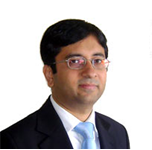 Rajeev Thakkar possesses over 15 years of experience in various segments of the Capital Markets such as investment banking, corporate finance, securities broking and managing clients’ investments in equities. He is currently the Director and Fund Manager at PPFAS Mutual Fund.
Rajeev’s tenure at PPFAS began in 2001. His passion for researching and analysing the fundamentals of companies was evident. from the very beginning and very soon he was heading the Research division at PPFAS. His responsibilities soon expanded as he was appointed the Fund Manager for the flagship scheme of the Portfolio Management Service, titled “Cognito” in 2003.
Rajeev is a strong believer in the school of “value-investing” and is heavily influenced by Warren Buffett and Charlie Munger’s approach. In his interview with Safal Niveshak, Rajeev shares his wide investment experience and how small investors can practice sensible investment decision making.
[show_to accesslevel=’almanack-all’]
Safal Niveshak (SN): Could you tell us a little about your background and how you got interested in value investing?
Rajeev Thakkar (RT): A lot of it is luck and lot of it is the ovarian lottery, as Buffett talks about. I think a lot of credit should go to my father in this regard. He has been an equity investor since 1980, if not earlier. In those days of no internet and physical annual reports, I used to see annual reports coming in with some regularity to my home. That made me curious about equity investing. We had those conversations when I was eight years old. I didn’t start investing like Buffett at an early age but I knew about equity investing at an early age.
Also, my father was somebody who was not into the tipping thing or trading. At that time, he would subscribe to two magazines. One was Capital Market and other was Dalal Street Journal. I did not have exposure to Benjamin Graham and Warren Buffett at that time. For that period, we had few investing books. One I remember was by an Indian author who spoke about investing in India, which had the basic concepts about balance sheet, equity base, earning per share, dividend yield, etc. But the framework wasn’t as robust as Philip Fisher’s or Benjamin Graham’s or Buffett’s. Basically it spoke about investing rather than speculating. It was a big advantage to be exposed to such a thing as an eight-year-old.
My graduation year was 1992. That was the period when India was getting transformed in terms of licensing being removed and at the same time there was some glamour
attached to the stock market. Harshad Mehta and the stock boom happened, a lot of which was because of manipulated stocks. But still stock market was being seen as a place where a lot of wealth could get created. So post 1992, I went in for Chartered Accountancy but the plan was always to get into stock investing. From 1992 to 1994 I did my normal articleship. In the third year of articleship, you’re allowed to be in a company instead of a CA firm. So in the third year itself I moved to the investment banking field. It wasn’t direct equity research, it was more of IPOs and stuff like that. At least I was interacting with the capital markets, knew about companies, and could look at various businesses. Another big pivot was when I joined this organization [PPFAS] in 2001 and had a chance to meet with Mr. Chandrakant Sampat. He was a well renowned investor in India, and almost a contemporary of Buffett and Munger. I learned a lot from him.
So the whole grounding, of looking at quality of business, quality of management and capital efficiency, came in after meeting Mr. Sampat. Prior to that it was only buying cheap stuff like net-nets, stocks with good dividend yield, or ones with low price to earnings.
SN: Great! You mentioned about starting from buying cheap stocks, learning about Buffett and then getting involved into what Mr. Sampat taught about capital efficiency. It’s very difficult for us to let go of what we have learned in the past and unlearn and relearn new kind of things. So how smooth was the evolution for you?
RT: I am a living example of how difficult it is to let go of things. Somewhere, intuitively I clearly knew that an equity investment held over long term will give you superior returns than owning a bond. Another thing that I roughly calculated in my mind was that if a stock’s P/E is, say, 5x then its earning yield was 20%, i.e., if a stock with P/E of 5 is earning a 20% and if part of that is paid out and other part is deployed sensibly, what can go wrong?
That was a simplistic way of thinking in those very-very early days. But understanding about capital efficiency, understanding the nuances of how some of the FMCG companies expense out their capex, how all the brand building gets expensed out or the idea of “capacity to suffer”, or how without deploying capital earnings can grow dramatically – those things were not known to me. Incidentally, I have spent a few years doing government bonds and doing fixed income securities. So for me letting go of Graham has been a very difficult process.
Even when I recognize good quality names, I am not very comfortable in paying seemingly expensive looking valuation. Many of my mistakes are in terms of not paying up enough rather than overpaying. That’s where I stand currently. I have recognized that there is a different price that you have to pay for a higher quality business. But beyond a point I just let go.
SN: I have seen a lot of value investors evolving from Graham, i.e., focusing on what’s cheap, to paying up for quality. Does Graham’s philosophy really work now? If we keep aside the margin of safety principle, purely in terms of business analysis, is it possible to get Grahamian ideas?
RT: Some of the things like getting net-nets may be very difficult, but otherwise buying statistically cheap stocks works. The only difficulty is that you need to go in and come out. It can’t be a buy and hold kind of scenario. And these won’t be compounders. These will be things where you buy at 50 cents to a dollar and get out at 90 cents to a dollar. Then go out and buy something else.
When the overall market is at a higher level, sit on cash or twiddle around doing some workouts or risk arbitrage. It works, but it’s more hard work and probably less rewarding. But sure you can beat bonds any day and you can grow your money in a low risk fashion.
SN: Have you done that in your career or have you always been a long term investor?
RT: I have done that. Even in Graham plays you have to wait out 2-3 years for that to really give returns. I have done a bit of that.
SN: What about now? Currently you focus on long term compounding stories or you’re still open to statistically cheap bargains?
RT: It’s alluring. You can’t let go off it completely. The other thing is that investing is an opportunity cost game. It’s an activity where you look at your alternatives. So if you’re sitting on cash and workout comes around, rather than let that cash be in money market, you can deploy it for few months in a risk arbitrage or something. So I keep looking at that space.
SN: Talking about Mr. Parag Parikh, he seems to have had a great impression on you. What are some of the key learnings from working under him? Can you talk about a few big lessons from him which have helped you in life as well as in investing?
RT: The impact has been enormous. One key thing has been the concept of an inner scorecard. It’s been articulated by Buffett but Parag Bhai was a follower of that. Whether it was about his decision to not go for opening branches all over the country in the brokerage business historically or hiring an army of analysts to get into the institutional brokerage business to gain market share at the cost of profitability. He let go off the fear of what other people think or what a competitor is doing. He always, whether in business or in life, went with what he felt was the right thing to do and never got into the trap of imitating others or being afraid to take a path less travelled.
Another amazing thing was the concept of work-life balance. He wasn’t someone who would slog from 9 AM to 9 PM. He always believed in devoting enough time for exercise and physical health, devoting enough time to pursue some hobby or personal interests.
Behavioural finance was something I came across through his writings even before I joined this organization. I read his article in 2000. That was something that helped a lot in understanding the traps that we fall into, the shortcuts that mind takes and mind games that are played by us on ourselves. Those were the key learnings.
SN: You talked about behavioural finance. In managing your own money and managing someone else’s money, I think the behavioural biases that we fall into can be different. So what are the key behavioural issues you often come across while managing other people’s money?
RT: The first key thing, if you’re managing other people’s money, is to get the right kind of investors. If there is a mismatch between what you can deliver and what your clients’ expectations are then you are headed for trouble from day one. Although, we run an open-ended mutual fund, from day one we have been communicating that if your investment horizon is less than 5 years then this is not the place for you.
I was going through Safal Niveshak’s website and in the “About Us” section you tell your audience that if you’re looking for short term quick fixes or get-rich-quick stock tips then don’t waste your time over here, but if ever you learn your lessons and come back, you will be welcomed with open arms. Essentially we are that. In our communication with clients and distributor partners, the key message is that our mutual fund scheme is not a vehicle for short term. We don’t have a dividend plan in our mutual fund, because this is not an income generating asset class. This is an asset class to grow wealth and to compound money. It’s not something which will give you predictable returns every year.
A lot of funds, to encourage people to invest in their funds, don’t have exit loads. For us the money generated from exit load is not an income for the fund house. Exit load is ploughed back into the scheme so that it benefits the remaining investors. We have said that if you try and time the market, come in and go out in short intervals, we will levy a penalty on you. So that also acts as a barrier for people coming in for a short period of time.
So once you have aligned the kind of clients that you have with your investment process, I think a lot of problems go away. Because then you can manage the money exactly the way you would manage your own investments. So that is the first starting point. And the second is, if you look at it as a profession rather than a business, as John Bogle keeps saying, then you have to completely let go of the fear of losing assets or losing clients. As someone has said, it’s better to lose half of your clients than to lose half of your clients’ money. If you’re willing to accept that, then there is no problem at all. When it comes to insurance underwriting. Buffett and Ajit Jain do not write the insurance at all if the premiums aren’t right. Your current underwriting may be 10 percent of what you did last year or it can be 10 times. Unless it makes sense one shouldn’t do it.
Anyways, let me now answer a corollary question you have in your list – How we behaved in 2009 and whether it was a difficult period for us and were we able to buy stocks at that time? Actually 2008-2010 were the best years for us. And it was very easy. The most difficult year for us was 2007. In 2007 we were underperforming the indices by huge margins. And this was the period where the favourites of the market were the likes of DLF, Unitech, GMR, GVK, and all the commodity companies – Sesa Goa, Tata Steel, SAIL, etc. We couldn’t understand any of those. We were having zero exposure to infrastructure, commodities, and real estate sectors. And we were hugely underperforming. For fresh clients we were holding cash. Most of the clients who had been with us for long, who understood the process, stuck around. Those clients who were jittery or were impatient went away. So the message by Parag Bhai was clear – “Keep your cheque book ready; anyone who wants to exit let them go. We shouldn’t change our investment process because of what market is doing.”
And within a couple of years all the performance numbers came back on track. All that frenzy went away. The cash that we had helped us to buy a lot of good stocks at throw away prices when the markets were down and out. Our clients also gave additional money, because we hadn’t lost money for them in the downturn. Some of the out of favour stocks like FMCG and pharma companies strongly rebounded at the time of global financial crisis. For us, runaway bull markets are actually more difficult to manage than bear markets.
SN: It talks a lot about having the right kind of process and sticking to it. Right?
RT: Right kind of process and right kind of clients. A lot of a fund manager’s behavior depends on the kind of clients he has. If there is alignment and if there is commonality in thinking, it goes a long way.
SN: I think this is in line with what Charlie Munger says about knowing where he was going to die, so that I he never went there. So you don’t want the clients that can kill you. And that takes care of lot of biases. That’s great insight Rajeev! Anyways, you talked about sticking to high quality businesses through ups and downs. Can you list down some key characteristics of high quality business, or a checklist that you use to identify such businesses?
RT: We don’t have a long checklist running into many pages and breaking down each variable. Broadly the starting point of checklist was, as Buffett has been saying all along, promoters with competence and passion for their business. Then high return on equity, high return on capital. Businesses with some kind of moat or barriers to entry. Less leverage so that it’s not vulnerable to down cycle. There shouldn’t be liquidation risk and it should be within our circle of competence – something which we can understand. And finally it should be available with some margin of safety in terms of reasonable valuation. That’s the basic checklist. Within that we can have very detailed break ups.
Of course there is Atul Gawande’s book The Checklist Manifesto.. Munger has spoken about it. Even Mohnish Pabrai keeps talking about it. I think there is an investment book about it too – The Investment Checklist.. It’s not a printed manual for us where we keep tick marking each box but broadly these are the 4-5 factors we look at. The questions that we ask in our internal presentations and in the brainstorming session – what are the risks that are there in terms of the thesis we envisage in what could go wrong.
SN: That’s a simple yet very effective checklist. Now, what are the rules for exit that you follow? When do you decide to sell a stock from your portfolio?
RT: We start with the same criteria as entry and then look at exit as the opposite of an entry. Our criteria for entry are – great promoters and management in terms of competence and passion for business, high return on capital, high return on equity, some moat in form of entry barriers or some sustaining power, a business that we can understand, low leverage and a price with reasonable amount of margin of safety.
In most cases the beginning part remains the same, only the price changes. Sometimes, out of five buying criteria we have four positives and one negative, then the selling becomes difficult. Especially when we know that intrinsic value is not a point estimate, it’s a range. You can’t say the intrinsic value of a stock is Rs 1,562. You can say the intrinsic value is between Rs 1,000 and Rs 2,000. It can be a broad range also. So if the entire margin of safety is lost plus the price is moving beyond the upper bound of our intrinsic value estimate then we start selling in stages. Since we don’t know the precise intrinsic value and typically such stocks start becoming bigger and bigger proportion of our portfolio, we try to bring down their portfolio weights and gradually exit at a price which we feel is not justified by fundamentals. It would happen in stages, not in a single shot where we wake up one day and completely exit the stock. Whereas, if there is deterioration in any of the other factors – let’s say we assumed that the promoters were honest and they turn out to be crooks or we invested in Kodak and suddenly see that digital cameras are gaining traction and photo film will be out of action i.e., the whole business characteristics have changed then it may require a sale even at a loss. In this case it would be an exit in a short span of time. There are these two different kind of exits.
SN: Have you ever faced a Kodak moment in your investment career? I mean a case where you have sat on an investment thinking it’s going to recover but ultimately you had to sell off.
RT: Not exactly a Kodak kind of thing but it comes down to a common theme on investment mistakes. One common theme that I can see in my mistakes in the past and especially true in the Indian context is that you can place only a certain percentage of reliance on free market capital or free market economies. Finally, there is public perception, populism and regulatory mechanism. Somewhere things will not pan out the way you envisage even if you have taken care of everything because of people not willing to honor the contract.
I’ll give you some examples which will help understand the concept. Look at oil marketing companies. What’s their business? Take the crude oil, refine it and sell the products to the networks. An oligopolistic business. HPCL, BPCL, IOC – mainly three players, all PSUs. Many years back they were quoting at extremely attractive valuations and crude oil price started rising continuously after that. So the economic theory will say that these oil companies will have to keep increasing the retail selling price of their products in the marketplace. But populism demanded that price increase shouldn’t be allowed so government clamped down on the retail selling price, while forcing these oil PSUs to take losses. Some subsidies were given but still it was huge financial burden for these oil companies and subsidy was also given in terms of bonds.
The other example one can think of is domestic pharma companies, where price controls keep coming up every now and then. Third example I can think of is – toll road operators. A lot of these people raise capital, create infrastructure, or improve the infrastructure but suddenly if public expectation is there – no this should either be free or priced at a very low level – things may not work out as planned. Or look back to the Enron fiasco in India. The Dabhol power project. Enron thought it had a great deal. Government guaranteed contract, dollar denominated returns and everything. But people said – we can’t afford it. We’ll not honor the contract. And they had a problem. Even in the US context, Martin Shkreli who jacked up the prices of the generic drugs by a factor of 10 or 20 and then there was a hue and cry. Hillary Clinton called it unethical. So what he did was legal, may not be morally right but within the bounds of the law. This could apply to even private sector hospitals. People may feel that the medical care cost is similar to what you would pay in Singapore and somewhere else in Europe and America. We may have the best doctors and best equipment but if the patients feel that it’s excessive then there could be a riot and political agitations. In Delhi we have seen power companies where suddenly government intervened to cut down the power cost by half. Wherever there is government involvement, be extremely wary of shareholders rights being protected.
In HPCL, BPCL, and Air India we have seen those things happening. And even if you’re in private sector, if there is a possibility of a political agitation happening or if so called public interest factor being thrown in, then don’t rely on a patent or a contract. My capitalist rights will not be protected when push comes to shove. The government, the bureaucrats and the judiciary will always side with the agitators. Don’t rely on contracts to make your investment. That’s one recurring thing. I have seen that in PSUs.
One of our current holdings Noida Toll Bridge is facing agitations. We don’t know finally how it will work out. As of now it’s paying good amount of cash flow but finally that willingness to pay and the willingness to adhere to the rule of law doesn’t always apply. And we don’t have that great a history of being in capitalist mode. We have a mixed economy. Whenever a politician could get involved and lead an agitation and say I’ll determine what price you can charge, in that business there is a risk.
SN: Being a fund house, how do you feel about holding cash for long period of time across market cycles? You mentioned that you did well with right kind of clients and right amount of cash during the 2008-09 crisis, but overall what’s your philosophy about cash? How do you treat cash?
RT: We don’t deliberately try to keep cash at all points of time. Since our hurdle rates are very high, we start out with an objective of delivering a 15% kind of return which is a reasonable bond beating returns from equities. Cash is what’s there as residue after we have deployed in equities and not finding significant opportunities. So typically cash would increase where valuations are very high and we are constrained for opportunities. At such times we’re not averse to holding cash. We don’t start out saying we want to be 20% or 10% in cash. Some amount of cash always needs to be maintained to meet outflows and redemptions etc. But every small inflow we don’t run out to buy shares and similarly every small outflow doesn’t require us to sell shares. The final portion of cash takes into account inflows-outflows. But beyond that it’s essentially lack of opportunity.
SN: Is there a mechanism in Mutual Funds where you repay cash to shareholders if you’re not finding opportunities for a long period of time?
RT: Some people do it by the way of dividend payouts. Other mechanism is that you can shut the doors for the inflows. What you can say is that I’m not getting opportunities now so I wouldn’t be buying anymore. Lot of people have done that also. So you shut the door and say I’ll not take any more inflows from this date onwards. And you can open it as and when the opportunity arises. You can keep it shut for may be 3-6 months or 1 year or whatever period you deem fit.
SN: Being a fund manager, what are your thoughts on indexing?
RT: Indexing has a very important role to play but you can’t overemphasize it. People typically fall into two categories. One category of people are completely pro indexers. And the other is people who are completely against indexing. I am someone who is in between. So at one side indexing acts as a huge control on excessive fund management fees. Since indexing is a low cost mechanism for people to participate in equity markets. It’s a fact that if all the money were to be managed by professional managers the aggregate return that they give to investors will be market return minus fees. They can’t outperform themselves as a group. So mathematics is fine and I appreciate indexing from that point of view.
At the same time, there is a very interesting piece written by Seth Klarman on indexing. He asks us to do a thought experiment. Let’s say that the entire market moved to indexing and there are no active managers left in the marketplace. So there was one giant index fund operating at absolute low cost and whatever was the market return was the return to the investors. In such a scenario that fund house should have logically fired all the fund managers and all the analysts because only one person is required who is allocating the money as per the index weights. In such a scenario there would be no one left to vote for shareholders because it wouldn’t matter what salary the promoters are paying themselves, it wouldn’t matter whether they are doing shareholder friendly or unfriendly mergers and acquisitions or spin offs. There would be no buyers of IPOs because at the time of IPO the share isn’t in index so no fresh capital raising would ever happen in the economy. There would be no relative variation in prices of various companies irrespective of how they are doing in terms of profitability. So if Company A tripled its profits and Company B fell by 90% they would continue to get inflows from the index funds in the proportion of market weights. That would be a completely illogical market where everything is formula driven and mechanized.
The role of active managers is to act as a watchdog for the company management and to allocate funds to more capital efficient promoters and management, to channelize funds to right direction. At the same time, they can’t be too greedy for charging excessive fees because ultimately they have to deliver good return after fees and they have a strong competitor in terms of an index fund which is doing it for low cost. I think both will co-exist and as asset sizes grow there will be pressure on managers to reduce the expenses in the system.
SN: How do you think about valuations and how do you address the complex problem of differentiation between paying up for quality and overpaying?
RT: I think the first decision in any business evaluation that I make is – how many years out can I see the business. So when Prof. Sanjay Bakshi says about Cera that its business would not change much with technology or Internet, I tend to agree. Making basins and toilet pots isn’t going to change dramatically. But if you’re a cable TV operator or a satellite channel then streaming video could change things dramatically. If you are a newspaper, then you are aware of the threat that internet poses for your company. So it depends on the horizon that you can project into, or where you can have some reasonable visibility, and most case it would be not more than 5-10 years and in some cases it would shorter. Shorter the visibility, lower the valuations. The characteristic of the moat is that it either widens on a continuous basis or it reduces. It’s a continuous widening or reducing action. It doesn’t remain constant. If the moat is not going to be around, then paying a very expensive multiple doesn’t make sense. If you’re paying 40 times for a business, ignoring the growth part of the business, then you’re saying that it will take 40 years for the business to earn back your initial investment. And if your visibility is not beyond 5 years then how can you pay that valuation. It’s a very rough heuristic. If you are paying 40 times earnings and next year, the profits grow four-fold it’ll be a 10x P/E. I’m not saying P/E is the be all and end all of valuation. But it has to be in conjunction with how strong you think the moat is. And if one is humble then he would realizes his own limitations and also the fact that the humans are a bad predictor of the future.
There is this great piece by James Montier on fallacy of forecasting. If you do a google search on the “famous incorrect predictions”, you’ll realize that even the so called experts in the field don’t get it right most of the times. For example, IBM thought that there was no market for personal computers and that’s why they gave away the DOS to Microsoft and allowed Microsoft to dominate the Operating System market. So given that track record I am not confident of looking far into the future for most businesses. Because of that I am most stingy in terms of paying too high a price. Stephen Penman, in his book Accounting For Value,, has given a good framework for this. It says that you calculate something called true intrinsic value and you calculate speculative value.
So what is true intrinsic value? Let’s say you are able to see somewhat confidently for the next five years. You discount those cash flows to present value, that’s the true intrinsic value. And then you say this terminal value based on some assumptions is the speculative value. So the bigger the portion of intrinsic value, the bigger the comfort. Otherwise you are just making wild bet. One of the reasons I am not able to pay far too much, at least it’s my personal opinion and people have different view on it, because my view of the world is that it’s changing faster than it used to change in the past.
If you look at the human history of thousands of years. In the initial years the lifestyle and technology didn’t change much from one generation to the next. The rotary telephones we had, the same instrument would last for 10-15 years. Till it broke you wouldn’t throw it away and get a new one. Whereas these days, people change their cell phones every 1 or 2 years as the new model comes in.
Given the fact that change is increasing its pace, you should shorten your horizon to that extent. True that you can’t pay the same price for a high quality business vs a low quality business. But there is a limit. I don’t know if that answers your question.
SN: It does and it actually gives me another question about things changing very fast. If businesses are changing, I think the valuations should be changing. In such an environment, how do you look at this concept of ‘moats’? You said it’s always increasing or gradually decreasing, right?
RT: It could be a sudden increase or sudden decrease.
SN: Right. Now, people give high valuations to FMCG companies and to big banks with brand power. Big companies with deep pockets can easily erode the existing moat of others. You also said that government regulations and patents couldn’t be a moat. So how do you figure out if the moat is sustainable or fleeting?
RT: One is to be extremely wary and keep your eyes and ears open. There is this signal vs noise thing. Sometimes you may mistake a noise as a signal and get scared out of a company which has a good moat, whereas in some cases you would assume it as a noise where it is a signal and not come out of it before it’s too late. So you have to balance both the factors. But again some of the things that used to be strong moats earlier may not be moats anymore. You mentioned one, which is brands. So most of the brands, historically, have been built by financial muscle and dominating media for a long time.
If you were a Hindustan Lever at that time, then you went down saying “lifebuoy jahan tandurusti hai wahan” repeatedly over decades on television and you kept bombarding your audience with that message. And that was brand, that was a moat. For someone else to come in was very difficult. Because you’d have to have financial muscle to buy the television advertising for all over India on such a scale and have that kind of distribution network too. But those days of broadcasting of one-way media is now giving way to two-way interaction between businesses and consumers and things like social media and narrowcasting. So earlier a shop owner gave you a shelf space and the consumer had seen that brand repeatedly on TV so he thinks that it’s a good and reliable brand and buys the product. That is giving way to things like, different people have given reviews on Facebook or Twitter. On an ecommerce website like Amazon you’ll have consumer feedback and review. And if customer feedback is not strong your product will fail. Whereas something which has not been heavily promoted but has good user feedback and good word of mouth, that brand could take off in a big way. Some of the people who have gained a lot of market share, for example Samsung is a very heavily advertised brand whereas Chinese companies like OnePlus or Xiaomi as phone makers are not that heavily advertised but they have a good price point, they have word of mouth recall, they get positive reviews in newspapers and magazines and that is enough to gain market share and gain customer loyalty. So it’s a changing world and I don’t know how things will be in the future. So today “fulfilled by Amazon” or an Amazon quality guarantee or Amazon saying that we’ll take back the product if you’re not satisfied is as good as brand for me. Even if it’s an unknown company selling to me, as long as Amazon is in between and they promise to make good any defect, I would be willing to try out new things. So things are changing fast. A brand and a distribution network was a big advantage in the past, may not be true today.
SN: This is where Graham comes into picture where you have to have the margin of safety of whatever high quality business you are buying, because you never know that the moat or what you are paying for is coming down or whether it will exist for next 5-10 years.
RT: I would have thought that Dabur is a great moat and a great brand but I didn’t know that Patanjali would come with someone who is a Yoga teacher and has wide following. He’s right in terms of following traditional Indian products and Ayurveda but I would be very worried if I am selling Dabur Chyavanprash or Dantmanjan.
SN: What about risk? You talked about different kind of risk to business – moats deteriorating, valuation going haywire. How you think about risk apart from general definition of having permanent loss of capital? And how do you employ that mindset of keeping risk low in your investing?
RT: It’s here that, to a small degree, there is a difference between managing public investments and managing your own money. When you’re running an open ended unitized fund, any person who comes in and invest money in your scheme is buying shares at today’s market price, not at your historical cost. That’s why you have to be wary of not owning too many companies which are at the upper end of the valuation bound or beyond. Even though your original purchase price is quite low. Second is, the way Buffett defines permanent loss of capital saying I’ll hold it for 10-15 years it will eventually work out, if your client’s investment horizon is 5-6 years, you have to make sure that within that time period you don’t lose capital rather than 10-15 years. Volatility isn’t risk is true as far as daily or weekly volatility goes, but for 2 to 5 years’ volatility you have to be aware of those kind of volatility saying you shouldn’t have a big drawdown in 4 to 5 years. Again, some people are big fans of very concentrated portfolios. I understand that you can’t have 100-200 stocks because that will dilute your best ideas, but at the same time one wouldn’t be too comfortable having let’s say 10-12 stock or a very limited portfolio. You’ll need to have reasonable amount of diversification say, 20-25 names so that anything going wrong in one or two businesses doesn’t affect your investment too heavily. You have to come at something like a golden mean, not excessively diversified vs not too concentrated, where one or two things going wrong could upset your overall returns of your capital.
SN: What’s your advice for an investor who wants to improve his/her decision making? Is reading enough?
RT: Reading is a hygiene factor. You have to do it. But it alone may not improve quality of decision making. Two things come to mind to improve quality of decision making. One is to keep an investment journal. Jot down your thought process when you are buying something or rejecting something and then periodically revisit that as to how things have panned out and what are the things you missed out originally. That improves your decision making.
The second is make fewer decisions. This thing I have seen very strongly in Mr. Chandrakant Sampat. He would stick to an extremely small set of companies that he would cover and understand or decide upon. Again, number of trades in a year would be very few. At most times there are thousands cons to either buying or not buying, selling or not selling. Whereas at some points it’s blindingly obvious. You can’t miss it. It screams at you that this should be done. When you act at such time the quality of decision making will be far superior. Buffett has also talked about it in terms of a punch card where you have 20 investing decision over your investing career. So fewer decisions you make the better. You’ll put that much more time and effort into arriving at that decision whereas if you’re making a decision every day or every hour then seriousness doesn’t go into that decision. So just like most people get married once in their lifetime, you give a lot of thought to it – most people do. Marriage is an extreme example. Even when you take a job you plan to spend at least a few years in that company. People give serious thought to it. Why should it be different for stock investing? You can’t be on a train and some guy sitting next to you says that this stock looks good and you go out and buy it. It can’t be that.
SN: It’s good to be positively optimistic about the world but if you remove the angle that you are managing money and were a personal investor, what’s your thought about where the world is headed in terms of money and finance, given the way that central banks globally are turning the entire planet into a zero cost kind of thing. How do you think this is going to play out in the long term?
RT: I don’t give too much thought into it. Very recently Charlie Munger has said that he’s surprised that so much money printing is going on, interest rates are so low and yet inflation is not there at all in most of the world. This poses a greater risk to fixed income investments or the currency notes that you and I have in our pockets than to the businesses. Buffett has said this numerous times. If you are the best heart surgeon in town, irrespective of what the currency is, whether the US dollar was up or down, whether people moved back to exchanging gold coins or shells as currency or bitcoin, your service will be valuable to humankind and people will be willing to exchange goods and services for your expertise. Same thing carries over to businesses that provide good or services to the population. So if you are pharma company making life saving drugs, whether interest rates are zero or 20% or negative, people will still be willing to give up their time, labour, effort and capital to get your product in return. As long as you have that business view right, focusing too much on macro may not make much of sense. However, there is one thing that confounds me. Switzerland for example, their 10-year bond is at negative yield and Nestle which is Swiss company is about 22 times earning where earning is equivalent to cash flow because there is not much capex etc. So if we could borrow money in Swiss currency or government bond for 10 years and buy a Nestle, this one will at least give you may be 50% of your principal amount in earnings over 10 years and you just have to repay what you have borrowed effectively or even less because the yields are negative. Interest rates, even long term interest rates, are so low, hence the opportunity cost for equity investors is that much lower. If you are a pension fund or endowment fund, where do you put your money today? In a low inflation environment, you should be prepared for a lower nominal return. When Indian inflation was closer to 10% and we were getting 15-18% equity return, if our inflation were to fall to 5%, you should be happy getting 10% equity returns.
We should be prepared for lower nominal returns. So I don’t worry so much about macro as long as the business is right. It’s not that I predicted that in 2009 there would be a crash. I was clueless. The reason we held on cash was because we were not understanding DLF, Unitech, GMR or GVK. It’s not that we had any foresight that Lehman Brothers would go bankrupt. I hadn’t even heard of subprime mortgages or what is CDO or CMO etc.
SN: What’s your quick advice to someone who wants to get into value investing? What are the pitfalls that he or she must be aware of?
RT: The only pitfall is that you’ll not enjoy the riches of youth. Raw material of investing is money, so if you start with Rs 100 and make a 25% return the first year, you can’t go out and consume that Rs 25. You require Rs 125 to compound next year. In your youth you have to live a frugal lifestyle to really compound wealth to become wealthy. Lot of people come to investing with expectations. Unfortunately, lot of advertisement on mutual fund also say that invest now and ride in a Mercedes. Most value investors I have seen are frugal people who don’t splash money around. They can retire comfortably and achieve financial independence rather than a flashy lifestyle. If you’ve inherited a lot of money you can live a flashy lifestyle as well as be a sensible value investor. Otherwise it’s a long term game. You can get financial independence and you can retire wealthy. You can either leave behind a large legacy for charitable or philanthropic work but if you’re expecting to suddenly become a billionaire, it doesn’t work that way. Even Buffett made most of his wealth in older age. It’s the nature of compounding.
SN: I think compounding should be taught in school. More important in compounding is that it’s back ended. You have to have time on your side. Great! So what are some unconventional books and resources you would recommend to a budding investor?
RT: Rather than a book or a resource, it’s an activity. I think someone who has parents who have been salaried employees and who does conventional education like MBA, CFA, Chartered Accountancy or Engineering and then straight away comes to investing, starts with a big disadvantage. Buffett has said this numerous times and it’s absolutely true. He says I am a better investor because I am businessman and I am better businessman because I am an investor. When you have an experience in running some kind of a business or a professional service it gives you unique insights to investing. Being in business and actually being an entrepreneur gives you that multidisciplinary thing.
Let’s say you’re a sole proprietor starting out. You have to understand finance, you have to raise money and figure out whether that will generate adequate returns or not. You have to understand accounting to see whether your business is making enough profits or where do you stand on a continuous basis. You have to have human resource capabilities to recruit, motivate, monitor and compensate people. You need sales and marketing capabilities to be able to go out and get customers and grow your business. You need some legal expertise for clearing all the regulations. It may be a simple thing like a municipal permit for a restaurant or a shopping establishment license for your store. It also gives you that perspective that running a business is not linear. There are ups and downs. And in fact sometimes I laugh when I see brokerage reports by well renowned people which say that we ran a screener and only these companies grew profits in each of these quarters. Business doesn’t run that way. You can’t have a linear growth in each quarter. Why should it grow every quarter? When you run a business on your own you get that approach to investing in company as a business. Otherwise your knowledge of this concept – buying an equity share is partnering in a business, it’s not buying something which is quoted on the exchange and goes up and down every day – is only at a superficial level. You don’t get an owner’s perspective. Another thing is, if you have done accounting or auditing for these large corporates as a chartered accountant or as an auditor, that enables you to take those quarterly report or even annual earnings numbers with a pinch of salt. I don’t know how you can place so much reliance on one quarter’s or one year’s accounting estimate for an entity like a bank or even some of the manufacturing companies. It’s an estimate. Effectively, you should have a view of the business as an unfolding movie rather than a snapshot. That comes only after running a business or understanding how that accounting happens. Otherwise people know it only at a superficial level.
SN: But for most people who neither have a business background or running a business?
RT: I have not run a business in a traditional sense. But today we run PPFAS. It’s not linear. We have periods like 2007 where we underperformed severely where we don’t understand the fancied sectors for a period. Where we see client outflows. We have periods like 2009 where markets are down and out so growth doesn’t happen and people are reluctant to put in money. We face challenges in terms of recruiting people and creating awareness. Let’s say you run Safal Niveshak. You will face challenges in terms of how to make the website well known among people. How to get more people to sign up for the programs and seminars? It could be small things like that. But unless you have actually implemented something and you have understood the challenges of human resources, marketing, finance and you really know how a real life organization or business works you will understand things only at a superficial level. In a lot of conference calls and analyst meets that I attend as an investor, the whole question is on this quarter’s number or guidance for the next quarter or projections. Things don’t work out that way. Let me ask you – how many people do you predict will sign up for your course in the next quarter. That depends on so many factors. You may not have a precise number. If you give a precise number, then you are just making things up or it’s your best guess. A lot of people don’t get it. A lot of people don’t understand business at an intrinsic level. They only understand at a superficial level. Also when things go wrong, how long will it take to rectify? If a pharma company gets a FDA notice, people say by when will this be resolved? A lot of these things are fluid. Lot of interaction has to happen with a regulator. A lot of bureaucracy is involved. Timelines are usually underestimated. These things are known only if you have experienced something similar in your life. Otherwise you think everything is cut and dried and everything becomes a point estimate for you.
SN: I think running a business helps you empathize better with the promoters.
RT: You asked me a very good question. What happens if you don’t have a business and you still want to become a better investor. Become a secretary of your cooperative housing society. It will give you challenges like dealing with the municipal corporations, how tax notices come out of the blue for retrospective taxes, how dealing with other members of the society becomes challenging, or how to make compromises. It tells you what the real world is. Otherwise we are sitting in our air-conditioned offices in silos, and only looking at spreadsheets. If all you’ve looked at is spreadsheets in your life, you can’t be a good equity investor.
SN: That should also be an advice for someone who wants to get into value investing that you need to have the sense of business.
RT: Business or any organization. You could be your class representative in your college. That gives you a sense of how many variables are involved, that things don’t go exactly as planned, why the concept of margin of safety is required, why do you over-engineer things so that there are fall back mechanisms. All those things come only when you have experienced it.
SN: Which investment thinkers or investors do you hold in high esteem?
RT: The usual suspects. Apart from Buffett and Munger, Prof. Bakshi is someone who I follow quite regularly. I have mentioned about Mr. Chandrakant Sampat and Parag Parikh.
SN: Coming to a hypothetical question. There are two questions. Let’s say you are going to lose all your memory next morning, briefly what would you write in a letter to yourself so that you could begin relearning everything starting the next day.
RT: One is, associate with good people. Applies both to personal life as well as investing. Then the concept of inner scorecard. Also, the idea of envy being the deadliest of the sins. What matters is how you are doing absolutely in terms of your mental well-being, physical well-being, financial well-being, rather than what someone else has earned or what return someone else has achieved. The biggest trap that people get, even in investing, is trying to catch up with someone else who has done better than you rather than being happy with what you have earned.
SN: Another question, if you could do anything other than managing money for a living and make twice as much money as you do now, what would you do?
RT: Manage my own investments rather than managing for other people. Apart from investing, I would pursue other hobbies that I have.
SN: Last question. What are the other things that you currently do apart from investing?
RT: Playing chess is one. Reading fiction, listening to music, karaoke singing, travel and watching movies.
SN: Great! So that’s all I have. Thank you so much Rajeev for all the insights and your time.
RT: You’re welcome Vishal.
[/show_to]
[hide_from accesslevel=’almanack-all’]
- Spotlight: Big ideas from Value Investing and why applying them in your investment decision making will be a great deal
- InvestorInsights: Interviews with experienced value investors, learners, and deep thinkers
- StockTalk: Thorough analysis of business models of companies (without any recommendations)
- Behaviouronomics: Deep analysis of human behaviour and how it impacts investment decision making
- BookWorm: Reviews of the best books on Value Investing and related subjects
- Free Course – Financial Statement Analysis for Smart People (otherwise priced at Rs 5,900)
- Archives: Instant access to our huge archive from the past three years