
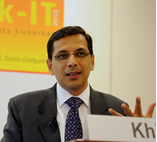
 Naresh is a Bachelor of Engineering and a Certified Risk Manager. He has a global consulting experience in Investment Banking, Risk Management, Trading, and Compliance. He also has Consulting experience in global Capital Markets. Prior to starting off as a full-time investor in 2014, Naresh headed the Global Risk and Compliance Consulting unit at the Indian IT major, TCS.
Safal Niveshak (SN): Naresh, could you tell us a little about your background and journey, how you got into value investing?
Naresh Katariya (NK): While I qualified as an engineer, I realized early that my interest was in equity markets. I was working in the broking industry for a few years. But my primary interest in equities arose while I travelled globally and worked on consulting projects for stock exchanges, depositories and investment banks. My fifteen years in TCS, in fact, provided me the perfect platform to observe how capital markets worked across the globe. I used to be filled with amazement working at exchanges/depositories in New York, Zurich, Singapore, Frankfurt, London etc. I was an equity investor in Indian markets throughout this period, building capital as well as honing my investment skills. In 2014, encouraged by a very smart investor from Hyderabad (who was my client during my broking days and now a family friend), I took the plunge into full-time value investing.
[show_to accesslevel=’almanack-all’]
SN: Great! How has been your evolution as an investor and what has been your broad investment philosophy? Has your philosophy changed much through the years?
NK: When I started serious investing in 2000, it was a relatively easy period. One could find high quality businesses at very reasonable valuations. I remember buying companies like Sundaram Clayton, TTK Prestige, Pidilite, Bajaj Finance, Hawkins, Blue Star at very reasonable valuations (closer to 10 P/E). However, returns were too good to be true, and thus I almost always sold after making 50-100% returns (which happened in short time frames).
Thanks to association with and encouragement from several smart investors, I have had the chance to improve myself, and be in perpetual learning mode. Now, I am able to better appreciate my stocks as part-holdings in businesses. Also, my background in risk/analytics offers me the opportunity to apply analytics in investment decisions. I have built a set of analytical indicators, which help improve my investment decisions.
While I have tried to grow as an investor, I still do not have the patience to hold on to my investments for long term. My usual holding period is between 12-24 months. I am hoping to learn to be able to identify and hold on to promising long term investment ideas, and not just exit on smallest sign of over-valuation.
Some of my big winners have come via an investment style which I term as GOV model (Growth-Operating Leverage-Valuations). If I find a business starting to grow or growing already, with sufficient operating leverage available to be able to grow without a lot of additional capex, and if that is available at compelling or reasonable valuations, it’s likely to be a multi-bagger. Of course, it is not easy to find such a company often (as markets would not usually make it available at compelling valuations). But such opportunities do come forth occasionally, and when they come, I go overweight on them.
SN: How is it being a money manager, especially during the extreme situations – euphoria or market crashes? How do you keep yourself sane, especially when dealing with clients with undue expectations?
NK: My readings and learnings of behavioral finance and closely observing smart investors has helped me to become more balanced in my approach (some insights on my experience detailed in next answer). Some of the tricks I employ to stay level-headed in times of extreme volatility:
a) I do not calculate my portfolio value/returns very often (so, even after a good correction, my portfolio would most likely be above the last measured value. This allows me to avoid Anchoring Bias (to the high watermark of portfolio value). Also, I compare my portfolio performance with my own performance earlier (which fortunately has been in a broad uptrend). Another trick is to have a long duration to calculate portfolio CAGR. I use 3, 5, 10-year horizons to measure my portfolio performance. This allows me to take short-term volatility in my stride easily.
b) I use several sentiment indicators to identify market froth or despondency. I use them (partly) to time my asset allocation in stocks. Having some cash always is comforting that I can buy more if my stocks correct beyond fair value.
c) I am emotionally comfortable buying stocks as they correct. This has been very helpful. Some of my larger positions have been built by buying on declines (technical analysts would frown upon this approach, but has worked very well for me, especially in cases where my conviction was high).
d) Apart from portfolio value, I use multiple indicators to track my portfolio performance: CAGR growth in dividends received, growth in owners’ earnings (EPS into number of shares which I hold).
e) During very negative periods, I curtail the number of investors which I would talk to, and avoid business channels.
SN: This last point looks interesting! Anyways, what has been your best and worst experience as a stock picker, in terms of how your stocks have worked/not worked?
NK: First, let me talk about the best. I was rewarded more than what I had bargained for. I bought into TVS Srichakra (was one of my top positions in 2013/2014) in 2013, as it offered a good way to ride the ongoing 2W boom, and also due to the change in company’s strategy to focus more on aftermarket rather than just OE (which indeed has played out, as I had expected). But the company was unexpectedly rewarded with some additional tailwinds (closure of a competitor in 2014, drop in rubber prices and in crude prices in 2014/15). This resulted in very high earnings growth and the stock moved 10X in 2 years (while I thought it would be a mere doubler). Of course, it helped that it is one of the best managed companies around, and was earlier not very actively tracked by analysts (being headquartered in Madurai).
Now about the worst. In fact, this was a combination of best and worst. Due to my perception of froth and overvaluation, I was selling in 2007 and was luckily mostly in cash at the start of 2008. However, the global financial crisis made me overly pessimistic (and possibly overconfident in my ability to time the market), and I remained in high levels of cash right till the middle of 2009. I missed first few quarters of the ferocious rally which started in March 2009. I now usually stay between 80 and 95% in stocks, considering the confidence I have in India’s long-term prospects.
SN: What are some of the characteristics you look for in high-quality businesses? What are your key checklist points you consider while searching for such businesses?
NK: I usually do not restrict my investments to so-called “high-quality” businesses. I believe there are differences between high-quality businesses, and compelling stock ideas. Within my universe of acceptable companies/sectors/managements, I primarily look for medium/long-term growth triggers, which are not yet fully reflected in valuations. I’ll give you a few instances which have worked for me:
• In early 2016, it was becoming clear that HMEL (HPCL’s JV Refinery) was nicely turning around. From a big loss in FY15, it was becoming clear (as mentioned in some Rating upgrade documents, which I accidentally came across) that HMEL had made an EBITDA of over Rs 4,400 crore in the first nine months of FY16. However, markets were not ascribing much value to that asset. The Bloomberg estimates for standalone and consolidated earnings for HPCL were the same (meaning analysts were assuming that HMEL would breakeven in FY16). It was clear that markets were missing the solid turnaround in HMEL. As a result, while Bloomberg estimates for FY16 consolidated EPS was around Rs 100, HPCL reported Rs 145. That too, very close to the year-end. Of course, there were (and are) other things which are going good for HPCL as an investment. HPCL is one of the best managed PSUs, and managed to increase its market share in various petroleum marketing segments consistently over long periods. The stock not only got rerated in the short-term (with a 50% return in those 3 months), but is up around 200% in the last eighteen months
• Towards end-2015, due to drop in Gold prices, Manappuram (and other Gold NBFCs) reported significant drop in earnings. A big part of the decline in earnings was however due to one-off factor of Interest Reversals (reversing accrued interest, due to shortfall during auctions). After bottoming in late-2015, Gold started to climb back. Which meant that the one-off losses of recent quarters due to Interest Reversals would not recur. However, markets were valuing the stock at around 10X the depressed earnings, though it was becoming clear that earnings would normalize due to stabilizing/growth of Gold prices. So, while AUM grew by less than 30% in the subsequent two years, earnings grew by 200% and the stock is up around 5X in this period. Of course, it helped that the company had a valuable consumer franchise, and its borrowing costs have dropped over 2.5% in the last three years.
One bias which I have (which has worked both ways, but more often, helped me) is a focus on dividends. I consider it a negative if a company has a payout ratio less than, say, 15%. I am not comfortable with managements not sharing at least part of the profits with minority shareholders. While I have avoided some potentially bad investments due to this bias, it has also led me miss some good ones.
Another characteristic which I give a lot of importance to is insider buying. While there could be several reasons for which an insider can sell his stock, there could possibly be only one reason why an insider would buy his own stock. Unifi Capital has done studies in Indian markets which show that tailgating insiders (after they report their buying decisions) can generate significant alpha for investors.
SN: That’s a nice idea. Thanks! Let’s talk a bit about valuations. How do you think about this subject?
NK: I am usually averse to overpaying. I can also call it a bias. P/E of my portfolio is usually lower than market P/E. I like to buy stocks which are not very expensive but which have growth/triggers coming up. I can also call it “growth as reasonable price.” Of course, it is not always easy to find companies fitting this model (as I explained in GOV model above), but with patience and hard work, it is possible I believe. But in general, my hesitation in not paying a high multiple has led to missing some secular growth themes (missed Page Industries and Maruti some years back, purely on basis of valuations). Of course, my portfolio returns have possibly beaten returns from such missed investments, but that has come at the intellectual cost of constantly looking for multi-baggers over a 2-3 years horizon.
SN: How do you determine when to exit from a position? Are there some specific rules for selling you have?
NK: I have not been very successful on this one. I have often exited much early. While the GOV model has offered me good entry opportunities, I have often ended up selling my winners early. Of course, I have usually ended up with finding decent opportunities for the released capital. Some of the criteria I have used to exit:
• The business dynamic deteriorates, and visibility of growth is no longer very good
• Markets start discounting the “story” which I had bought. So, it is no longer a GOV stock, but a regular stock (after GOV dynamics have played out)
• Markets have become very frothy. Of course, this may sound like heresy to most investors. But I have ended up selling some good stocks, just to raise cash levels, to assuage my concerns on froth/euphoria in markets in general or in a sector. This has worked both ways for me.
SN: When you look back at your investment mistakes, were there any common elements of themes?
NK: I can’t find common themes. Few traits which I have realized (there may be more which I have yet to discover) and fixed are:
a) Being happy with relatively small returns (like doubling of a stock). If I reflect on my investments more than a decade back, I see that I usually never managed to hold on to any stock after it had doubled (which often happened quite soon)
b) Worrying too much about short-term volatility in portfolio returns
c) Not being able to bet big when I find a great investment opportunity
I believe, these are all part of the growing-up process. But the key aspect it to keep learning and improving.
SN: How can an investor improve the quality of his/her decision making?
NK: This has been an area of special interest to me. I believe, investors underestimate the value of decision making, and its impact on overall performance. While it is a work-in-progress for me, the following have helped me improve quality of my decision making:
a) Meditation and Yoga in the morning brings a sense of calm and focus
b) Reading on a variety of topics. Apart from books on science, travel, biographies, I also have a list of blogs which I read regularly
c) Maintaining an Investment Diary. I started this few years back and this has been immensely beneficial. I periodically record my thoughts on my larger investments. Beauty of this is to have a record of our thoughts on a particular investment over a period of time. Some of my notes of just a few years back look silly to me in terms how I thought about an investment then, and how differently it played out subsequently. It does allow me to reflect on major investment decisions I have taken earlier, make necessary course correction to overall investment strategy.
SN: How do you think about risk? How do you employ that in your investing?
NK: Being a qualified Risk Manager (PRM), I had the theoretical/analytical background on what risk was all about. As part of my preparation for PRM exams, it also helped to study well-known blow-ups like Long Term Capital Management, Global financial crisis etc. But the concepts of risk management, as understood in the academic sense, is very different from what I practice. Prudent risk management for me is knowing my investments/companies very well (aspire to be one the best-informed analyst in my companies), applying adequate margin of safety (especially when buying, but okay with little lower level when holding), and staying away from the fads of the season.
SN: What’s your two-minute advice to someone wanting to get into value investing? What are the pitfalls he/she must be aware of?
NK: It takes effort and practice to get good at this “craft.” Some ingredients of being a successful value investor are: Lots of multi-disciplinary reading, building good understanding of businesses (not just financials) in which we are invested, avoiding mistakes in our larger positions (I try to do this by spending more effort and trying to be amongst the best-informed analyst on those positions), and not getting carried away by fads of the season.
SN: Which unconventional books/resources do you recommend to a budding investor for learning investing and multidisciplinary thinking?
NK: Apart from popular books like One Up on Wall Street and The Intelligent Investor, some of the books which have had a profound impact on my world view as well as on my investment strategy are:
- Superforecasting by Philip Tetlock
- The Selfish Gene by Richard Dawkins
- The Brain That Changes Itself by Normal Doidge
I specifically want to mention Superforecasting. I believe, becoming a “super forecaster” could be a vital ingredient in achieving long-term success in value investing.
Additionally, other aspects which, I believe, have contributed to my journey as a value investor are:
a) Travel (especially abroad) helped open my horizons and thinking, and helped bring perspective when analyzing any investment opportunities
b) Networking and collaboration with like-minded investors, with a genuine interest in financial well-being of my fellow investors (I would term them as collaborators).
SN: Which investor/investment thinker(s) so you hold in high esteem?
NK: Here are a few of them:
a) Mr. James Simon for his ability to apply advanced analytics to achieve one of the best investment returns of last few decades (about 100% CAGR)
b) Mr. George Soros for his conviction and courage to bet big when he finds a very compelling investment opportunity
c) Mr. Rajiv Khanna for his overall investing acumen, his ability to spot business trends, and his ability to distil his investment hypothesis into a small number of variables
d) Mr. Anil Kumar Goel for his ability to single-handedly track so many companies so thoroughly, for his conviction in taking concentrated bets and riding them patiently via his KCP investing model (Knowledge, Conviction, Patience).
SN: What other things do you do apart from investing?
NK: We as a family like to travel. My work too earlier (in consulting) took me to various parts of the world. I like to observe and learn from different cultures, economic/political systems, learn from languages (have dabbled in German, Spanish).
My other interest is in reading. I have started learning flute.
SN: Thank you Naresh for sharing your insights. I wish you all the best for your work and life.
NK: Thanks Vishal!
[/show_to] [hide_from accesslevel=’almanack-all’]- Spotlight: Big ideas from Value Investing and why applying them in your investment decision making will be a great deal
- InvestorInsights: Interviews with experienced value investors, learners, and deep thinkers
- StockTalk: Thorough analysis of business models of companies (without any recommendations)
- Behaviouronomics: Deep analysis of human behaviour and how it impacts investment decision making
- BookWorm: Reviews of the best books on Value Investing and related subjects
- Free Course – Financial Statement Analysis for Smart People (otherwise priced at Rs 5,900)
- Archives: Instant access to our huge archive from the past three years