
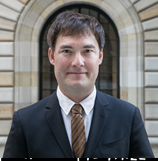
Jeff Gramm manages Bandera Partners, a value-oriented hedge fund based in New York City. He has served on several public company boards and is the author of Dear Chairman, a history of shareholder activism that has been described as “a grand story” and an “illuminating read” by the Wall Street Journal, “a revelation” by the Financial Times, and “an excellent read” by Andrew Ross Sorkin at the New York Times. Jeff has taught Applied Value Investing with Terry Kontos since 2011. He received his MBA from Columbia Business School in 2003 and graduated from the University of Chicago in 1996.
A hedge fund manager and an adjunct professor at Columbia Business School, Gramm has spent as much time evaluating CEOs and directors as he has trying to understand and value businesses. He has seen public companies that are poorly run, and some that willfully disenfranchise their shareholders. While he pays tribute to the ingenuity of public company investors, Gramm also exposes examples of shareholder activism at its very worst, when hedge funds engineer stealthy land-grabs at the expense of a company’s long term prospects. Ultimately, he provides a thorough, much-needed understanding of the public company/shareholder relationship for investors, managers, and everyone concerned with the future of capitalism.
[show_to accesslevel=’almanack-all’]
Safal Niveshak (SN): Jeff, could you tell us a little about your background and journey, how you got into value investing?
Jeff Gramm (JG): Hey Vishal, thanks for taking the time to interview me! I came to investing quite late. I’m not one of those people who was buying stocks or starting businesses when I was very young. I was a philosophy major in college and played music after graduation. As my music “career” (if you can even call it a career) wound down, I decided to pursue an MBA. It seemed like a versatile degree that would give me some options to pivot into something new. I had never heard of Warren Buffett or value investing when I got to business school. I didn’t even know what investment banking was or how accounting worked. But I ended up taking some finance courses at Columbia and I lucked into Joel Greenblatt’s Security Analysis class. The idea of buying a dollar for fifty cents really resonated with me, and I’ve been hooked on value investing ever since!
SN: Yeah, that’s the idea – buying a dollar for fifty cents – that either hooks you instantly or leaves you amused. Anyways, you’ve written this wonderful book ‘Dear Chairman,’ where you have sharply portrayed one of capitalism’s longest-running tensions — the conflicts of interest among public company directors, managers, and shareholders. Your book also explains how shareholder activism works, while giving historical context to today’s hostilities.
Can you please talk a bit more about this critical subject of shareholder activism that’s often not talked about much these days? How did you come up with the idea of writing this book?
JG: When I first began to work in the hedge fund business, in 2002, shareholder activism was becoming very popular. I even kept a folder on my desk with shareholder letters to public companies. Like most investing nerds, I was trying to read as much as I could to help myself improve. There was something very appealing about reading original activist letters written by successful investors to real companies. By contrast, many investing books are theoretical or use stale case studies. Years later, when I taught investing at Columbia Business School, I gave original activist letters to my students rather than assign books. I figured there must be some book out there that collects such letters, but there wasn’t. That was how I came up with the idea for Dear Chairman.
At first, the book was going to be a mere collection of shareholder letters. I contacted people like Warren Buffett and Ross Perot asking for specific letters that I knew existed. I asked Warren Buffett for the letter he wrote to American Express in 1964. Alice Schroeder had quoted from it in The Snowball, but I had never seen the full document. One day I came to work, and there it was on my desk, in an envelope from Berkshire Hathaway! I got the Ross Perot letter shortly after that, and the project was off and running. Eventually I decided to weave a narrative around the original letters, and the book evolved into being a history of shareholder activism.
While shareholder activism is a narrow topic, I tried my best to cover a lot of ground in the book. I discussed eight activist interventions from history, beginning with Benjamin Graham’s campaign against Northern Pipeline in 1927, and ending with the implosion at BKF Capital in the mid-2000s. Beside explaining how boards of directors work, I explored the evolution of public company ownership in the US, and I tried to impart as many business lessons as I could over the eight chapters. The raw material is fabulous; I was lucky to have a lot to work with. We can learn an awful lot from Ross Perot, Warren Buffett, Carl Icahn, Michael Milken, Benjamin Graham, and Alfred Sloan.
SN: Wonderful! In your book, you have talked about the examples of heavyweight investors like Ross Perot who walked away in frustration from General Motors and Warren Buffett who has believed that serving on boards was his worst business mistake. So, if guys like Perot and Buffett have struggled to have a positive impact in the boardroom, how can the rest of us possibly improve oversight at large public companies? Isn’t selling the stock if you disagree with how the company is being managed always a better strategy, and especially when you aren’t a heavyweight investor?
JG: I think you are basically right here. Activist investing is very hard, and getting involved with a public company’s governance is difficult, dispiriting and time-consuming. Walking away from poorly governed companies is often the best option for investors, especially smaller ones.
But what if everyone just walked away from poorly-run companies? Then there would be very little pressure on companies to mind their shareholders. Some investors have developed expertise in dealing with boards of directors and replacing underperforming management teams. There are profits available to investors that can take underperforming companies out of the hands of bad management teams. Carl Icahn called this an arbitrage almost 40 years ago, and that arbitrage still exists. Some public company assets are simply more valuable to shareholders if they are auctioned to the highest bidder, or transitioned to a different management team. In today’s markets, where it is very hard to outperform, activism can be a valuable tool.
SN: Which was your favourite case of activism from your book? Why?
JG: I think the Ross Perot chapter is my favorite. The history of GM is incredibly rich, and Perot’s involvement with the company ultimately marked a turning point in public company oversight in America. Perot was a legendary businessman and the largest shareholder. But GM’s CEO found him a nuisance and ended up pushing the company to buy him off the board for $750 million dollars. When GM’s shareholders saw the company use three quarters of a billion dollars to weaken its board of directors, they realized they had created a monster by not putting enough pressure on the company.
Besides the Perot story, just being able to recount GM’s history was a real privilege. The ascent of the company under Alfred Sloan and its decline under his successors make for wonderful reading. There are just so many fascinating lessons in there.
I also like the Karla Scherer chapter of my book. Karla was the wife of the CEO of R. P. Scherer and the daughter of the founder. She ended up running a proxy fight against her husband and pushing him out of the company. It was a fun chapter to write and research, because the story had not been extensively covered in the media. I got to do a lot of original research.
SN: You have also mentioned in you book how cynical you have become over years about how public companies are run. Can you please share some instances that aided this rise in your distrust in sincerity and integrity practiced in boardrooms? What are those factors that cause you to get cynical about how a business is being managed?
JG: Well, I’ve worked with a lot of really good management teams, so I don’t want to sound too negative. But the fact is that corporate governance in America, particularly at very small companies, can be abysmal. I don’t think it’s exaggeration to say that many directors of small cap public companies routinely put their own personal interests before shareholders’. You see this many time in my book and I’ve seen it over and over again in my investing career. In the end, we are self-interested creatures, and many companies are run for the benefit of management and the board. I’ve been involved in several companies where management willingly screwed over their shareholders, and I’ve seen many more such situations from the sidelines.
SN: I can tell you that the situation isn’t any different in India on how a lot of boardrooms work. The incentives are often misaligned.
Anyways, let’s now talk about Jeff Gramm, the investor. How have you evolved as an investor and what’s your broad investment philosophy? Has your investment policy changed much through the years?
JG: I think I’m a pretty typical value investor. I love to find wonderful businesses at great prices that I can own for a long time and watch compound earnings. At the same time, I’m not above buying lesser businesses for dirt cheap prices or seeking out special situations with a good risk-reward setup. I don’t think my overall philosophy has changed over time. If I’ve changed as an investor, it’s because I’ve made many mistakes and learned from them. Nothing is quite as educational as a permanent capital loss. Over time, I’ve become more skeptical of boards and management teams, and I’ve become more skeptical of bad but very cheap businesses. They still seduce me sometimes, though! But my overall philosophy is the same – like my value investing peers, I view shares of stock as fractional ownerships in a business, and I try to buy those shares at a significant discount with a margin of safety.
SN: You have a fund Bandera Partners. Please talk more about your investment philosophy here and what you are aiming at while taking money from your clients.
JG: Bandera launched in December 2006. We are a small value investing shop with only about $160 million of assets under management. We have a concentrated book, only about 15 positions, with some positions as large as 20% of our portfolio. Our goal is really quite simple – to try to generate good long term returns for our investors while staying laser-focused on downside risk.
SN: I understand that your fund is long term biased, and that you maintain a concentrated portfolio. How do you manage to do that – especially a long-term focus – when the temptations to act in the short term are so high, and when clients may be breathing down your neck especially during topsy-turvy markets?
JG: We’ve been very fortunate to have good, long-term oriented investors who understand our strategy. So we haven’t really gotten pressure to chase rising markets or sell falling positions. I’ve always thought the great challenge of investing is to be able to patiently look for good ideas and to not get lulled into doing dumb stuff when you can’t find a suitable place to deploy capital. I think so much of our job is just staying sane and not making dumb mistakes with our investors’ money.
SN: What kind of fundamental analysis you do, or the process you use, while selecting investments for your fund? What is your broader checklist like?
JG: I think investment research is ultimately pretty simple. We try to understand the economics of a business and the competitive dynamics of its industry. We make a conservative estimate of the value of that business – again that isn’t necessarily hard – and we hope the market gives us an opportunity to buy it at a discount to our estimate.
I tend to focus on quirky, small businesses, so usually my research process consists of finding the handful of people who really understand the industry and the business, and then picking their brains. Much of my job is just being an investigative reporter, trying to find people who know more than me that I can learn from.
I don’t really have a broader checklist, and I don’t have a process for finding ideas to look into. I think it’s key for investors to refine their quick filters to allow them to choose which companies to really focus on. Investing is often about time allocation, and about deciding which companies to really dig into. I’ve gone through various periods of being systematic about the initial search, but none of them has really borne much fruit. There are always plenty of ideas to look at, the real challenge is figuring out which ones to cast aside and which to pursue.
I think the longer that you invest and the more experience you have, the faster and more efficient this quick filter becomes. This is one reason why I don’t teach “idea generation” in my class. To me, idea generation is not the hard part, it’s what you do with the ideas that come across your desk. I think this is something you refine over time as you learn to value and research companies. I’m sure there are some investors out there who have excelled at their searches and screens so that the ideas that first come across their desk are from a potentially more profitable pool. But I’ve never been able to do that, so I rely on efficient filtering.
SN: Now, that was a great insight. Thanks! As per your March 2017 filing, Google was around 11.5% of your portfolio. Can you please explain your case for the company here? What made you buy it? What makes you hold it? And what could make you to drop it going forward?
JG: I can’t take credit for our Google position – that is my partner Greg’s. That said, it is not super complicated. Google is one of the great franchises we’ve ever seen, and it is a rapidly growing business with high returns on assets and very low capital requirements. We bought it at only about 12x after-tax earnings. Today that multiple is more like 20x. We still think that is too cheap for a business of this quality that is continuing to grow so rapidly. Obviously, we could drop it going forward if the growth doesn’t materialize as we expect, or if the valuation gets too high. I think one of the key long-term challenges for this business will be on the regulatory front. These mega-tech companies have incredible competitive positions, and their domination will ultimately lead to much tighter regulation and utility-like oversight. We’re already seeing this happen in Europe, which has no big tech companies of its own. Europe’s leaders are asking themselves, “Why let a bunch of large American corporations act as essentially a toll booth on the highway of global internet commerce?”
SN: What are your thoughts on disruption that’s killing businesses all around. How do you build in a margin of safety for that when choosing your portfolio companies?
JG: The only margin of safety I know of to protect me from disruption in today’s economy is micro-level. It is, of course, to buy individual companies at a large margin of safety against risks inherent in any business enterprise. If you buy decent businesses at dirt cheap prices, your portfolio will be able to withstand disruption. Remember, disruption is not new. Warren Buffett made a fortune buying companies that made windmill parts, paper computer punch cards, and trading stamps.
SN: Given your cynicism with how boardrooms function, what is your corporate governance checklist while searching for investment ideas?
JG: I don’t have a rigid checklist. I always want to understand how management and directors think about the company, its long-term strategy, its shareholders, and capital allocation. Getting capital allocation right is so critical, and it often comes hand in hand with wisely considering what is in the shareholders’ long-term best interests. That said, one of the major themes of my book, and I believe it applies to investing, is that there aren’t a lot of corporate governance best practices. There’s no set of governance characteristics that will ensure a good or bad investment outcome. Some companies that have performed exceptionally well, the obvious example being Apple, have had very questionable oversight. In the other side, Enron would have passed many governance checklists before its fraud was exposed.
SN: That’s so true! Anyways, what has been the best time – that tested you – and worst time – that tested you – in your experience as an investor?
JG: If you’ve asked this question to other investors, I’m sure several of them gave the same answer: the financial crisis of 2008-2009 was an incredible trial by fire that was exhilarating and horrifying at the same time. It qualifies as both the best time and the worst time for me. Value investors talk about capitalizing on fear in the markets, but many of market’s fears during the financial crisis were legitimate. The money markets were grinding to a halt and you saw large, blue chip corporations worried about making payroll. We held a very large investment in a company called Hilltop Holdings, which at the time traded at a steep discount to its cash balance. I remember meeting with the chairman of the company in New York the day the Congress voted down the bailout. So many surreal things were happening. There were a lot of incredible investment opportunities, many of which were simple situations where you were buying cash in the hands of good allocators at a huge discount. But at the same time, parts of the financial system were collapsing around us. It was harrowing.
SN: That was indeed a terrible, but memorable, time to be an investor. Let’s talk about valuations now. How do you think about this subject?
JG: My approach to valuation is so absurdly simple that, when I teach it at Columbia, the students think I am intentionally dumbing it down for their benefit. Here’s how I value companies: I evaluate the prospects of a business and make a rough estimate of what I think its normalized earnings power is. I then ask myself what yield I would require to want to buy that business. The more durable the competitive advantage and the better the growth prospects, the lower yield I will require! It really is that simple. I even give my students a little chart with, I kid you not, earnings multiples and their inverse, earnings yields. For example, a 10x EBIT multiple means a 15.4x P/E assuming a 35% tax rate, meaning a 6.5% earnings yield. If you make valuation too complicated, you’ll find clever ways to delude yourself into thinking a fairly valued stock is cheap! I try to keep it as straightforward as I possibly can.
SN: I am so elated to know your thoughts on valuations. While trying to keep it very simple, I always had a guilt, which is gone now! Simple works best.
Anyways, how do you determine when to exit from a position? Are there some specific rules for selling you have?
JG: Selling is always very difficult, and I don’t profess to be good at it. Part of managing a portfolio means trimming position sizes back down when they get too large, but that often means reducing your very best ideas just when the company is at peak performance. I don’t have any rules of thumb other than I evaluate my positions frequently and consider what I would do if I owned zero shares and wanted to put the position on at that moment. I just try to think clearly, and I’m not sure I can successfully do it.
It seems totally impractical to set a sell target when you first buy a position, and stubbornly stick to it no matter what transpires. We hold investments for many years. We have owned our biggest position, Star Gas Partners, for almost 10 years. So much happens to a business over 10 years, it would be silly to say, “Oh, I need to sell at X price, because 10 years ago X was my estimate of fair value!”
SN: I’m completely with you on this too. As Philip Fisher said, if the work done before buying high quality stocks was good, the time to sell them is never.
What about mistakes? When you look back at your investment mistakes, were there any common elements of themes? A real-life example would be helpful.
JG: I suppose I’ve made every mistake possible over my career, but a few common themes come to mind. Here are some:
• Unintentionally cutting corners because a smart friend or peer is in the stock. When you research a company, you can often boil down the investment decision to a few key questions that you need to answer about the business’ prospects. Sometimes those questions are very hard to answer, and you will be tempted to cut corners if another smart investor has bought the stock. This is a classic mistake that I have made several times. Not only do you end up buying a stock you should not have bought, you end up owning a stock that you don’t understand as well as you need to. If you know a business inside and out, you know what to do when it does not perform how you expect it to. If you don’t know a company as well as you should, and then something bad happens, it’s easy to compound the initial mistake with another blunder.
• Trusting a management team or director when they are saying all the right things. It’s easy to say all the right things in this business and tell a good story. This can be very seductive to investors and I’ve certainly been suckered during my career by polished and optimistic CEOs.
• Buying a stock that’s not quite cheap enough for me, but has some impending catalysts like an activist investor or potential buyout. Don’t buy that one! Just don’t.
• Buying a stock that’s not quite cheap enough for me, but I’m sitting on a ton of excess cash, the stock seems pretty decent, and I’m worried about my lack of market exposure. Don’t buy this one either!
SN: How can an investor improve the quality of his/her decision making? How have you done it?
JG: I think it’s very hard to meaningfully improve decision making, and I certainly don’t think I have done it. I appreciate the public’s burgeoning interest in this topic. I love the Munger speeches on human misjudgement, and Kahneman’s Thinking Fast and Slow is of course a monumental achievement. I subscribe to Shane Parrish’s content and I enjoy it a lot, too.
But honestly, I think I read that stuff for fun, not self-improvement. So many of our biases are just too deeply ingrained. For example, everybody anchors. It is just human nature – if an investor tells you they have unlocked some magic secret to attain pure rationality without ever anchoring, I would guess they are being delusional. This is why you need to buy things cheap, with a margin of safety.
The truth is, none of us are perfectly rational beings, and we are going to make a lot of silly decisions influenced by various psychological biases. We combat these issues, not by re-purposing our brain and becoming superhuman clear thinkers, but by buying stocks cheap enough to give us some leeway to do the dumb stuff we can’t avoid doing. If, on the fringes, we can learn enough about our own psyches to avoid a few real boners, that would be nice. But, again, the real trick is buying good businesses cheap when they happen to come on sale.
SN: That was honesty at it best! Thank you!
How do you think about risk? How do you employ that in your investing?
JG: I desperately try to avoid permanent capital losses, but that’s almost the full extent of my approach to risk management. We take large positions, so I’m also very aware that concentration is dangerous and can cloud your judgment on your most important positions. But, not to sound like a broken record, my approach to risk really centers around buying with a margin of safety.
SN: You teach Value Investing at Columbia. What key ideas do you focus on in your curriculum? If you were to ask your students to forget everything but five big ideas from this subject, what would be those? (I am a teacher of Value Investing myself, so this is more of a self-help question for me 😊)
JG: I’m taking next year off from teaching so I can do more book events in the US and abroad, but I don’t plan for this to be a permanent hiatus. My class is built around valuation case studies. We look at a new company every week and try to value it as best we can. I’ll often bring in expert guest speakers (company insiders like store managers, or large shareholders) for the second half of the class to debunk a lot of the precious ideas that got tossed around during the first half. I find this can be a really powerful didactic tool.
The mantra of my class is that the students need to think about every company like it is a gas station around the corner from their house that they have an opportunity to buy. You see, we all know what value investing is in theory. As I said earlier, it is treating shares as fractional ownership interests, and buying them with a margin of safety. Those are simple guidelines, yet so many of my students don’t really adhere to them. I’ll get writeups that focus on stock charts, 52-week highs, insider purchases, share repurchases, and a lot of other stuff that doesn’t have anything to do with what the business is, how it makes money, and what it’s worth to an acquirer. So much of my class is breaking down what people think they know about the stock market, and then focusing on the very basics of how to value businesses.
SN: Wonderful, thanks for that! What’s you two-minute advice to someone wanting to get into value investing? What are the most important thing he/she must practice, and the pitfalls he/she must be aware of?
JG: Start investing with your own money – not too much of it – and get ready to make some dumb mistakes that will teach you valuable lessons. That’s how I learned, and I can’t think of a more effective method. A permanent capital loss is a stern master.
Beyond that, really try to think about what makes a business tick, how it earns money, and what you would pay for the whole thing. Always read the 10K (annual reports) from front to back, and don’t get too fixated on ratios, metrics and trailing P/E multiples. Always take a step back, look at the enterprise value, and ask yourself, “Would I really want to pay $XXX for this entire business?”
SN: Which unconventional books/resources do you recommend to a budding investor for learning investing and multidisciplinary thinking? If you were to give away all your books but one, which one would it be and why?
JG: Well this is a terrible answer but I would probably keep my own book for sentimental reasons. I sunk a year of my life into it, I’d always like to have a copy lying around! Joking aside, I really think reading a lot of 10Ks and getting out there and buying a few stocks is the best way to learn.
There are some good investment books out there. I like You Can be a Stock Market Genius by Joel Greenblatt. Many of the “secret hiding places” that Joel discusses aren’t so secret anymore, but it is a valuable book that should destroy any notion you have that markets might be fully efficient. I am also a big fan of The Snowball. It has so many interesting Buffett stories that I never knew. I should reread that book.
SN: Which investor/investment thinker(s)/business owner you hold in high esteem? And why?
JG: Oh, there are so many good investors and wise businesspeople out there, I feel like I’d be leaving too many of them out by trying to make a list. And I esteem very good ideas as much as people – all of us are capable of coming up with some insightful stuff.
SN: Hypothetical question: Let’s say that you knew you were going to lose all your memory the next morning. Briefly, what would you write in a letter to yourself, so that you could begin relearning everything starting the next day?
JG: What a question! Well, I’m not really sure I’d want my memory-less self to get back into investing. As I discussed before, the best way to climb that learning curve is to make money-losing mistakes, and I’d rather the amnesiac, 42-year-old JG refrain from losing our hard-earned money.
I think I would stress family and friends. Relearning value investing seems like perhaps not the best use of time. Instead, I would leave myself the names of some wise fund manager friends to invest money with. I would also tell him that he’s allergic to alcohol, and it will immediately make his heart stop upon consumption of just one drop. .
I would make a list of all the best restaurants and good bands that we will now get to experience as first-timers. Sounds pretty fun, actually!
SN: Sounds great fun indeed! Finally, what other things do you do apart from investing?
JG: I really enjoy writing, so I’d like to try to churn out a book every once in a while. I love music. I enjoy singing, seeing bands play, and swimming in the ocean. I like regional junk food and ethnic food. I’m one of those extroverted types that would go out every single night with family and friends if I could. Time management is thus always an issue.
SN: That’s brilliant, Jeff. It was one of the most refreshing and insightful discussions I have had. Thank you so much for sharing your insights with Safal Niveshak readers. I wish you all the best for your work and life.
JG: Thanks so much for doing this, Vishal!
[/show_to] [hide_from accesslevel=’almanack-all’]- Spotlight: Big ideas from Value Investing and why applying them in your investment decision making will be a great deal
- InvestorInsights: Interviews with experienced value investors, learners, and deep thinkers
- StockTalk: Thorough analysis of business models of companies (without any recommendations)
- Behaviouronomics: Deep analysis of human behaviour and how it impacts investment decision making
- BookWorm: Reviews of the best books on Value Investing and related subjects
- Free Course – Financial Statement Analysis for Smart People (otherwise priced at Rs 5,900)
- Archives: Instant access to our huge archive from the past three years