 Hari is a Senior Director of Engineering at Salesforce. He is part of the Einstein Analytics Group and his work involves empowering thousands of startups and successful companies at scale by democratizing big data, analytics, artificial intelligence. He is passionate about bringing positive change to society with the help of technology and business. Hari is a frequent guest at The Investors Podcast and share his thoughts on his blog bitsbusiness.com.
In this interview, Hari talks about his journey and experiences in self-learning and investing over the years.
Safal Niveshak (SN): Please share about your background and your education.
Hari Ramachandra (HR): I come from a small town (now it is a bigger city) Mysore. My father was a government employee, a civil engineer by profession and a musician by hobby, I grew up in an atmosphere where art and education were equally valued. My father is a staunch follower of Mahatma Gandhi and spent his evenings and weekends teaching “Bhagavad Gita” to adults and kids in Mysore and nearby villages. His principles and philosophy have had a lasting impact on me.
I started my career as a Mechanical Engineer. I was fascinated by robotics, however over time I was drawn towards software engineering. It was 1998 and Internet was the new big deal. I quit my secure job at Wipro Infotech as a design engineer in their printer division to join a small internet startup in my hometown. I had to take a large pay cut, but it was one of the best decisions I ever made. It gave me the experience of running a business from sales, customer relations to software development. I was exposed to the world of business and deal making through my CEO and founder. I got to travel with the sales team and present to key customers. I learnt first-hand the challenges in selling products and the importance of customer satisfaction. I had to present at multiple events to small and big audiences. I practiced intensely to overcome my nervousness. This experience has helped me immensely throughout my career.
After working for some time in the startup world, I realized the immense opportunity and promise the Internet had and wanted to play in the big league. Hence, I set my eyes on the United States of America. Thanks to some of my good friends, who encouraged me to pursue higher education in the US, I landed here in 2000 for my masters’ in computer science.
Timing wise, it could not be worse. Few months after I registered for my masters, the dot-come bubble crashed and with that my dreams and those of many students like me were shattered. There were mass layoffs and companies stopped sponsoring H1B visas, which was essential for immigrant students like me to work in the US. I was lucky to be selected for a fellowship offered by IBM in collaboration with my University, which helped me sustain myself till I found a IT consulting company to sponsor my H1B.
<!–more–>[show_to accesslevel=’almanack-all’]
I worked at various jobs since then, but that experience has seared few lessons deep in my mind, including these –
1. Industries and careers are uncertain and can be disrupted at any time, and only those who can adapt survive,
2. Grit is more important than intelligence in hard times, and
3. When you face hard times, the best course of action is to put your head down, focus on the problem, work harder, stop worrying and ignore everything else.
Thanks to my experience, I was able to instantly connect and receive the advice by Charlie Munger on facing hard times in a talk to students at University of Michigan, where he quoted this famous poem by Rudyard Kipling (complete poem here) –
If you can keep your head when all about you
Are losing theirs and blaming it on you,
If you can trust yourself when all men doubt you,
But make allowance for their doubting too;
If you can wait and not be tired by waiting,
Or being lied about, don’t deal in lies,
Or being hated, don’t give way to hating,
And yet don’t look too good, nor talk too wise…
In this talk (back in 2009 after the financial crisis) answering a question from a student on coping with the hard times ahead after they graduate, his advice was (full video here, the question starts at 17 mins) –
The great depression in 1930’s was difficult but the people who plugged well and just kept going eventually did fine and so I think there’s still plenty of trouble ahead but I don’t think it matters if you’re gonna live a long life, it actually may be an advantage to have some trouble early in your life, I think that the job market is going to remain lousy for some time to come but why fret too much about what you can’t fix just keep your head down and do your best, if you stick around you will be there to take advantage of the next boom.
This advice is priceless and timeless to anyone and especially to students who are starting out in their careers. I have lived this advice and thanks to my luck and grit I was able to stick around and take advantage of the next tech boom in social networking, in 2009, by joining LinkedIn at the right time. I currently work at Salesforce as Sr. Director of Engineering.
SN: That was inspirational, Hari, and I completely buy into your idea of keeping your head down and doing your best, and then sticking around.
Let’s move on. You’re a voracious reader on a wide variety of topics. How did you first get interested in reading?
HR: My grandfather was a librarian at the University of Mysore and my father had carefully stacked books in shelves in every room. We did not have TV at home till I was in high school. This left me with books as one of main avenues to spend my spare time. I got introduced to various topics and my love of books continues till date.
SN: How do you retain what you read? Do you have any specific system for making notes and keeping track of what you’ve read?
HR: This is an important question, Vishal. In the age of self-publishing and Amazon Kindle, there is a constant struggle by authors and publishers to get the attention of the readers. Many of us buy books impulsively and rarely care to evaluate the value we got out of that book for the money we paid and more importantly the time we spent reading it.
I recommend the book How to Read a Book: The Classic Guide to Intelligent Reading. This book has helped me understand the serious work involved in reading a book and it’s benefits. The authors Mortimer J. Adler (Author), Charles Van Doreneducate the reader about various techniques he should employ while reading a book based on the topic of the book and the intention of the reader.
I have incorporated some of the techniques recommended by the authors. These techniques also help me in eliminating many books (which helps me answer your question #5).
I follow the usual methods of highlighting, making notes on the side of the printed matter etc, but the most effective way for me to retain what I have read is through synthesis. However, I also try to answer following questions –
• Why am I reading this book?
• What is the structure of the book?
• What’s the main theme of the book (key points)?
• What are my questions to the author?
• What are the facts in the book I would like to challenge?
• My commentary on the topic of the book?
I find it most useful to write down my thoughts on what I have read that day or week, even though I might not be accurate in recollecting facts and figures in the books I have read that week. This helps me to meditate on the ideas presented by the author, sometimes contest the arguments presented in the book and digest the subject matter as it relates to other ideas presented by various books/matter I have read in the past.
SN: Those were valuable insights. How has your reading style changed in last 5 years?
HR: If I look back, much of the reading I did in the past can be called browsing, i.e., hopping from one topic to the other without deliberation and synthesis. Over the years I have realized the importance of assimilation of knowledge rather than information. When done right, our reading should help us build mental models and lead us to related books and materials which would help us sharpen our models with an aim to practice them in our day to day life or profession. Knowledge without application is not beneficial. One of the outcomes of this realization is more purposeful reading with a goal of seeking and I am more selective in terms of what I read.
SN: Using Charlie Munger’s principle of inversion in the context of reading, I think it’s more important to figure out which book to abandon rather than which ones to finish. How do you decide that it’s time to stop reading a book and move on to next one? In other words, what’s your process for separating signal from the noise?
HR: Time is the most precious commodity and so is our energy. However, while selecting a book, it is important to understand the purpose or your goal in the first place. For example, if you are reading for entertainment then you don’t have to be deliberate, but if you are seeking knowledge in an area of interest, you must be extremely selective and cautious as the risk of being misguided is more dangerous than ignorance. This is especially true in areas like investing.
Some of the criteria I use to in selecting books or other sources is based on the following factors –
1. The credentials of the authors i.e., their qualification, experience and reputation in the field,
2. Their motive, i.e., their motivation to author the book or publish their opinions, and
3. Social signals, including referrals from trusted friends and experts I respect and trust.
However, there are instances when the book might not be meeting my expectations or might be either much more advanced or rudimentary compared to my current my knowledge. Once I realize the book is not satisfying my goal or is not helping me in my quest to understand the topic or I find myself unable to digest the subject matter when I am meditating on the subject addressed by the book, I put it aside and move on. Sometimes I might come back to the book once I am ready.
SN: What do you consider your biggest mistake in life and what lesson did you learn from that mistake?
HR: This is a hard question as I have made many mistakes in my life and it’s hard to pick one as the biggest. At the same time, I believe mistakes are great learning opportunities and a life without mistakes is not worth living. Mistakes are a sign of growth, exploration, experimentation, change and innovation. However, if we fail to learn from our mistakes and other’s mistakes, we are destined to stagnation and mediocrity.
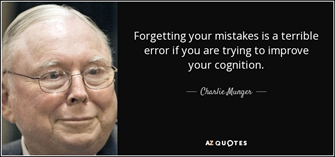

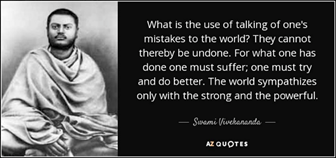
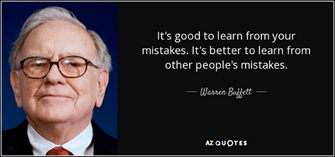
If I am forced to pick one of my biggest mistake, I would pick “lack of focus.” One of the luxuries of living in in the age of fourth industrial revolution and in the heart of Silicon Valley is the abundance of opportunities. There are many fields of interest that are attractive and tempting if you have a curious mind. But if you don’t have the discipline to prioritize your interests and opportunities and focus on what is most important you will not accomplish much.
I am guilty of letting my mind run loose in many directions. I had many ways to rationalize it but over few years I realized I had stagnated due to my lack of focus. I came across a story about Buffett’s advice to his pilot (Mike Flint; read below) and found it very instructive. I decided to implement it in my life and it has worked very well for me. I recommend this exercise if you feel you lack focus. It sounds simple, but you will realize how hard it is when you try to implement it for an extended period of time (1-2 years). Once you get into this habit you will never turn back to your old ways.
One of the ways I keep my intellectual curiosity alive and satisfied is by reserving and time-boxing my exploration activities. This I find personally important and satisfying as it is like a release valve that prevents me from breaking my rules. Enjoy the story. (I am not sure if it is a true story, however it is powerful)
Mike Flint was Buffett’s personal airplane pilot for 10 years. (Flint has also flown four US Presidents, so I think we can safely say he is good at his job) According to Flint, he was talking about his career priorities with Buffett when his boss asked the pilot to go through a 3-step exercise.
Here’s how it works…
STEP 1: Buffett started by asking Flint to write down his top 25 career goals. So, Flint took some time and wrote them down. (Note: you could also complete this exercise with goals for a shorter timeline. For example, write down the top 25 things you want to accomplish this week.)
STEP 2: Then, Buffett asked Flint to review his list and circle his top 5 goals. Again, Flint took some time, made his way through the list, and eventually decided on his 5 most important goals.
Note: If you’re following along at home, pause right now and do these first two steps before moving on to Step 3.
STEP 3: At this point, Flint had two lists. The 5 items he had circled were List A and the 20 items he had not circled were List B.
Flint confirmed that he would start working on his top 5 goals right away. And that’s when Buffett asked him about the second list, “And what about the ones you didn’t circle?”
Flint replied, “Well, the top 5 are my primary focus, but the other 20 come in a close second. They are still important, so I’ll work on those intermittently as I see fit. They are not as urgent, but I still plan to give them a dedicated effort.”
To which Buffett replied, “No. You’ve got it wrong, Mike. Everything you didn’t circle just became your Avoid-At-All-Cost list. No matter what, these things get no attention from you until you’ve succeeded with your top 5.”
Also see this video –Focusing is about saying no – Steve Jobs (WWDC’97)
SN: Thanks Hari for these insights. They are really helpful! Anyways, how do you go about learning a new topic? Where do you start?
HR: I had my struggles with learning and for a long time I was deprived of good techniques to truly understand and master new topics. I discovered few techniques partly by trial and error and partly thanks to friends and books. One of the most influential among them has been the techniques made popular by Prof. Richard Feynman.
The famous Nobel Prize-winning physicist understood the difference between “knowing something” and “knowing the name of something,” and it’s one of the most important reasons for his success.
Following his advice and based on my experience, I have developed a learning process that works for me. I start with developing familiarity of the subject and try to understand the vocabulary used, once I am satisfied with my level of understanding, I test it by writing about the subject. I try to write it in simple terms so that an eight or ten-year-old can understand the topic.
A lot of people tend to use complicated vocabulary and jargon to mask when they don’t understand something. The problem is we only fool ourselves because we don’t know that we don’t understand. In addition, using jargon conceals our misunderstanding from those around us.
When you write about a topic in simple language that a child can understand, you force yourself to understand the concept at a deeper level and simplify relationships and connections between ideas. If I notice struggling to explain in simple terms, I know I have gaps in my understanding.
I also use teaching as a forcing function. I teach at a local technical institute in Santa Clara and I sign up for topics that I know but would like to develop a deeper understanding. I have discovered teaching as a powerful tool, as it packs multiple benefits and psychological forces.
I have also discovered that apart from teaching, practicing what we learn is the true way to attain deeper understanding of any subject. For example, if one wants to gain deeper understanding of a subject like investing, after reading few books that introduces the basics, it is important to put the learnings into practice by analyzing businesses, reading the annual reports and making the tough decisions of investing in the companies.
SN: What according to you is the most important psychological blind spot that one should try to overcome in order to be a better decision maker?
HR: There are several blind spots that can be barriers to better decision making, but I consider ego to be the most formidable. Ego is the hardest barrier to overcome as it sneaks up on you in your most vulnerable moments.
Ego can never be overcome, rather it should never be eliminated as it is essential for our existence and identity. Ego is the result of millions of years of evolution. Self-centredness, or ego, is readily observable in the early stages of development when a child searches for own identity. Ego is also responsible for motivating us to survive, thrive and grow in our lives. However, ego is a double-edged sword, like everything else in life. If we don’t know how to channelize our ego and the resulting energy, it will take control of us.
Even the most successful, highly intelligent and benevolent human beings are not immune from the illusions created by their egos. According to Charlie Munger (Vice Chairman of Berkshire Hathaway) –
When ego is involved people tend to do things that they are not supposed to do.
In fact, Warren Buffett, one of the most successful investor and a shrewd decision maker has fallen prey to his ego and the result was the acquisition of Berkshire Hathaway, the textile mill. Buffett has said that buying Berkshire was a mistake because back then it was only involved in the textile business. Textiles were a declining industry in 1965. It tied up a lot of his money in a poor business.
But why did he end up owning such a poor business? The short answer is ‘ego’, and here’s the story in Buffett’s own words in an interview with CNBC –
I bought the first shares of Berkshire in 1962 and it was a northern textile business destined to become extinct eventually,” Buffett says in the documentary. “It was a statistically cheap stock and a terrible business.
The textile company, headquartered in New Bedford, Mass., was in bad shape, but Buffett saw an opportunity where others saw a lost cause.
“Berkshire Hathaway was closing mills, and as they closed mills it would free up some capital, and then they would re-purchase shares,” he explains. “So I bought some stock with the idea that there would be another tender offer at some point, and we would sell the stock at a modest profit.” He first purchased shares on Dec. 12, 1962 for $7.50 each.
Buffett was just an investor in the business like any other until a dispute arose. The management of the company offered to pay Buffett $11.50 for his shares, but later lowered the amount.
The tender offer came out a few months later and it was at $11.375, an eighth of a point cheaper,” Buffett says. He felt cheated. “That made me very mad, so I just started buying more stock.” He continues, “I just felt that I had been double-crossed by the management. In May of 1965, I bought enough so we controlled the company, and we changed the management.
To Buffett’s credit, he learns from every mistake and Berkshire Hathaway became the foundation for what is now a globally renowned holding company. However, this story is instructive and serves as a reminder about the consequences of letting your ego take control of you and hence your decision-making process.
If a famously rational investor like Buffett admits having fallen prey to his ego and emotions, it is safe to assume most of us are not immune to this blind spot.
SN: Isn’t it difficult, almost impossible, to eliminate this blind spot?
HR: Yes Vishal. It would be a futile, if we try to eliminate ego as it is deeply intertwined with our existence. Rather, the focus should be on evolving our relationship with it. We should strive to be the masters of our ego rather than the other way around. Buddhism, Hinduism and other eastern philosophies have spent considerable energy and mindshare tackling this challenging topic facing humanity.

SN: What are some of the books that you’ve re-read multiple times?
HR: Here are some such books –
- Poor Charlie’s Almanack – Peter Kaufman (I read some parts of it to my son every week and I revisit it often, this book has had a profound impact on me)
- Wings of Fire – Dr. APJ Abdul Kalam
- Essays of Warren Buffett – Lawrence Cunningham
- Introduction to Algorithms – Cormen, Leiserson, Rivest, Stein
- High Output Management – Andrew Grove (former CEO of Intel)
- Influence – Robert Cialdini
- The Third Chimpanzee – Jared Diamond
- The Selfish Gene – Sir Richard Dawkins
- The Goal – Eliyahu M. Goldratt
- How Will You Measure Your Life – Clayton m. Christensen
- The Lessons of History – William James Durant
- The Black Swan – Nassim Taleb
- Bhagavad Gita
- The Complete Works of Swami Vivekananda
SN: A great list! By the way, if you were to give away all your books but one, which one would it be and why?
HR: It would be Poor Charlie’s Almanack, especially the book signed by Mr. Munger himself.
SN: What big ideas have you changed your mind on in the last few years?
HR: Jeff Bezos once said that people who are right a lot often change their minds. Smart people revise their decisions because they gathered new information that wasn’t there before.
Like many, I struggle to let go of my ideas and convictions. One of the ways I try to protect myself from this trap is by avoiding making public commitments towards any ideology or ideas.
One of the ideas I am changing my opinion on recently is regarding big tech. I have believed that overall (net-net) rapid advancement in technology and hence the new business models that emerge will bring positive changes to the society and hence the governments should stay away from these companies i.e., they should not be regulated.
Few years ago, it was clear that social media, AI, mobile and cloud would change the way we work and live. However, no one could predict some of the recent developments, especially in social media. It is clear from many incidents of breach of privacy and trust at companies like Facebook, Uber and the likes that when you have an aggressive environment and a locker room culture, Silicon Valley is not much different than Wall Street.
I admired and cherished the egalitarian culture in the Valley and many companies followed the motto of “don’t be evil” even though it was not in their manifestos officially, like Google. However, greed is seductive and when the missionaries are replaced by mercenaries you have a culture that’s out of control.
We are becoming unthinkingly reliant – addicted – to ease-of-use at the expense of quality. We are walking dumpsters for Internet content that we don’t need, and which might actively damage our brains. However, what is alarming is that this phenomenon is not an unintended consequence, rather it is by design.
This phenomenon is the effect Netflix has when it auto-plays the next episode of a show after a cliff hanger and you continue watching. It is evident when you are sucked into scrolling the endless feed on your Facebook app, where you are served content with an intention to monetize and not with an intent to inform. It is obvious when Alexa starts recommending stuff based on the parameters that are not just in your favour but also profitable for Amazon.
I believe it is time to hit the pause button and become mindful of our use of technology and the trust we place in those who deliver these services.
SN: That’s pretty interesting, Hari! Anyways, what’s one habit that you’re trying to change right now? What new habit are you working on?
HR: The new habit I am working on is “Mindfulness,” defined thus –
Mindfulness is the basic human ability to be fully present, aware of where we are and what we’re doing, and not overly reactive or overwhelmed by what’s going on around us.
Mindfulness is a powerful antidote to distraction and restlessness, which I am working hard for many years to change and overcome.
SN: What do you do with the money you save? Do you invest in stocks or mutual funds? What’s your investing style/process?
HR: My investing process/style is based on my philosophy of investing which is –
“Never treat investing as a source of wealth generation, rather it should be a way to preserve and protect one’s wealth or capital.”
Based on this philosophy, I prefer investing in assets that I can hold for long periods of time (my average and preferred holding period is 8-10 years).
I consider myself a student of value investing. However, I prefer investing in low cost index funds in the US as my primary option. I invest in individual stocks or businesses, but not frequently. I study businesses out of interest but not with the sole purpose of investing in their stocks. However, occasionally, market throws opportunities that are very favorable. Those are the times when I invest meaningful sums of my funds in individual stocks. Rest of the time, I dollar cost average into broad/diversified index funds.
In India, I have my funds with a fund manager who I respect, and I understand and agree with his investing philosophy and style. One of the benefits of investing with a fund manager you respect is the learning you get in the process. The returns are charged with reasonable fee but the learnings from my quarterly meetings with him are priceless.
I ask following questions before I invest in a business or stock (this is derived from the teaching of many value investing gurus including Buffett and Munger). If I can’t answer these questions satisfactorily, I don’t invest in the stock/business –
1. Do I understand the business and the industry?
2. Do I have an edge or an advantage in understanding the industry or business?
3. What are my limitations in understanding the business and the industry? (If the limitations are considerable, based on the answer to this question, the investment idea might either fall under “too hard pile” or it might lead me to further learning)
4. Does the business have a sustainable moat or competitive edge (this can be a trap, as it is really hard to understand and evaluate moats, especially over long periods of time)
5. Do I understand how the business derives its competitive advantage (i.e., moat).
SN: Your favourite contemporary business owner and why?
HR: I thought about this question for a long time and I decided not to name anyone as my favourite business owner as it would lead me to be biased and committed to my view about that person (i.e., commitment-consistency bias).
Professor Robert Cialdini explains the perils of commitment-consistency bias in the context of taking a public stand on any topic (through our writing or other means) –
It is, quite simply, our nearly obsessive desire to be (and to appear) consistent with what we have already done. Once we have made a choice or taken a stand, we will encounter personal and interpersonal pressures to behave consistently with that commitment. Those pressures will cause us to respond in ways that justify our earlier decision…we all fool ourselves from time to time in order to keep our thoughts and beliefs consistent with what we have already done or decided.
I am sorry if this sounds odd, I thought about some of the business owners I admire, however I own shares in their companies or I am following them keenly and might decide to invest in their company in the future. One of the risks investors faces is the “Halo effect,” which might create blind spot in our judgment of the CEOs or executives who run the business we own. When I publicly commit to my views and opinions of any business leader, it will be harder to stay rational.
SN: Hypothetical question: Let’s say that you knew you were going to lose all your memory the next morning. Briefly, what would you write in a letter to yourself, so that you could begin relearning everything starting the next day?
HR: This is a deep question as it gave me the opportunity to understand the minimum viable ideas I need to have in order to get back to who I am. This is similar to the bootstrap program that kicks off the rest of the software in a computer. This question helps one explore their core philosophy, identity and values.
So, if I lose all my memory, I need to have a bootstrap program that will help me regain my identity starting from the core and gradually expanding to regain my complete identify.
With this in mind. I will document my values, principles and my life philosophy with references to books and materials that have influenced me.
I will also briefly document my family history and my life story, contact details of my friends and relatives I most trust – those who can help me fill in the gaps, provide more context about my life and help me regain my social identity.
Finally, I will document references to the knowledge I have gained and some of the mental models I have documented.
SN: What would you be doing if you weren’t working in technology? What other things are you occupied with?
HR: If I were not employed full-time in technology, I would be teaching. In fact, I teach in my spare time and weekends even now. I teach Mridangam and Music to kids over weekends and programming to students one of the evenings during the week.
I believe teaching is the best way of learning a subject and learning about oneself. Teaching is also the best gifts one can give and receive at the same time. I am thankful to all my students who have given the opportunity to learn and grow with them.
SN: That was wonderful, Hari! Thanks for taking out time to share your insights with my readers.
HR: Thank you for the opportunity, Vishal.
[/show_to] [hide_from accesslevel=’almanack-all’]- Spotlight: Big ideas from Value Investing and why applying them in your investment decision making will be a great deal
- InvestorInsights: Interviews with experienced value investors, learners, and deep thinkers
- StockTalk: Thorough analysis of business models of companies (without any recommendations)
- Behaviouronomics: Deep analysis of human behaviour and how it impacts investment decision making
- BookWorm: Reviews of the best books on Value Investing and related subjects
- Free Course – Financial Statement Analysis for Smart People (otherwise priced at Rs 5,900)
- Archives: Instant access to our huge archive from the past three years