
Statutory Warning: This is NOT an investment advice to buy or sell shares. Please make your own decision, as blindly acting on anyone else’s research and opinions can be injurious to your wealth. I do not own the stock, but my analysis can be biased, and wrong. I have been wrong many times in the past. I, Vishal Khandelwal, am a registered Research Analyst as per SEBI (Research Analyst) Regulations, 2014 (Registration No. INH000000578).
About Hawkins Cookers Ltd. (HCL)
HCL, founded in 1959 by H.D. Vasudeva in technical collaboration with L.G. Hawkins of England, is India’s leading manufacturer of pressure cookers and cookware. The company offers 73 different pressure cooker models in twelve different types. The pressure cookers are marketed under the flagship brand Hawkins and also under the brand name Futura, Miss Mary, Hevibase and Bigboy.

Cookware is sold under the brand name Futura.
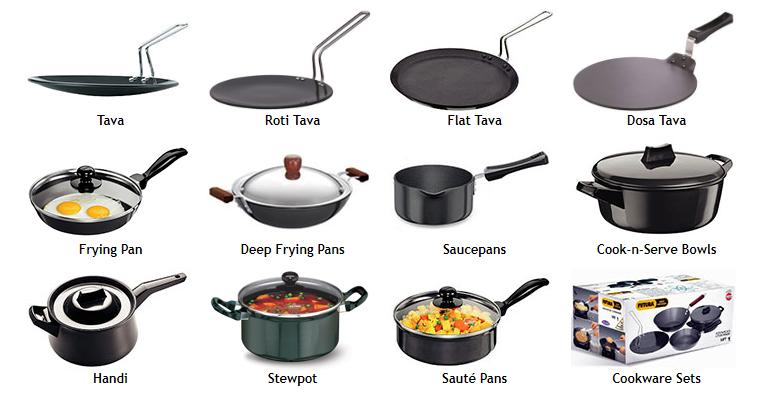
In terms of revenue composition, HCL derives around 80% of its revenues from pressure cookers and the remaining from cookware.
Let’s now turn to how things are going for HCL on a few key parameters.
1. Business Growth and Profitability
HCL has grown its sales and profit before tax at compounded annual rates of 10% and 11% over the past five years. This growth has been aided by both volume growth and some improvement on the pricing front. Rising disposable income and a shift towards the organized segment of the industry has also aided the company’s business over the past few years.
The market for pressure cookers is shared amongst organized national branded players, regional players and unorganized players. Over the years, the share of the unorganized players has been gradually coming down as there has been a shift in the consumer preference to reliable branded products (HCL and TTK are leaders here). The market for organized brands is estimated at about 60% of the total market.
2. Capital Efficiency
HCL’s return on equity (ROE) has averaged around 61% over the past ten years, and 51% over the last five. Return on capital employed has averaged 72% and 61% respectively during these two periods. Not many businesses in India outside the FMCG space have been able to generate such high returns and for such a long time. Remarkably, HCL has been able to churn out these numbers without leveraging its balance sheet much. The company also generates strong operating and free cash flows.
3. Competitive Advantage
HCL is without doubt India’s most popular brand in the pressure cooker space. And its brand strength, combined with the management’s capital allocation skills, has been seen in the high return on capital the company been able to generate over the years, which is a proof enough of the presence of competitive advantage or moat in its business.
HCL’s Chairman Mr. Brahm Vasudeva, in his speech to shareholders at the 2009 annual meeting, spoke of the seven strands of the DNA of Hawkins. One of those strands that he talked about was about “being prudent.”
He spoke and I quote –
Be Prudent. This principle applies to our financial operations as well as general expectations. We are conservative to the point of being stodgy. We do not issue ‘detailed guidance’ to investors. We do not seek out analysts or journalists. We don’t “Bet the Company” on anything, no matter how exciting the prospect is. We believe in vigorous preparation and planning and we never forget the importance of the unforeseen and the contingent.
Over these years, the management has stood true to this principle, and the others that were part of the said speech, and has allocated capital with extreme prudence and returned the rest to shareholders. HCL’s dividend payout has averaged 75% over the past ten years.
Here is what the Chairman said in his latest AGM speech last year –
In India, of late, we have seen the unfortunate downfall of quite a few large and many small companies, much of it caused by loans which can’t or won’t be repaid. It reminds me of a time when Hawkins was considered very stodgy because we did not borrow aggressively to invest in some big expansion project or the other. It is not that we don’t have any ambitions. It’s just that we prefer to fuel our ambitions with our own money, not with hot money that has to be returned when you need it most. We are well funded by you shareholders and our internal accruals and we ensure that without a huge debt we have enough to expend and expand as needed to supply the demand.
We also are uncomfortable about other people using our money. We run a tight ship on collections. We have a record of collecting 99.996% of our dues without fail. We are not in the habit of “buying” sale with unlimited credit or credit to suspect parties. We give lucrative discounts for paying upfront and so a substantial part of our business is run on full advance. Therefore, we have not been majorly affected by the credit squeeze that has largely crippled the economy currently and this is evident in our recent excellent results.
This speaks volumes about the management and business quality.
4. Key Risks
Despite being a leading brand in the pressure cooker category, HCL competes against a lot of smaller players in the fragmented cookware market, where the share and the role of regional brands and unorganized players continue to be significant. In general, there is a clutter of regional brands/unorganized players at entry level price points, which creates intensive competition for HCL in this space. What is more, continued perception of uncertainty in disposable income amongst core middle-class, and now after a significant slowdown in consumption in expected due to the Coronavirus epidemic, it should give room for down-trading/bundling of products of entry level price points by some regional brands and may distort the market for entry level products. This is one of the key risks that HCL faces.
Further, aluminium being the key raw material that HCL uses, forms around 52% of the company’s total raw material expenditure. Volatile aluminium prices have put pressure on HCL’s profitability in the past, so this also a risk for the future.
Valuation
HCL’s stock is currently trading around Rs 3,880 (as on 31st March 2020), which implies a P/E multiple of 26.7 times its trailing twelve months earnings of Rs 145 per share.
Please carefully assess the opportunities and risks in the business and ensure sufficient margin of safety before taking an investment decision on the stock.
Statutory Warning: This is NOT an investment advice to buy or sell shares. Please make your own decision, as blindly acting on anyone else’s research and opinions can be injurious to your wealth. I do not own the stock, but my analysis can be biased, and wrong. I have been wrong many times in the past. I, Vishal Khandelwal, am a registered Research Analyst as per SEBI (Research Analyst) Regulations, 2014 (Registration No. INH000000578).